Skip to content

A Sturdy Line, A Safer Perimeter
In the landscape of physical security, a robust perimeter serves as the first line of defense against both accidental vehicle incursions and intentional security breaches. For property managers and security experts, the strategic deployment of bollards is an essential component of a professional safety protocol. Acting as more than just markers, these sturdy vertical posts provide a critical physical barrier that protects pedestrians, high-value assets, and building infrastructure from the devastating impact of a vehicular collision.
Establishing a secure perimeter is not merely about aesthetic organization; it is a vital investment in long-term risk mitigation and liability reduction for any modern commercial enterprise.

However, the efficacy of any security perimeter is heavily dependent on the specific material composition of the bollards selected for the job. Choosing the wrong material for a specific environment can lead to catastrophic failures or an unnecessary financial drain for business owners and operators. For example, installing a standard concrete bollard in a high-speed zone might result in shattered debris and compromised footings upon impact, whereas a rigid steel bollard in a tight loading dock could lead to constant, expensive replacements.
Today’s All Security Equipment post is dedicated to empowering property managers and business owners with the understanding of which material composition of their bollards best suits their needs. By the end of this guide, you will be equipped to select the perfect bollard composition to meet your property's unique security demands.
Understanding the Bollard: Function and Strategic Placement

A bollard is a sturdy vertical post installed to control traffic, protect pedestrians, and shield buildings from vehicle impacts. For security experts, these posts are the building blocks of "hostile vehicle mitigation" (HVM), acting as both a visual deterrent and a physical obstacle against ram-raiding. Effective placement is key; they should be situated at building entrances, along pedestrian walkways, near utility meters, and at the corners of loading docks.
When selecting bollards for your commercial site, keep these core features in mind:
- Impact Rating: High-velocity resistance vs. low-speed flexibility.
- Durability: Resistance to UV rays, moisture, and road salt.
- Visibility: Integrated LED lighting or high-reflective panels.
- Installation: Permanent fixed posts, removable units, or bolt-down models.
- Maintenance: Frequency of painting or anti-corrosive treatments.
Concrete: Rugged and Utility-Focused Longevity
Concrete bollards are often utilized by property managers for parks and pedestrian plazas where a natural, stone-like aesthetic is desired. They offer a budget-friendly solution for traffic control and are inherently resistant to UV rays and general weathering. However, they lack the tensile strength of steel and can be prone to cracking or chipping under repeated minor stress. While they serve a purpose in low-threat landscapes, they often lack the sophisticated security ratings required for modern high-risk commercial assets.

Pros:
- Weather Resistance: Immune to the rust and chemical corrosion that can plague poorly maintained metals.
- Inherent Mass: Their sheer weight provides a significant psychological and physical deterrent to unauthorized vehicle entry.
Cons:
- Installation Difficulty: Their extreme weight makes them labor-intensive to install or relocate compared to steel.
- Structural Brittleness: Large impacts can cause the concrete to shatter, potentially leaving dangerous debris on the site.
Steel: The Gold Standard for High-Strength Defense
Steel bollards are the premier choice for business owners seeking a modern aesthetic combined with immense stopping power. Typically made from galvanized or stainless steel, these units are engineered to withstand significant force that would crumble other materials. While a major impact might require a replacement, the primary goal of a steel bollard is to sacrifice itself to save the building and lives behind it.

For high-security needs, steel is the only material that truly offers the peace of mind required for high-traffic commercial storefronts.
Pros:
- Exceptional Strength: Capable of stopping high-speed vehicles, especially when rated for K12/M50 crash standards.
- Premium Aesthetics: Products like the BFT RANCH E 330/1200C LI Stainless Steel 316 Fixed Bollard offer a sleek, professional look with integrated LED caps.
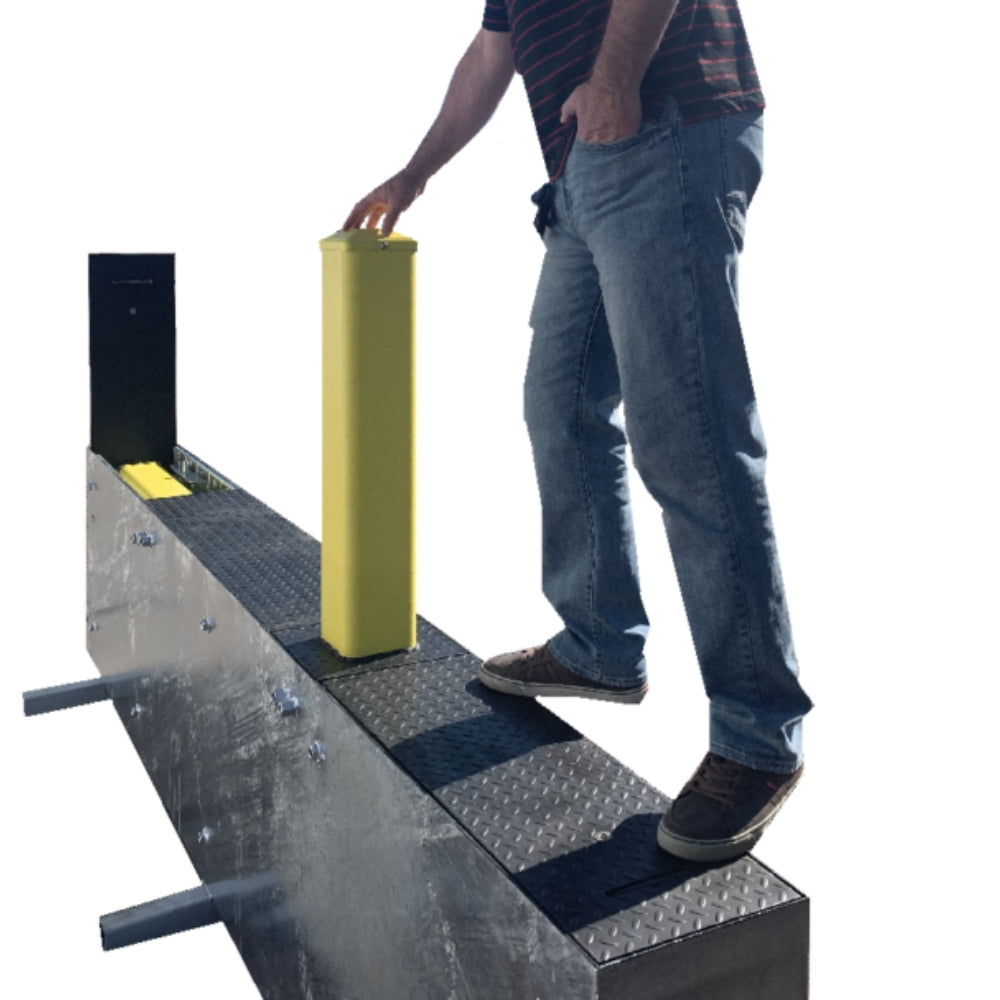
- Versatile Mounting: Options range from deep-rooted fixed posts to the Post Guard 6"x48" Bolt Down Bollard, which is perfect for protecting sensitive circuit boxes.

Cons:
- Initial Upkeep: Non-stainless versions may require repainting if scratched to prevent surface rust.
- Rigidity: Significant impacts can occasionally affect the concrete foundation due to the material's unyielding strength.
Plastic and Polymer: Flexible, Low-Maintenance Alternatives
For security experts in warehouses, polymer and recycled plastic bollards offer a unique "self-healing" capability. These materials are designed to flex upon impact and return to their original shape, protecting the vehicle and the floor. They are also ideal for housing technology; for instance, the BEA Mounting Post for Push Plates uses a plastic cap to allow wireless signals to pass through—a feat impossible for metal. However, they simply cannot match the raw stopping power provided by heavy-duty steel in high-speed scenarios.

Pros:
- Impact Recovery: Ideal for low-speed environments like loading docks where frequent minor "bumps" occur.
- Zero Corrosion: Entirely immune to rot and salt, making them suitable for coastal properties or chemical facilities.
Cons:
- Lower Stopping Power: Not typically suitable for anti-terrorism or high-speed vehicle mitigation.
- Aesthetic Limitations: Often look more "industrial" and may not fit the branding of a high-end retail or corporate office.
How Metal Always Wins the Medal
While plastic offers flexibility and concrete provides mass, steel remains the superior choice for the serious property manager or business owner. It offers the perfect intersection of high-speed crash protection, professional aesthetics, and long-term reliability that modern commercial properties demand.
If you are ready to upgrade your security, our team is standing ready to help. Contact the All Security Equipment customer service team today for a personalized consultation to find the perfect steel solution for your facility.