Skip to content

Playing Defense
In an era where vehicular threats—both accidental and intentional—are a constant concern, the essential role played by steel bollards cannot be overstated. These sturdy posts serve as the primary line of defense, creating a formidable physical barrier that protects infrastructure and lives without creating an atmosphere of confinement. By integrating bollards into a comprehensive security strategy, property owners can effectively deter unauthorized access, manage traffic flow, and safeguard vulnerable glass storefronts.

However, the effectiveness of a security perimeter is profoundly affected by precise placement and the specific category of property it protects. A strategy that works for a high-traffic shopping mall may be entirely unsuitable for a quiet residential complex or a fast-paced construction site. Today’s All Security Equipment post delves into the nuances of spatial design, exploring how to tailor your bollard layout to meet the unique demands of different environments. Understanding these variables is key to balancing high-level security with functional accessibility and aesthetic harmony.
Five Key Large Property Categories for Security Planning
- Commercial Spaces: High-traffic environments requiring a balance of sleek aesthetics and heavy-duty protection to manage daily visitors safely.
- Large Residential Areas: Sites focused on excluding unauthorized vehicles while ensuring residents move freely and safely within their neighborhoods.
- Parking Lots: High-risk zones for low-speed collisions necessitating clear markers to protect pedestrians and lighting fixtures from accidental impact.
- Construction Sites: Dynamic areas requiring perimeters to shield workers from passing traffic and protect expensive machinery from theft or damage.
- Hospice Care & Medical Centers: Sensitive facilities where accessibility is paramount; bollards must protect emergency entrances while ensuring zero interference with wheelchairs.
Why Steel Bollards Are the Superior Choice

When it comes to perimeter protection, steel remains the gold standard for security experts. Steel bollards offer an unparalleled strength-to-weight ratio, ensuring they can absorb significant kinetic energy during a vehicle impact. This is critical for preventing "ram-raiding" or accidental building intrusions.
Unlike concrete, which can crack over time, or plastic, which offers only visual guidance, high-grade steel provides a permanent, low-maintenance solution that resists environmental wear. Furthermore, steel's versatility allows for various finishes—from polished stainless steel for a modern look to high-visibility safety yellow—making it the most adaptable material for both security and architectural integration across diverse landscapes.

Strategic Placement Guide by Property Type
Commercial Spaces

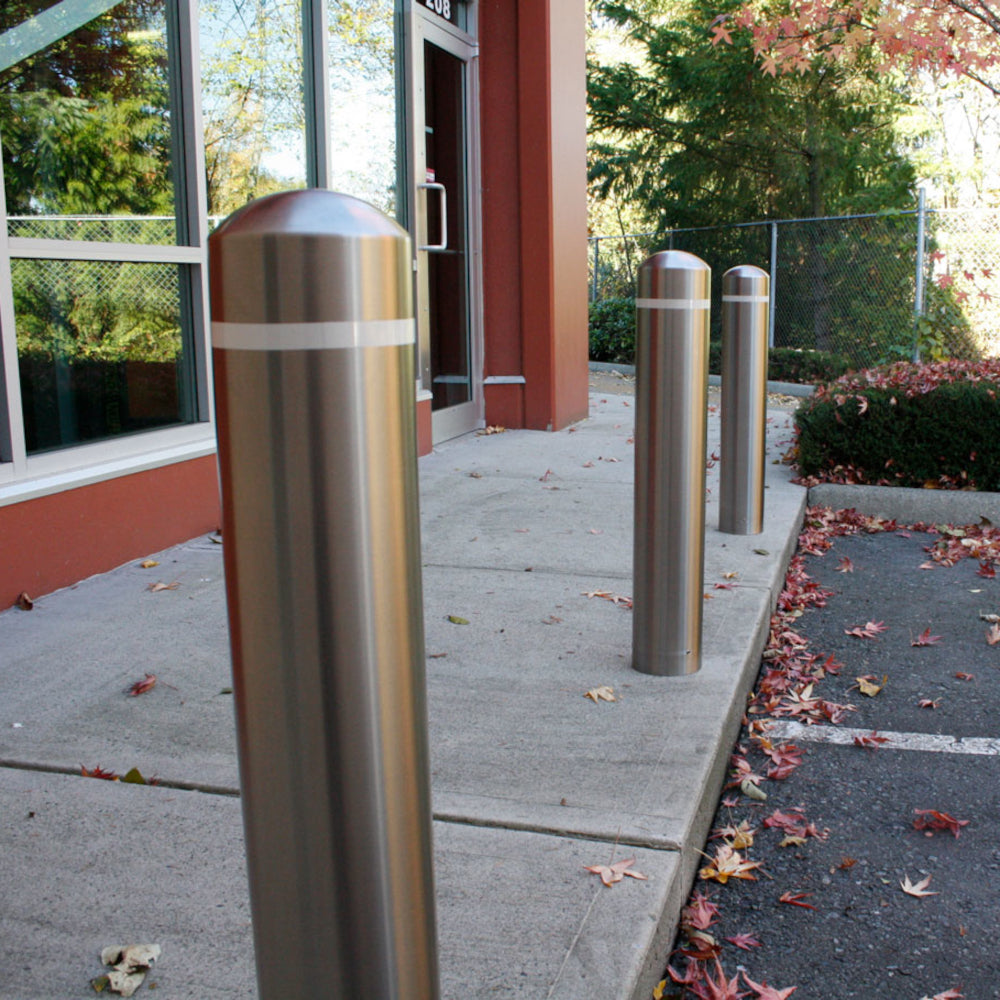
In commercial environments, the goal is to protect glass-heavy storefronts from "store-front crashing." The best placement for steel bollards is along the curb line or in front of main entrance vestibules, spaced approximately 4 to 5 feet apart. This spacing is wide enough to allow comfortable pedestrian and wheelchair access but narrow enough to stop a standard passenger vehicle.
Additionally, placing bollards near utility connections and outdoor dining areas ensures that diners and infrastructure are shielded from parking lot mishaps. By using decorative steel covers, businesses maintain a welcoming, upscale appearance while hiding the raw strength of the crash-rated steel core beneath.
Large Residential Areas

For residential perimeters, placement should focus on "pinch points," primarily gated entries and community park borders. Bollards should be installed at the corners of gate houses to protect expensive automated gate operators from being struck by turning vehicles. Within the community, placing bollards at transition points between roadways and walking trails prevents residents from accidentally driving onto pedestrian-only paths.
This creates a safe zone for children and pets. Choosing fixed steel bollards with reflective tape or integrated lighting ensures they are visible at night, reducing the risk of residents clipping them during low-light conditions.
Parking Lots

Parking lot security focuses on managing traffic and protecting assets. Steel bollards should be placed at the ends of parking rows to prevent "cut-through" driving, where motorists cross empty spaces to save time. They are also vital for protecting "islands" that house expensive light poles or signage. In parking garages, bollards should be positioned in front of elevators and stairwell exits to ensure pedestrians are never in the direct path of a vehicle. For loading docks, heavy-duty steel bollards at the corners of dock doors prevent delivery trucks from backing into the building structure, saving thousands in potential repair costs.
Construction Sites

On construction sites, bollards serve as a life-saving barrier for ground crews. They should be placed along the perimeter facing active roadways to create a physical buffer against high-speed traffic. Often, deep-bury fixed bollards are used near site offices or fuel storage tanks to prevent impact from site vehicles like forklifts.
For areas where access needs change daily, removable steel bollards are the best option. They provide the same high level of protection as fixed posts but can be unlocked to allow heavy machinery to enter restricted zones, providing flexible yet uncompromising site security during different project phases.
Hospice Care & Medical Centers
In medical settings, placement is dictated by the need for rapid, unobstructed access. Steel bollards must define clear ambulance-only lanes, ensuring private vehicles do not block emergency bays. They should also be positioned around critical infrastructure such as external oxygen tanks and backup generators often located near service roads.
At the main entrance, bollards protect automatic sliding doors—a common failure point in vehicle accidents. By using shallow-mount steel bollards, medical facilities can install high-level protection in areas where underground medical gas lines or fiber-optic cables prevent the deep excavation required for standard posts.
One Bollard at a Time
Achieving the perfect balance of safety and accessibility requires a strategic partner who understands the complexities of perimeter design. Don't leave your property's safety to chance—ensure your placement strategy is as strong as possible. Contact the ASE customer service team today for a personalized consultation, and let us help you select the ideal bollard solutions to protect your space for years to com