 Skip to content

Barrier Gate Arms & Boom Barrier Gates
152 products
Showing 1 - 24 of 152 products
Barrier Gate Arms & Boom Barrier Gates
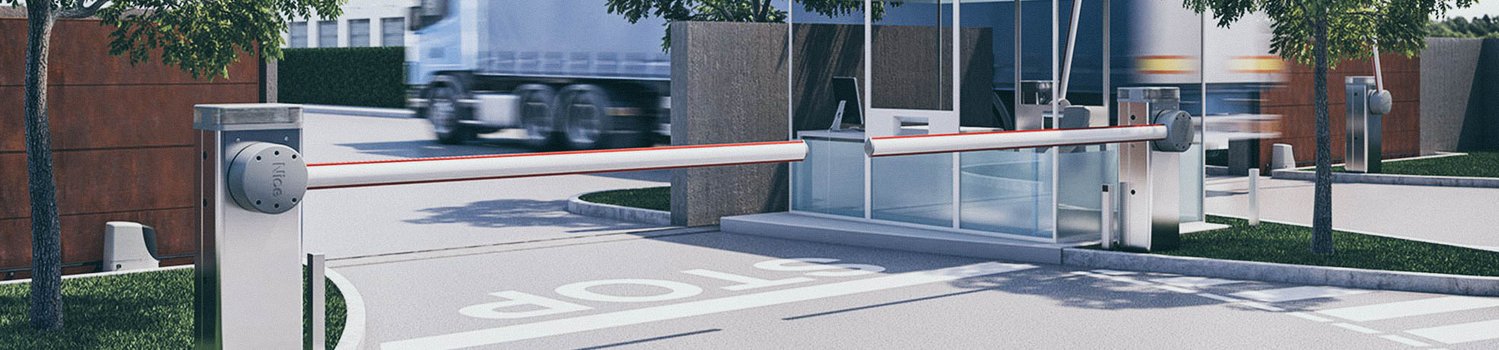
Barrier gate arms control the flow of vehicles at parking lots, garages, gated communities, and commercial entrances. One arm per lane, up and down in seconds, and only authorized traffic gets through. This collection covers complete barrier gate operators, replacement arms, and LED-lit arms for night visibility, so you can build a new lane or repair an existing one from the same page.
What is a barrier gate arm?
A barrier gate arm is the horizontal bar that raises and lowers to control vehicles at an entry point. The arm mounts to a barrier gate operator, the motorized unit that does the lifting, triggered by whatever access method you choose: a remote, keypad, RFID reader, loop detector, or a ticket system.
Two things make barrier arms the standard for vehicle control. They cycle fast (a commercial arm clears a lane in a few seconds, far quicker than a slide or swing gate) and they meter traffic one vehicle at a time, which is exactly what a busy entrance needs.
Barrier gate arms for every application
Parking lots and garages
The classic use case. A barrier arm at entry and exit, paired with a ticket dispenser or card reader, controls paid parking and keeps non-customers out. For the full setup around the arm (loops, readers, telephone entry), see our parking systems collection.
Gated communities, HOAs, and apartments
Residents get hands-free entry with RFID tags or remotes while the arm keeps cut-through traffic off private streets. Arms pair well with a secondary swing or slide gate where after-hours perimeter security matters.
Commercial and industrial facilities
Distribution centers, employee lots, toll lanes, and truck gates need continuous-duty operators rated for hundreds of cycles a day. This is where duty cycle matters more than any other spec, and where heavy-duty models earn their price.
How to choose the right barrier arm
-
Arm length: Measure the lane, not the driveway. Arms run from 6 to 30 feet; pick the length that covers the traffic lane with clearance at both ends. Low-clearance garages often call for articulated or folding designs.
-
Duty cycle: A light-traffic HOA gate and a paid garage doing a thousand cycles a day are different machines. Match the operator’s rated cycles per hour to your real peak traffic, then add margin.
-
Power: AC, DC, solar, and battery backup: AC models handle high volume; DC and solar-compatible units cover remote lanes without trenching power, and battery backup keeps the lane working through an outage.
-
Access control integration: The arm is only half the system. Confirm the operator works with your credentials (RFID, keypads, remotes, telephone entry) and with the safety accessories your lane needs.
-
Visibility: LED-lit arms and reflective sleeves keep the barrier obvious at night and in rain, which protects both drivers and the arm itself.
How much does a barrier gate arm cost?
Replacement arms are the inexpensive part: most run from under a hundred dollars to a few hundred, depending on length and LED options. Complete barrier gate operators typically range from about $1,000 to $5,000 in hardware, with heavy-duty, high-speed, and crash-rated models above that. What moves the price is duty cycle, arm length, speed, and integrations, not the brand badge. Every product page in this collection shows the current price, so you can compare real numbers side by side.
Brands you’ll find here
We stock barrier arms and operators from LiftMaster, Doorking, FAAC, BFT, Nice Apollo, All-O-Matic, Magnetic, and HySecurity. Each brand page groups its operators, replacement arms, and accessories, so you can stay inside the ecosystem your installer already knows.
Why buy your barrier gate arm from ASE
We carry the operators, the replacement arms, and everything around them: loop detectors, photo eyes, keypads, and telephone entry systems, with accurate upfront shipping and product experts a phone call away at 1-800-730-8382. If you’re planning the whole entrance, our guide to parking lot gate systems walks through the full setup, and our complete parking barrier gate operators collection covers ready-to-install packages.
Frequently asked questions
How much does a barrier gate arm cost?
A replacement arm alone usually costs from under $100 to a few hundred dollars, depending on length and LED options. A complete barrier gate operator with the arm typically runs $1,000 to $5,000, and heavy-duty, high-speed, or crash-rated models price above that.
What’s the difference between a boom barrier and a barrier gate arm?
Nothing, they’re two names for the same equipment. “Boom barrier” and “boom gate” are more common internationally; “barrier gate arm” and “gate arm” are the usual US terms.
Can I just replace the arm without replacing the operator?
Yes, if the operator is healthy. Arms take the abuse, so manufacturers sell them separately in standard lengths. Match the brand, mounting style, and length of your existing arm, and check whether yours uses a breakaway bracket.
What arm length do I need?
Standard barrier arms run 6 to 30 feet. Measure the width of the traffic lane the arm has to cover and match it to the closest standard length. Lanes wider than about 20 feet usually call for two operators facing each other, or a heavier-duty model rated for long arms.
Do barrier arms need safety loops or photo eyes?
For any lane vehicles pass through, yes. Ground loops detect a car under the arm and photo eyes add a second layer, preventing the arm from lowering onto a vehicle. Most operators in this collection support both.
Are solar barrier gate operators reliable?
For low and medium-traffic lanes, absolutely. A properly sized solar panel with a battery handles residential and HOA duty well. High-cycle commercial lanes are usually better served by AC power with battery backup.