Skip to content

Choosing an automatic gate opener isn’t simply a matter of finding an operator powerful enough to move your gate.
The right gate operator depends on several factors, including the type of gate, gate length, gate weight, frequency of use, installation environment, available power, and safety requirements.
An operator that works well on a lightweight residential driveway gate may not be appropriate for a long, heavy gate at a busy commercial entrance. Likewise, choosing an operator based only on its maximum advertised gate weight can lead to poor performance, unnecessary wear, and a system that isn’t well suited for the application.
So, what size gate opener do you actually need?
This guide from All Security Equipment walks through the most important factors to consider when choosing a gate operator and helps you narrow down the right type of equipment for your installation.
Start With the Type of Gate
Before comparing horsepower, gate weight, or operator models, determine how the gate moves.
Most automated gates fall into two primary categories:
Swing Gates
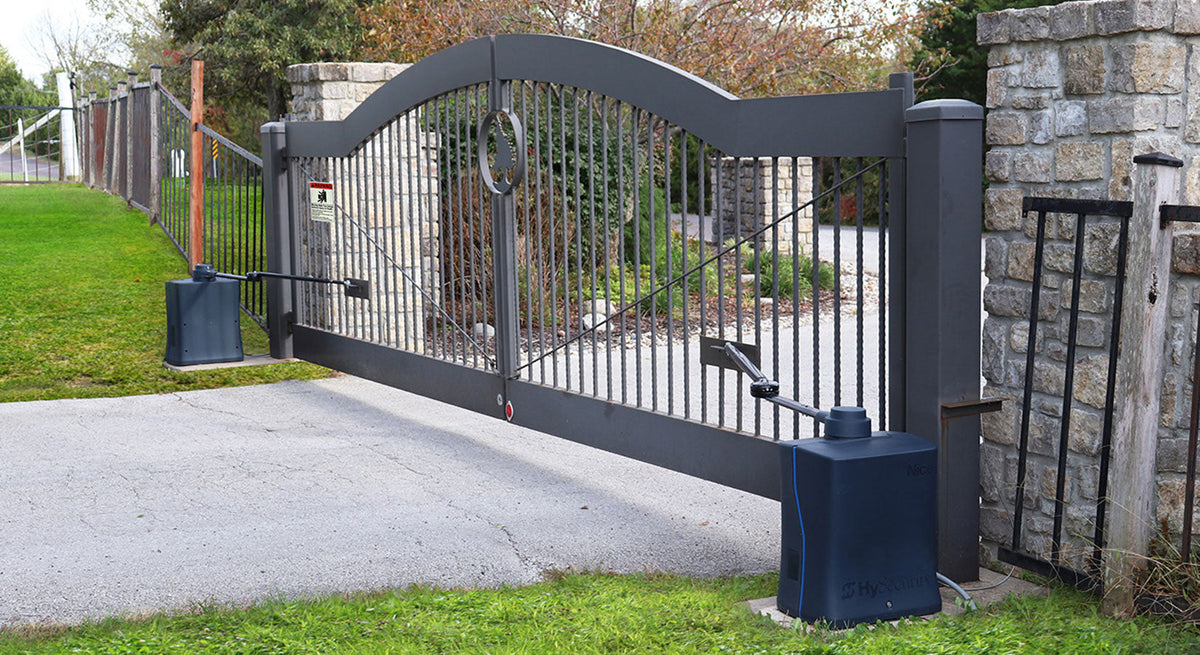
Swing gates rotate inward or outward on hinges, similar to a large door.
They are commonly used for:
- Residential driveways
- Gated communities
- Commercial entrances
- Estates
- Farms and rural properties
A swing gate can consist of a single gate leaf or a dual-gate configuration in which two leaves meet in the center.
Swing gate operators can also use different operating mechanisms, including linear arms, articulated arms, underground operators, and other configurations.
Slide Gates
Slide gates move horizontally alongside the fence line rather than swinging into the driveway.
They are frequently used for:
- Commercial properties
- Industrial facilities
- Parking entrances
- Warehouses
- Gated communities
- Properties with limited driveway depth
Slide gates can use a ground track and wheels or a cantilever design that keeps the gate suspended above the ground.
Once you’ve determined whether you need a swing gate operator or slide gate operator, you can begin narrowing the selection based on the gate itself.

1. Measure the Gate Length
Gate length is one of the first specifications to check when selecting an operator.
Manufacturers typically specify the maximum gate length their operators are designed to handle.
For a single swing gate, measure the complete gate leaf from the hinge side to the opposite end.
For a dual swing gate, evaluate the length of each individual leaf, not simply the total driveway opening.
For a slide gate, consider the complete moving gate assembly and follow the operator manufacturer’s sizing requirements.
Why does length matter?
A longer swing gate creates greater leverage against the operator. Wind and other external forces can also place substantially more load on a long gate.
This means two gates of similar weight may require very different operators if one is significantly longer than the other.
2. Determine the Gate Weight
Next, determine the approximate weight of the gate.
Gate construction can make a major difference.
For example, a gate made from lightweight aluminum may weigh considerably less than a similarly sized gate constructed from solid steel.
Gate operators have manufacturer-specified maximum gate weights. Your gate should remain within the specifications of the operator you select.
However, maximum gate weight should not be treated as the only selection criterion.
You should consider gate length and weight together.
An operator rated for a certain maximum weight may have a different allowable weight when operating a longer gate. Always review the manufacturer’s specifications for the exact operator and configuration being considered.
3. Consider How Often the Gate Will Operate
One of the most commonly overlooked factors is cycle frequency.
Ask:
How many times will this gate open and close during a normal day?
A residential driveway serving one household has very different operating requirements from an entrance serving hundreds of vehicles.
Lower-Cycle Applications
Examples include:
- Single-family homes
- Small private properties
- Farms
- Low-traffic entrances
These applications may only require several opening and closing cycles throughout the day.
Medium-Cycle Applications
Examples include:
- Small businesses
- Apartment buildings
- Small HOAs
- Offices
Traffic is more frequent, so the operator needs to withstand greater daily use.
High-Cycle Applications
Examples include:
- Large gated communities
- Parking facilities
- Warehouses
- Distribution centers
- Industrial facilities
- Busy commercial properties
These entrances may operate repeatedly throughout the day.
For these applications, look for an operator specifically designed for commercial, high-cycle, or continuous-duty operation, as appropriate for the installation.
Choosing an operator based solely on gate size while ignoring usage can result in an operator that is technically capable of moving the gate but isn’t designed for the workload.
4. Think About Gate Construction and Wind Load
A gate’s design can dramatically change the amount of force required to move it.
An open ornamental gate allows much of the wind to pass through.
A solid gate does not.
This can turn a large gate into something resembling a sail during strong winds.
Examples include:
- Solid wood gates
- Privacy gates
- Gates with solid metal panels
- Gates covered with privacy screening
Wind load can place significant additional stress on the operator, hinges, mounting hardware, and gate structure.
This is particularly important in areas exposed to frequent high winds or severe weather.
If the gate has a large solid surface, don’t select an operator solely according to the gate’s static weight. Review the manufacturer’s wind-load guidance and consider the entire installation.
5. Residential vs. Commercial Gate Operators
Another useful way to narrow your selection is to identify the type of property.
Residential Gate Operators
Residential gate operators are typically designed around the needs of private driveways and lower-traffic applications.
Important considerations may include:
- Quiet operation
- Battery backup
- Smartphone connectivity
- Remote controls
- Keypad access
- Solar compatibility
Commercial Gate Operators
Commercial applications may require greater durability and higher operating frequency.
Depending on the property, considerations may include:
- High-cycle operation
- Faster opening and closing
- Heavy gates
- Access control integration
- Vehicle detection
- Emergency access
- Multiple safety devices
- Network connectivity
- Battery backup
A commercial operator isn’t simply a “stronger residential opener.” The entire gate system should be designed around the property’s traffic and access requirements.
6. Choose the Right Power Source
Gate operators can be powered in several ways.
AC Power
When utility power is readily available near the gate, a hardwired AC installation may be an appropriate solution.
This is common in commercial and residential installations where electrical infrastructure is already available.
DC and Battery Backup
Many modern gate operators use DC motors and incorporate battery backup.
Battery backup can allow the gate to continue operating for a limited period during a power outage, depending on the operator, battery condition, usage, gate characteristics, and installed accessories.
For properties where continued access during an outage is important, battery backup should be part of the selection process.

Solar Power
Running electrical service to a remote gate can sometimes be expensive or impractical.
In these applications, a compatible solar gate operator system may provide an alternative.
Solar can be particularly useful for:
- Farms
- Ranches
- Rural properties
- Remote entrances
- Properties where trenching electrical service would be difficult
Solar systems must be properly sized according to factors such as operator consumption, expected cycles, battery capacity, solar exposure, geographic location, and connected accessories.
7. Don’t Forget the Access Control System
Choosing the operator is only one part of designing an automatic gate.
You also need to decide how people and vehicles will tell the gate to open.
Possible access devices include:
Remote Controls
A common solution for residential gates and controlled vehicle access.
Keypads
Users enter an authorized PIN to request access.
Keypads can work well for residences, businesses, gated properties, and other controlled entrances.
Card and Credential Readers
Businesses and managed properties may use cards, key fobs, or other credentials to identify authorized users.
RFID Vehicle Access
Long-range RFID solutions can identify authorized vehicles as they approach an entrance, making them useful for applications such as employee parking, gated communities, and commercial vehicle access.
Telephone Entry and Video Intercoms
These systems allow residents or staff to communicate with visitors before granting access.
More advanced systems may incorporate cloud management, mobile credentials, directories, cameras, and remote administration.
Your gate operator needs to be compatible with the access-control devices required by the property.
8. Plan the Required Gate Safety Devices
Automatic gates are powerful moving systems, which makes safety a critical part of the installation.
Depending on the operator and application, the system may require monitored entrapment-protection devices such as:
- Photoelectric sensors
- Safety edges
- Other approved monitored devices
Additional equipment may include:
- Vehicle loop detectors
- Wireless edge transmitters
- Gate position devices
- Warning devices
Always follow the gate operator manufacturer’s instructions and applicable safety standards when designing and installing the system.
A gate operator should never be selected without considering how the complete gate system will meet its required safety configuration.
9. Make Sure the Gate Moves Properly Before Automating It
One of the most important rules in gate automation is simple:
The gate itself needs to operate correctly before an operator is installed.
An operator should not be used to compensate for a poorly functioning gate.
Before installation, inspect the gate for problems such as:
- Damaged hinges
- Worn rollers
- Misaligned tracks
- Binding
- Structural damage
- Excessive resistance
- Improper balance
- Obstructions
A properly installed manual gate should move smoothly through its normal range of travel.
Excessive resistance places unnecessary load on the operator and can reduce the reliability of the entire system.
How Do I Know Which Gate Opener Is Right for My Gate?
Instead of beginning with a particular operator model, start with these questions:
1. Is the gate swing or slide?
2. How long is the gate or each gate leaf?
3. Approximately how much does it weigh?
4. Is the gate open-frame or solid?
5. How many times will it operate per day?
6. Is the property residential or commercial?
7. Is AC power available at the gate?
8. Is battery backup required?
9. Is solar power being considered?
10. What access-control and safety equipment will be connected?
Once you have this information, comparing gate operators becomes much easier.
Examples of Gate Operator Applications
There is no universal operator for every gate, but these examples demonstrate how requirements can change.
Residential Swing Gate
Consider:
- Gate length and weight
- Single or dual gate
- Remote controls
- Keypad
- Battery backup
- Photo eyes
- Exit device
- Solar requirements
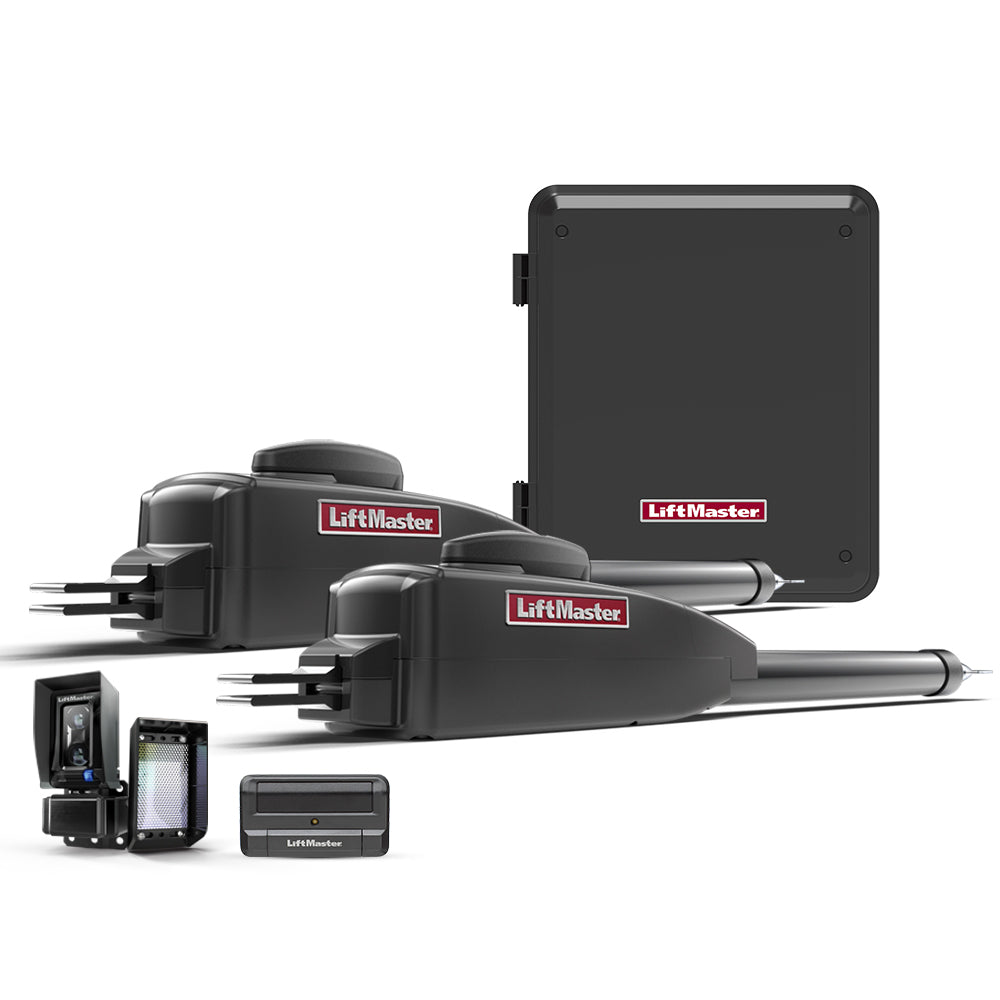
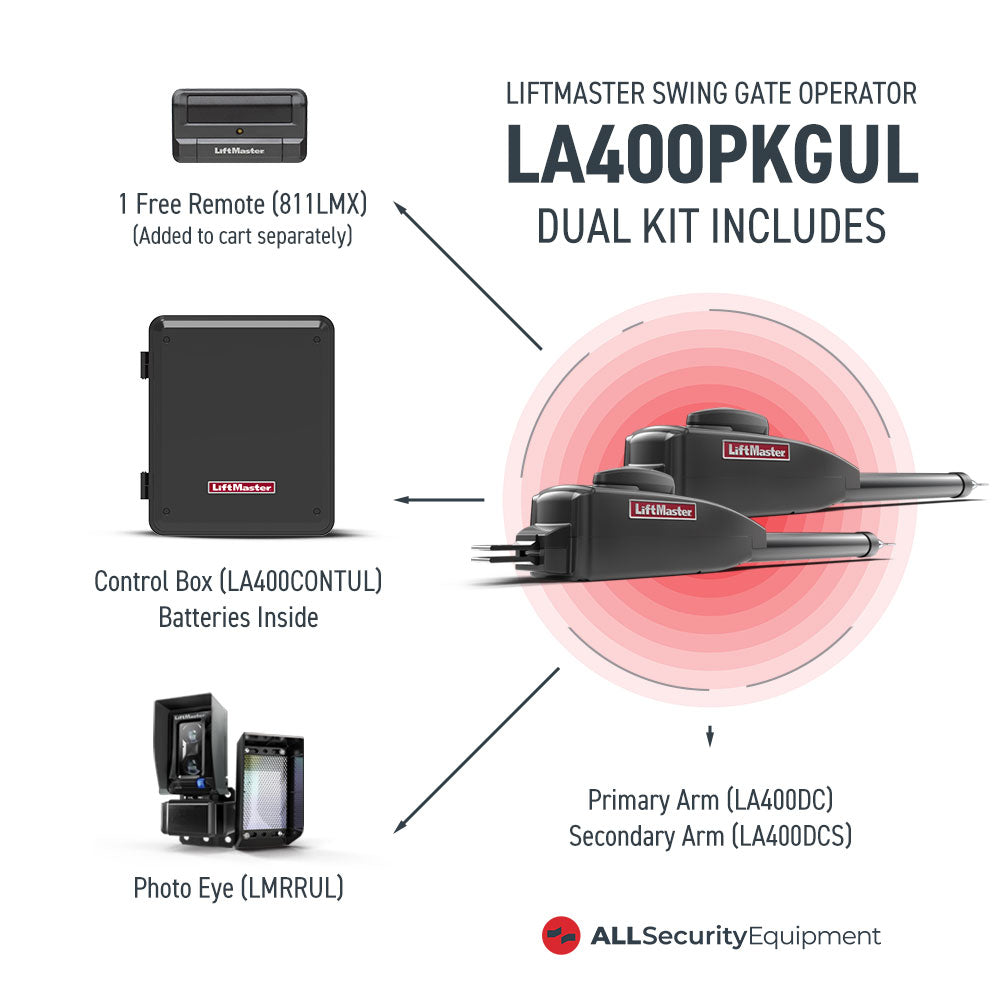
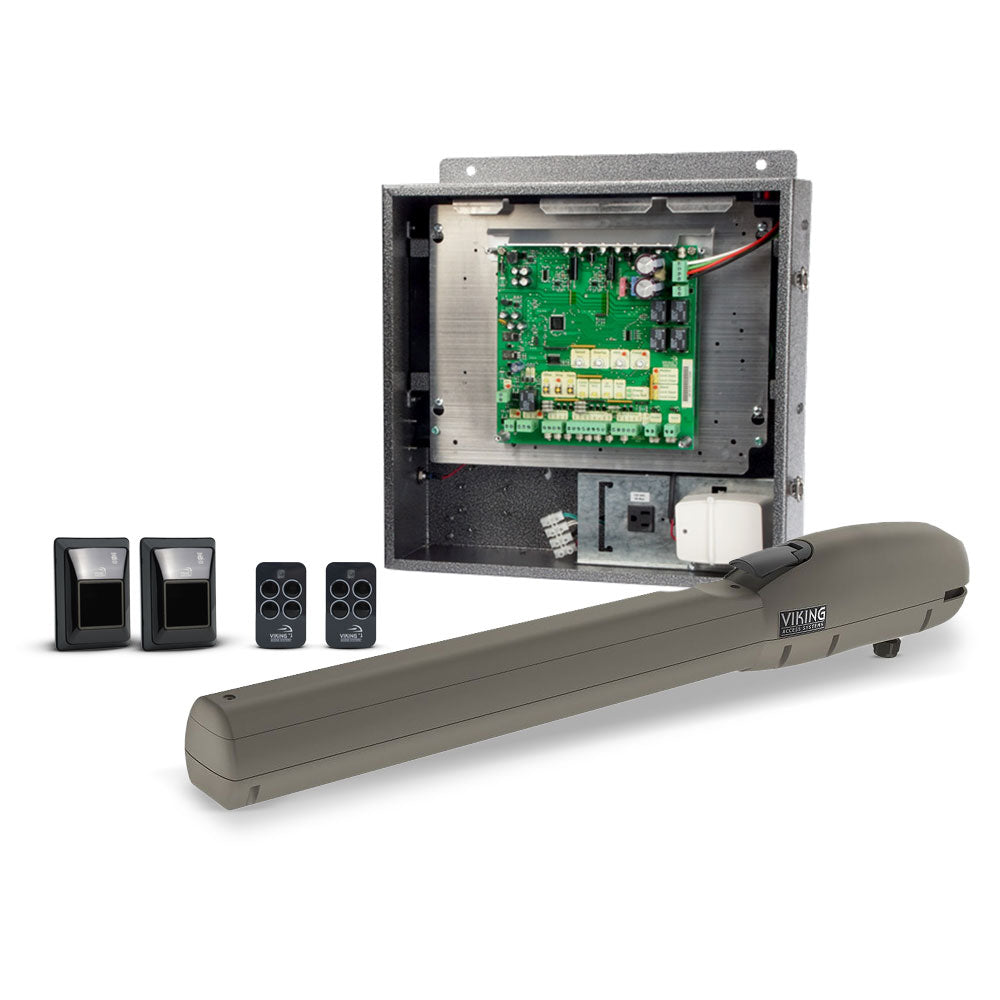
Products from manufacturers such as LiftMaster, BFT, Viking, FAAC, and USAutomatic can provide solutions for different residential swing-gate applications.
Commercial Slide Gate
Consider:
- Gate weight and length
- Daily traffic
- Duty cycle
- Access control
- Vehicle loops
- Safety devices
- Emergency access
- Battery backup
- Communication/network requirements
Commercial entrances may require significantly different equipment than a residential driveway.
Remote Solar Gate
For a remote property, the selection process should consider:
- Available sunlight
- Number of daily cycles
- Gate weight and length
- Battery capacity
- Solar panel requirements
- Accessories drawing power from the system
Simply adding a solar panel to an operator doesn’t automatically make the installation suitable for solar operation. The entire power system needs to be properly sized.
Don’t Size a Gate Operator by Horsepower Alone
It’s tempting to compare gate operators based on horsepower.
But horsepower alone does not tell you whether an operator is appropriate for a particular gate.
A better comparison includes:
- Maximum gate length
- Maximum gate weight
- Duty cycle
- Operating speed
- Gate type
- Power requirements
- Battery backup
- Environmental conditions
- Manufacturer-approved applications
The best gate opener isn’t necessarily the operator with the largest motor.
It’s the operator designed for the specific gate and application.
Frequently Asked Questions
Can a gate opener be too powerful for a gate?
Choosing a larger operator isn’t automatically better. The operator needs to be appropriate for the gate type, dimensions, usage, hardware, safety configuration, and manufacturer’s specified application.
What size gate opener do I need for a 16-foot gate?
There isn’t one universal answer. You need to know whether the gate is swing or slide, its weight and construction, expected daily cycles, and other application requirements. Check manufacturer specifications for operators rated for the gate’s dimensions and application.
Do heavier gates require more powerful gate openers?
Generally, gate weight increases the demands placed on the system, but weight is only one factor. Gate length, design, resistance, wind load, and operating frequency can also affect operator selection.
Can I use a residential gate opener on a commercial property?
It depends on the application and operator specifications. A low-traffic commercial entrance may have different requirements from a high-traffic facility. Always select equipment according to the manufacturer’s approved application, gate specifications, and expected duty cycle.
Can any gate opener run on solar power?
No. Solar compatibility depends on the operator and system configuration. The batteries, solar panels, geographic location, available sunlight, daily cycles, and accessory power consumption all need to be considered.
What safety devices does an automatic gate need?
Requirements depend on the operator, gate configuration, application, and applicable standards. Monitored photo eyes and safety edges are commonly used as entrapment-protection devices. Always follow the operator manufacturer’s installation instructions and applicable safety requirements.
Find the Right Gate Operator at All Security Equipment
Choosing the right gate opener starts with understanding the gate, not simply picking the operator with the biggest motor.
Gate type, length, weight, construction, traffic, power, access control, and safety requirements all matter.
At All Security Equipment, you’ll find gate operators, access control systems, safety devices, vehicle detection products, remotes, receivers, solar equipment, gate hardware, replacement parts, and accessories from leading manufacturers.
Already know your gate specifications? Shop our selection of swing and slide gate operators to compare solutions for residential and commercial applications.
Not sure which operator fits your gate?
Contact the All Security Equipment team with your gate type, length, approximate weight, and expected usage, and we’ll help you narrow down the right equipment for your application.