Skip to content

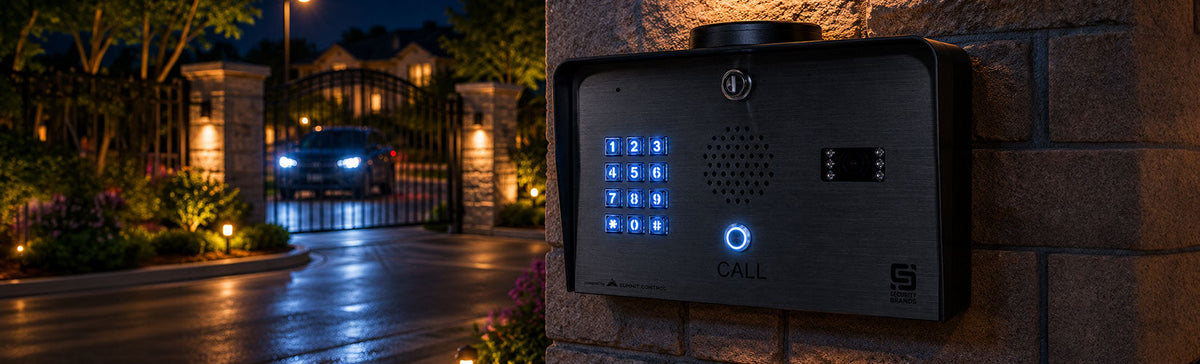
A security system homeowners insurance discount is a premium credit that many insurers give for a monitored burglar or fire alarm system, deadbolt locks or similar protective devices. Each insurer decides which devices qualify and how much they are worth under its state's rate rules, so the amount changes by company and by state. New Mexico law requires homeowners insurers to offer a minimum 10% premium discount for houses with electronic alarm systems.
All Security Equipment carries hardware that insurers commonly list as protective devices, such as deadbolt locks, fire extinguishers and security cameras. Alarm monitoring is a separate service from a monitoring company, and the insurer decides which combination earns a credit.

Security System Insurance Discount Quick Facts
-
Most common credit: 5% for fire and smoke alarms that report to a central station, with averages near 8%, in a 2020 Washington State Office of the Insurance Commissioner survey of insurers.
-
Who sets it: Each insurer decides which devices qualify and what they are worth, within its state's rate rules.
-
What earns more: Central station monitoring usually earns a larger credit than a local alarm that only sounds on site.
-
Proof: Insurers often ask for an alarm certificate or other documentation before applying the credit.
-
State minimum: New Mexico is the only state covered here that sets a minimum percentage in its law.
How Much Does a Security System Save on Homeowners Insurance?
A security system credit usually takes a few percentage points off the premium, and the exact figure depends on the insurer, the state and the type of monitoring. Published regulator data shows the range:
-
Washington: In the 2020 Washington State Office of the Insurance Commissioner survey, 5% was the most common discount for fire and smoke alarms that report to a central station, and averages ran about 8%.
-
California: The California Department of Insurance 2019 Homeowners Premium Survey lists central-station burglar alarm credits of 3% at State Farm General Insurance Company, 10% at Allstate Insurance Company and 20% at Farmers (Fire Insurance Exchange).
-
North Carolina: Homeowners rate deviations on file with the North Carolina Rate Bureau show protective device credits that vary from 1% to 15% for several insurers.
Example: on a $2,000 annual premium, a 5% credit would save $100 a year, and a 10% credit would save $200. Progressive notes that the discount for installing a security system typically won't cover the cost of the system itself, so the credit works best as a bonus on top of the protection.
What Qualifies for a Protective Device Discount
Insurers often call this credit a protective device discount, and it can cover more than a burglar alarm. The Washington State Office of the Insurance Commissioner notes that each insurance company determines which devices qualify. Devices named in insurer and regulator materials include:
-
Burglar alarms: State Farm lists fire, smoke and burglar alarms and other eligible home monitoring systems.
-
Fire and smoke alarms: Often credited separately from burglar alarms.
-
Sprinkler systems: Automatic systems that meet the insurer's or the state's installation standards.
-
Deadbolt locks: Named in New York law and in the Texas FAIR Plan Association's 5% home security device credit. All Security Equipment carries deadbolt locks alongside electric strikes.
-
Security cameras and monitoring systems: Progressive says many insurers offer discounts for video surveillance cameras.
Central Station Monitoring vs. Local Alarms
A local alarm only sounds at the property, while central station monitoring sends each alarm signal to a staffed monitoring center that can call the police or fire department. Insurers usually credit central station monitoring more: the California Department of Insurance 2019 survey lists 20% for a central-station burglar alarm and 6% for a local one at Farmers (Fire Insurance Exchange), and 10% and 5% at Allstate Insurance Company. The Texas FAIR Plan's 15% burglar alarm credit requires UL-approved equipment monitored by a UL-approved central station, contacts on every exterior opening, interior and exterior sirens, and a report from a local or county crime prevention unit.
Do Security Cameras Qualify for a Home Insurance Discount?
Security cameras can count toward a protective device discount, but each insurer decides whether they qualify. Progressive says many insurers offer discounts for video surveillance cameras and for home security systems with an alarm, door and window sensors, and motion sensors. Ask the insurer whether cameras qualify on their own or only as part of a monitored alarm system.
Recorded footage has value beyond the credit, since Progressive notes that security camera footage can provide evidence of what occurred in a dispute. All Security Equipment carries surveillance equipment and CCTV systems, including IP cameras and security video recorders and NVR systems that store footage on site. To see how a recorder works with cameras, read What Is an NVR, and Do You Need One for Your Security Cameras?
Fire Alarm Credits, Sprinklers and Fire Extinguishers
Fire protection often earns a credit separate from the burglar alarm credit. Progressive notes that monitored smoke detectors may make a homeowner eligible for a fire alarm credit. Washington law also requires insurers to consider the benefits of fire alarms and smoke detection devices when they set dwelling rates.
A full sprinkler system tends to earn a larger credit. Washington's 2020 insurer survey found 10% was the most common discount for a full fire suppression system, and the Texas FAIR Plan gives 8% for a qualifying automatic sprinkler system. New York law allows lower fire insurance rates for homes with smoke alarms, approved sprinkler systems or fire extinguishers when insurer loss data supports it, and AAA lists alarms and fire extinguishers among upgrades that can reduce a home insurance premium. Shop fire extinguishers at All Security Equipment.
Security System Insurance Discount Rules by State
Insurance discounts vary by state because each state regulates how insurers file and use rates. According to the National Association of Insurance Commissioners (NAIC), California and New York approve rates before insurers use them, Texas requires insurers to file rates before use, and Illinois lets insurers file homeowners rates after they take effect. The 9 states below also have a specific law, a state-run insurer credit or regulator guidance on protective device discounts.
States With Laws on Security and Fire Alarm Discounts
|
State |
Law |
What it means for homeowners |
|---|---|---|
|
New Mexico |
N.M. Stat. § 59A-17-13.1 |
Homeowners insurers must offer at least 10% off for electronic alarm systems and at least 5% for wrought-iron bars on all doors and windows. An insurer can leave a discount out only if it shows the state that the discount duplicates another one. |
|
Louisiana |
La. R.S. 22:1485 |
An insurer that offers a security system discount on a site-built home must offer the same or a similar discount on a factory-built home. The law defines a security system as a monitored device wired to a local law enforcement or fire department. |
|
New York |
N.Y. Insurance Law § 2346 |
The state may allow lower rates for homes with deadbolt locks, smoke alarms, approved sprinklers or fire extinguishers when insurer loss data supports it. A 2024 Department of Financial Services circular letter encourages insurers to file discounts for these devices. |
|
Washington |
RCW 48.19.540 |
Insurers must consider fire alarms and smoke detection devices in dwelling rates filed since January 1, 2020. The law does not set a percentage. |
|
Texas |
Former Articles 5.33A and 5.33B (repealed in 2003) |
The state's alarm discount law was repealed, and the Texas Department of Insurance no longer sets personal-lines discounts; each insurer files its own. No Texas statute requires a certificate for security device discounts. |
|
Florida |
Fla. Stat. § 627.0629 |
Florida's required rate discounts cover windstorm loss-reduction features, not security systems. Security and fire alarm credits come from each insurer. |
State-Run Insurers and Insurance Department Guides
|
State |
Source |
What homeowners can expect |
|---|---|---|
|
Texas |
Texas FAIR Plan Association |
5% for qualifying home security devices such as deadbolts and secondary locks, 15% for an electronic burglar alarm and 8% for an automatic sprinkler system on homeowners, tenant and condominium policies (not the Dwelling Policy). The Texas Department of Insurance shopping guide also lists monitored burglar or fire alarm systems and fire sprinkler systems as discounts. |
|
Florida |
Citizens Property Insurance Corporation |
Burglar alarm and fire alarm discounts for homes and businesses with centrally monitored alarms. Documentation is required, and the policyholder pays for any required certification. |
|
California |
California Department of Insurance |
Each insurer calculates its own rates, subject to department approval, and some companies offer discounts for burglar alarms and fire protection devices. The 2019 Homeowners Premium Survey lists alarm credits by insurer. |
|
Michigan |
Department of Insurance and Financial Services |
Burglar alarms and smoke detectors are allowed rating factors, and some companies reduce premiums for a home security system. |
|
North Carolina |
Rate filings with the North Carolina Rate Bureau |
Several insurers list protective device credits that vary from 1% to 15%. |
For a state not listed here, the state insurance department's consumer guide and the insurer's discount list are the best places to confirm what qualifies.
How to Get a Security System Insurance Discount
-
Ask what qualifies. Ask the insurer or agent which devices earn a credit, whether central station monitoring is required and what each device is worth on your policy. State Farm, for example, says discount names, percentages and eligibility vary by state.
-
Get the alarm certificate. Ask the installer or monitoring company for an alarm certificate or other proof. Citizens Property Insurance Corporation requires documentation before it applies an alarm discount, and the Texas FAIR Plan requires a crime prevention unit report for its burglar alarm credit.
-
Send the proof and check the policy. Send the documents to the insurer, then confirm the credit appears on the declarations page or renewal.
-
Keep the protection active. Tell the insurer about changes such as canceled monitoring or a removed system, because the credit depends on that protection being in place.
Homes and commercial properties can source that hardware from All Security Equipment, from cameras and recorders to deadbolts, fire extinguishers and access control systems. For help choosing equipment, contact the All Security Equipment team. Business owners planning a full system can compare costs in How Much Does a Commercial Security System Cost? A Breakdown of Equipment and Installation.
Security System Insurance Discount FAQs
Would a security system lower home insurance?
Often, yes. The Texas Department of Insurance lists a monitored burglar or fire alarm system among common home insurance discounts, and 5% was the most common central-station fire alarm credit in Washington's 2020 insurer survey.
Does State Farm give a discount for home security systems?
State Farm says homeowners may qualify for a discount with installed fire, smoke or burglar alarms or another eligible home monitoring system. Discount names, percentages and eligibility vary by state, so confirm the details with a State Farm agent.
Is a home security system tax deductible?
The business part can be. IRS Publication 587 lets a taxpayer who uses part of the home for business deduct the business part of the costs to maintain and monitor a security system that protects all doors and windows, plus depreciation on that part.
Do unmonitored alarms qualify for an insurance discount?
Some insurers credit them, but usually for less. Washington's 2020 insurer survey found 5% was the most common discount for a local alarm combined with other protective devices, while Farmers (Fire Insurance Exchange) listed 6% for a local burglar alarm and 20% for central station monitoring in California's 2019 survey.
Can a security system lower business insurance premiums?
It can. Citizens Property Insurance Corporation in Florida offers burglar alarm and fire alarm discounts to businesses with centrally monitored alarms, and commercial policies with a protective safeguards endorsement can suspend coverage if a required alarm or sprinkler system isn't kept working.