Skip to content

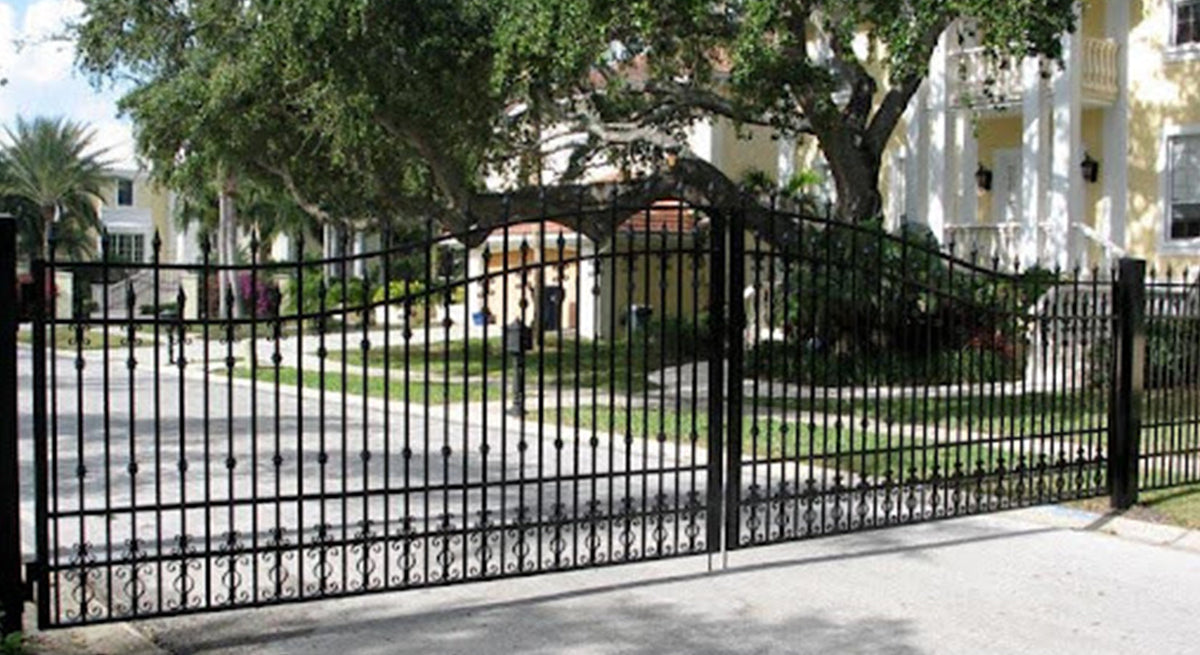
An automatic gate operator opens and closes your gate, but does it actually lock the gate when it reaches the closed position?
Not necessarily.
Depending on the gate operator, gate design, size, location, and application, the operator may hold the gate closed during normal operation without providing the same function as a dedicated locking device.
For some installations, that’s perfectly appropriate.
For others, adding an electric gate lock or outdoor magnetic lock can provide additional holding force, help stabilize the gate in the closed position, or create a dedicated locking point that works together with the automatic gate operator.
So when does an automatic gate actually need a lock?
This guide explains the difference between a gate operator and a gate lock, the main types of electric locks used on automatic gates, and what to consider before adding one to your system.
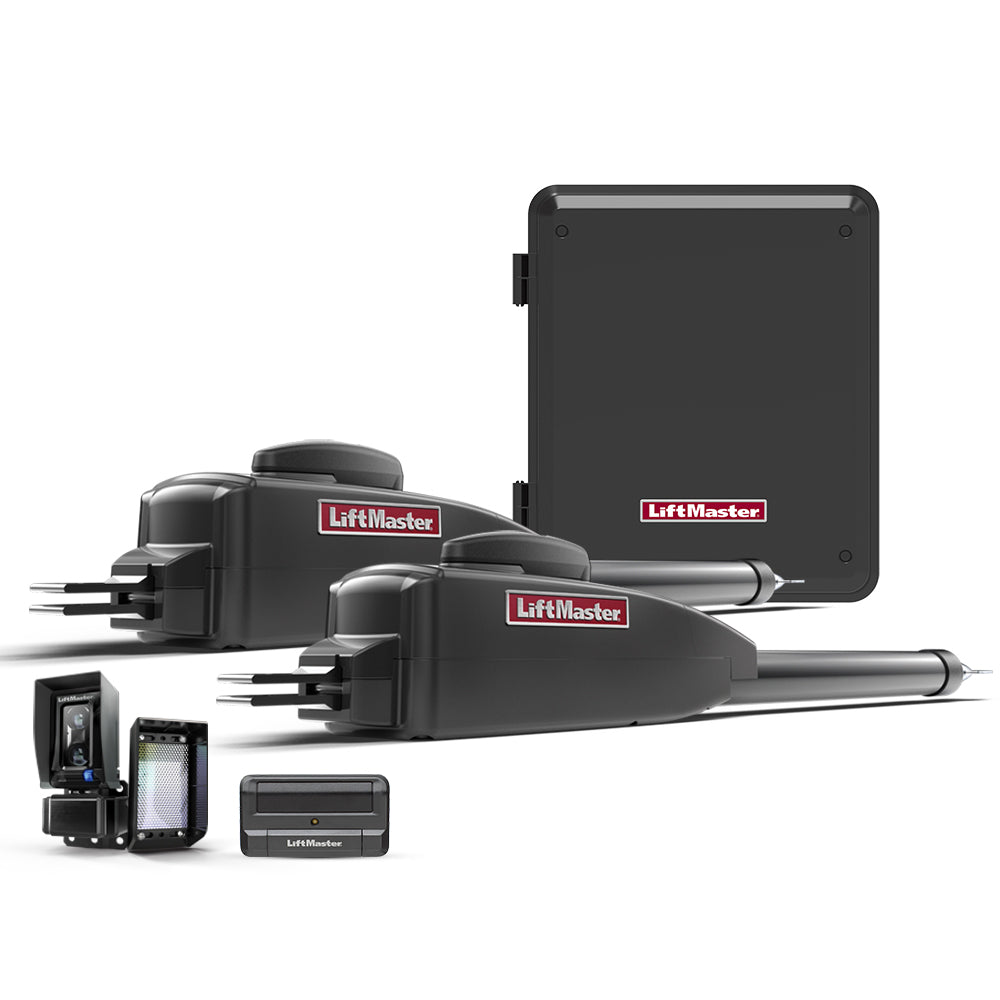
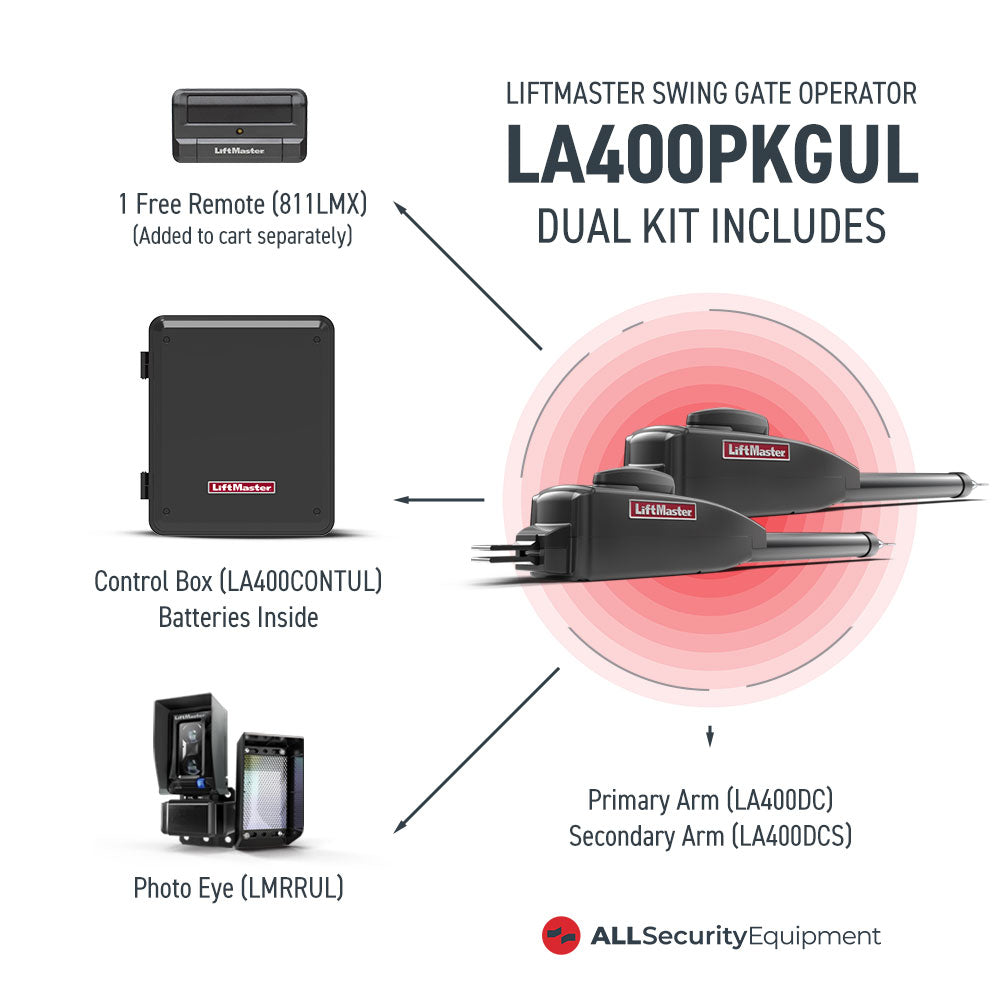
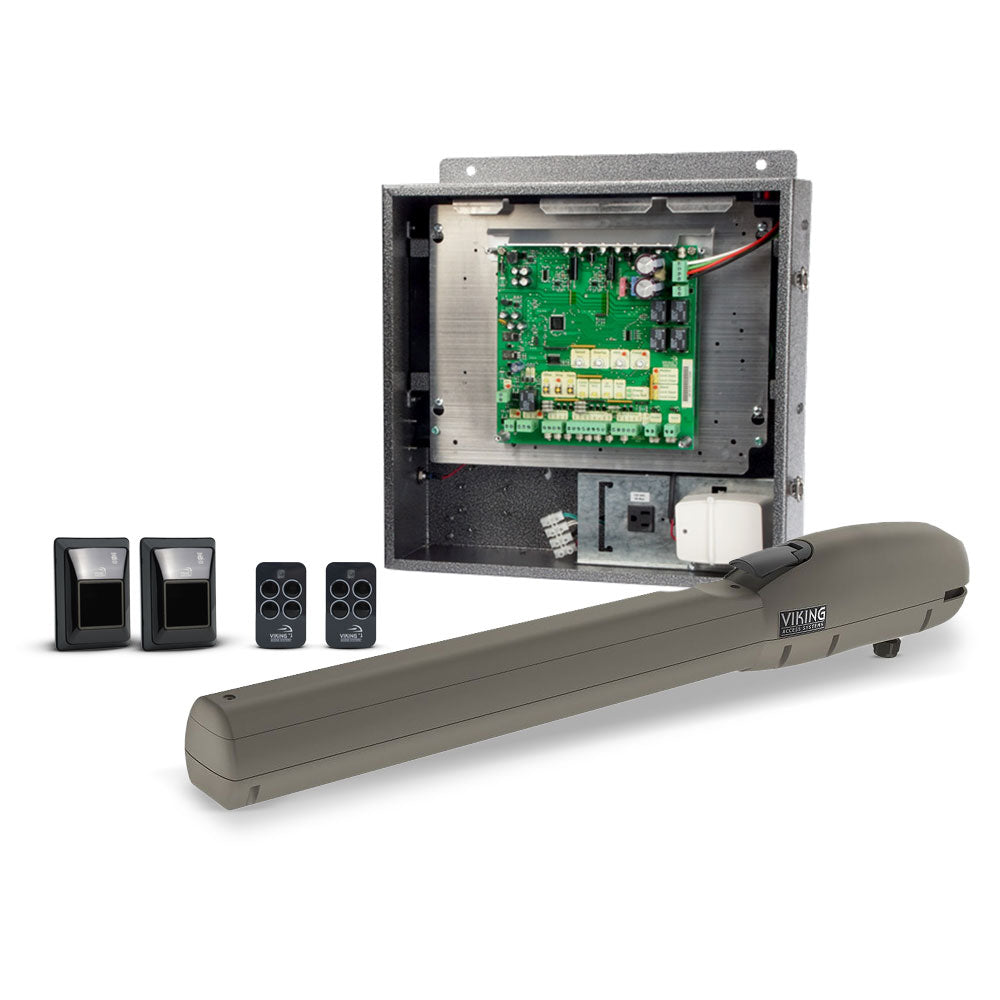
You can also browse gate operator accessories available from All Security Equipment.
Does an Automatic Gate Opener Lock the Gate?
This is one of the first distinctions to understand.
A gate operator is primarily responsible for moving the gate.
Depending on the system, its drive mechanism may also resist movement while the gate is closed. However, that doesn’t automatically mean the gate has a separate physical locking mechanism.
Think of it this way:
Gate Operator → Opens and closes the gate
Gate Lock → Secures or holds the gate at the closed position
Some installations only need the operator.
Others can benefit from both.
The decision depends on the gate and what you need the system to accomplish.
Why Add a Lock to an Automatic Gate?
There are several reasons an installer or property owner might add a dedicated lock.
Additional Holding Force
A gate lock can provide a dedicated point for securing the gate in its closed position.
This can be particularly useful for:
- Large swing gates
- Long gate leaves
- Gates exposed to wind
- Commercial entrances
- Properties where additional gate stabilization is desired
Gate Stabilization
A long gate can experience movement at the free end even when the operator is holding it closed.
Depending on the installation, a lock can help secure that portion of the gate at a designated catch point.
Controlled Locking and Unlocking
An electric lock can work together with the gate operator so the sequence happens automatically:
Access granted → Lock releases → Operator opens gate
Then:
Gate closes → Lock engages
This allows the locking system to become part of the automatic gate cycle rather than requiring someone to manually unlock the gate.
Specific Application Requirements
Certain gates, operators, manufacturers, or site conditions may call for particular locking hardware.
Always review the specifications and installation instructions for the gate operator and locking device being considered.
When Might an Automatic Gate Not Need a Separate Lock?
Not every automatic gate needs one.
A separate lock may be unnecessary when the gate operator and gate configuration already provide the performance required for the installation and the operator manufacturer does not call for additional locking equipment.
Factors include:
- Operator design
- Gate size
- Gate weight
- Gate length
- Wind exposure
- Residential vs. commercial use
- Required holding performance
- Gate construction
The goal isn’t to add as many components as possible.
It’s to build a system appropriate for the gate.
What Types of Locks Can Be Used on Automatic Gates?
Automatic gates can use different locking technologies.
Two important options are:
- Electromechanical/electric gate locks
- Outdoor magnetic locks
They both secure gates, but they operate very differently.
1. Electric Gate Locks
An electric gate lock uses a mechanical locking component that works together with the automatic gate operator.
A good example is the USAutomatic Electric Gate Lock 12 VDC | 070510.
This retracting-pin electric lock is wired into the gate operator control system.
The basic sequence is:
Gate closed → Lock engaged
Open command received → Lock disengages
Gate operator opens gate
Gate closes → Lock engages again
This creates a dedicated mechanical locking point while still allowing fully automatic operation.
Advantages of an Electric Gate Lock
Depending on the product, electric locks can provide:
- Automatic locking and unlocking
- Mechanical gate retention
- Integration with the gate operator
- Dedicated locking at the closed position
- Manual or emergency release provisions
The exact capabilities depend on the lock.
For example, the USAutomatic 070510 uses a spring-loaded self-latching mechanism and provides a removable strike pin for emergency release.
Where Might an Electric Gate Lock Be Used?
Applications can include:
- Residential driveway gates
- Long swing gates
- Commercial gates
- Dual swing gates
- Gates exposed to significant wind
- Installations requiring additional closed-position holding
Always confirm that the lock is suitable for the operator and gate configuration.
2. Automatic Gate Locks for Long or Wind-Exposed Gates
Wind can have a major effect on a swing gate.
A long gate leaf creates leverage, and a solid gate can act like a large sail.
This increases the forces placed on:
- Hinges
- Operator arms
- Mounting brackets
- Gate frame
- Closed-position hardware
For this reason, some electric gate locks are specifically marketed for applications involving long gates or high-wind conditions.
The Linear FM144 Automatic Gate Lock, for example, is designed to work with compatible automated swing gates and is recommended by the manufacturer for gates over 8 feet long and high-wind applications.
When the gate closes, the lock helps stabilize and secure it at the closed position.
Don’t Use the Lock to Fix a Bad Gate
This distinction is important.
If the gate is:
- Sagging
- Binding
- Poorly aligned
- Moving excessively because of weak posts
- Using undersized hinges
- Structurally damaged
adding a lock does not correct the underlying mechanical problem.
The gate should first be structurally sound and move correctly.
A lock should complement a properly functioning gate—not compensate for one that needs repair.
3. Outdoor Magnetic Gate Locks
Another option is an outdoor magnetic lock, commonly called an outdoor maglock.
Unlike a mechanical pin or latch, a maglock uses electromagnetic force to hold the gate closed.
The system generally consists of:
Electromagnet + Armature Plate
When the magnet is powered and properly aligned with the armature plate, magnetic force holds the two surfaces together.
When power to the magnet is released as intended by the access-control system, the gate can be opened.
All Security Equipment offers outdoor magnetic locks designed for exterior applications.
How Does a Magnetic Gate Lock Work With an Automatic Gate?
A simplified automatic-gate sequence can look like:
Gate closed → Maglock energized → Gate held closed
Then:
Authorized open command → Maglock releases → Gate operator opens gate
When the gate returns to its closed position, the system can restore the lock condition according to the system design.
Proper sequencing is important.
The gate operator shouldn’t begin trying to move a gate while the magnetic lock is still holding it closed.
The lock, operator, relays, and access-control system need to be wired and configured appropriately.
600 lb. vs. 1,200 lb. Outdoor Magnetic Locks
Magnetic locks are available with different rated holding forces.
All Security Equipment offers outdoor models including:
ASE Outdoor Magnetic Lock 600 lb. Holding Force | FAS-OUT600
This weatherproof stainless-steel maglock provides up to 600 pounds of rated holding force and operates on 12 or 24 VDC.
ASE Outdoor Magnetic Lock 1,200 lb. Holding Force | FAS-OUT1200
For applications requiring greater rated holding force, the FAS-OUT1200 provides up to 1,200 pounds and is also designed for outdoor use with 12 or 24 VDC operation.
The correct choice shouldn’t be made solely by picking the larger number.
Consider:
- Gate construction
- Application
- Mounting
- Alignment
- Required holding force
- Manufacturer specifications
- Environmental conditions
Proper installation is essential for the lock to achieve its intended performance.
Electric Gate Lock vs. Magnetic Gate Lock
Both can add locking functionality to an automatic gate, but their operating principles are different.
|
Feature |
Electric Mechanical Gate Lock |
Outdoor Magnetic Lock |
|---|---|---|
|
Locking method |
Mechanical pin/latch |
Electromagnetic holding force |
|
Requires power |
Yes |
Yes |
|
Physical locking component |
Yes |
No traditional latch |
|
Automatically releases |
When integrated correctly |
When power/control releases magnet |
|
Outdoor options |
Yes |
Yes |
|
Holding method |
Mechanical engagement |
Magnetic attraction |
|
Operator integration required |
Yes |
Yes |
|
Manual/emergency release |
Product dependent |
System dependent |
Neither one is automatically the right lock for every gate.
The choice depends on the gate and system design.
Which Is Better for a Swing Gate?
Swing gates are one of the most common applications where an additional lock may be considered.
A swing gate has a hinged side and a free end.
On a long gate leaf, that free end can be several feet from the operator mounting point.
A properly positioned lock can create an additional securing point at or near the closed end of the gate.
Potential options include:
- Automatic mechanical gate lock
- Outdoor magnetic lock
- Other compatible locking hardware
The gate’s design, operator, wind exposure, and mounting conditions should determine the approach.
Browse swing gate operators and verify the accessory requirements for the specific operator you’re installing.
What About Dual Swing Gates?
A dual swing gate adds another consideration.
Instead of one gate meeting a fixed post, two moving leaves meet near the center of the driveway.
That makes the closed position especially important.
Depending on the operator system and gate design, the installation may require:
- Proper gate sequencing
- Physical stops
- Locking hardware
- Correct alignment between both leaves
If a lock is used, its operation needs to coordinate with both gate leaves and the operator system.
Don’t add a lock to a dual-gate system without considering the complete opening and closing sequence.
Do Slide Gates Need an Electric Lock?
Slide gates operate differently from swing gates.
Rather than rotating on hinges, they travel horizontally along a track or cantilever system.
Many slide operators use drive systems that resist manual movement when the operator is stopped, but requirements vary significantly by operator and application.
An additional lock may or may not be appropriate.
Before adding one, check:
- Operator manufacturer recommendations
- Gate configuration
- Closed-position design
- Required access behavior
- Lock compatibility
Don’t assume that a lock designed for a swing gate can simply be adapted to a slide gate.
Automatic Gate Lock vs. Gate Latch
A gate latch and an automatic electric gate lock aren’t necessarily the same thing.
A traditional latch may secure a manually operated gate.
An electric lock designed for an automatic gate needs to coordinate its locked and unlocked state with gate operation.
The difference matters because the operator needs to be able to open the gate without fighting against the locking hardware.
If you’re working with pedestrian gates rather than automatic vehicle gates, ASE also carries products such as the D&D Technologies LokkLatch Magnetic Gate Lock, which is designed for driveway and pedestrian access gate applications.
How Does Access Control Work With an Automatic Gate Lock?
The lock doesn’t necessarily determine who is authorized to enter.
That’s the job of the access-control system.
For example:
User enters PIN → Keypad verifies user → Open command sent → Lock releases → Gate operator opens
Or:
Remote pressed → Receiver accepts transmitter → Lock releases → Operator opens
Other credential options can include:
- Keypads
- Remotes
- Card readers
- RFID
- Mobile access
- Intercoms
The gate lock is one component within the larger access system.
Timing Matters
One of the most important aspects of automatic locking is sequence.
The lock needs to release before the gate operator applies opening force against it.
A simplified sequence is:
1. Access authorized
↓
2. Lock releases
↓
3. Gate operator begins opening
Then, after the gate completes its closing cycle:
4. Gate reaches correct closed position
↓
5. Lock engages
This timing needs to be handled correctly by the compatible control equipment.
Improper sequencing can place unnecessary load on the lock, gate, and operator.
Gate Alignment Matters Too
Any lock depends on proper alignment.
For a mechanical gate lock:
Lock + Catch/Strike must align
For a magnetic lock:
Magnet + Armature must align
If the gate sags or stops in a different position every time, the lock may not engage correctly.
Before installing a lock, inspect:
- Gate hinges
- Gate stops
- Gate alignment
- Operator limits
- Mounting brackets
- Gate frame
- Posts
The lock needs a consistent closed position.
Why Gate Stops Matter
A lock shouldn’t necessarily be responsible for stopping all gate movement.
The gate and operator installation should use appropriate physical stops or manufacturer-specified closed-position hardware where required.
This helps ensure the gate repeatedly reaches the same position.
A consistent closed position improves:
- Lock alignment
- Operator operation
- Gate stability
- Reliability
Review the operator manufacturer’s installation instructions for the required gate stops.
Powering an Electric Gate Lock
Automatic gate locks require the correct electrical supply.
For example, the USAutomatic Electric Gate Lock operates at 12 VDC.
ASE outdoor magnetic locks such as the FAS-OUT600 and FAS-OUT1200 support 12 or 24 VDC.
But voltage alone doesn’t determine whether you can power the lock directly from the gate operator.
You also need to consider:
- Current draw
- Available operator accessory power
- Lock activation behavior
- Wiring distance
- Wire gauge
- Battery backup
- Other connected accessories
Always follow the specifications for both the lock and gate operator.
Does a Magnetic Gate Lock Need a Power Supply?
Maglocks require electrical power to create their holding force.
Depending on the installation, the appropriate power source may be a dedicated power supply rather than the gate operator control board.
For a complete outdoor solution, ASE offers the Outdoor Maglock Kit 600 lb. Holding Force | FAS-KITMAGOP600, which includes a 600 lb. outdoor magnetic lock, power supply, and L&Z bracket set.
This can simplify equipment selection when those components are required together.
Think About What Happens During a Power Failure
Power-loss behavior is an important part of selecting an electric lock.
Different lock types can behave differently when power is removed.
For example, a typical electromagnetic lock requires power to maintain its magnetic holding force.
Some mechanical electric gate locks can use a different locking principle and may include a manual release.
The Linear FM144 Automatic Gate Lock, for example, is described as fail-secure and includes a keyed manual override.
The appropriate power-loss behavior depends on the application and applicable requirements.
Make sure the gate can be operated appropriately during:
- Utility failure
- Battery depletion
- Operator failure
- Emergency access
- Lock failure
Don’t Forget Emergency Access
A locked automatic gate still needs to account for emergency conditions.
Depending on the property and jurisdiction, emergency access provisions can involve:
- Manual release
- Fire department access
- Key switches
- Emergency access equipment
- Siren-operated devices
- Other locally required systems
Don’t select an electric lock without considering how the gate will be released if normal automatic operation isn’t available.
Emergency access requirements can vary by jurisdiction, so verify them with the applicable authority.
Outdoor Locks Need to Be Designed for Outdoor Use
A gate is exposed to conditions a typical indoor door lock may never experience.
These can include:
- Rain
- Humidity
- Dust
- Heat
- Cold
- Direct sunlight
Use locking equipment intended for the installation environment.
For example, ASE’s FAS-OUT600 outdoor magnetic lock uses a stainless-steel weatherproof housing and sealed construction designed for outdoor applications.
The FAS-OUT1200 provides a similar weatherproof configuration with greater rated holding force.
Browse all outdoor magnetic locks.
Mounting Brackets Matter
Magnetic locks require the magnet and armature plate to meet correctly when the gate closes.
Gate direction and construction can affect how the hardware needs to be mounted.
For certain configurations, additional brackets may be required.
For example, ASE offers the Waterproof L&Z Bracket Set | FAS-LZ-W1200 for the FAS-OUT1200 outdoor magnetic lock and applicable in-swing mounting configurations.
Before buying the lock, determine:
- Gate swing direction
- Available mounting surfaces
- Gate/post dimensions
- Lock orientation
- Required brackets
Don’t wait until installation day to discover that additional mounting hardware is needed.
Does Every Long Gate Need a Lock?
No.
Gate length is one consideration, but it isn’t the only one.
Think about:
- Operator manufacturer recommendations
- Gate construction
- Gate weight
- Wind load
- Hinge condition
- Gate stops
- Operator type
- Desired additional holding
- Installation environment
Certain manufacturers specifically recommend their locks for longer gates.
For example, the Linear FM144 is recommended for gates over 8 feet and high-wind areas.
For another system, the recommendations may be different.
Always evaluate the exact equipment.
Can an Electric Lock Help in High Winds?
It can help secure and stabilize a compatible gate in its closed position when the lock is designed for that application.
However, a gate lock is not a substitute for proper wind-load design.
A solid gate exposed to strong wind can place substantial forces on:
- Posts
- Hinges
- Gate frame
- Operator
- Brackets
- Lock
The entire gate system needs to be designed for the environmental conditions.
Adding a stronger lock to an inadequately constructed gate does not solve the structural problem.
Common Automatic Gate Lock Installation Mistakes
Choosing a Lock Without Checking Operator Compatibility
Start with the operator model.
Don’t assume any electric gate lock can work with any operator.
Ignoring Gate Alignment
The lock and strike or armature need to meet consistently.
Incorrect Power
Matching voltage isn’t enough. Verify current, controls, wiring, and available power.
Incorrect Unlock Timing
The lock should release as required before the operator tries to move the gate.
Using an Indoor Lock Outdoors
Choose hardware designed for the environmental conditions.
Forgetting Mounting Brackets
Gate direction and geometry can require additional hardware.
Ignoring Power-Failure Behavior
Plan how the gate will be released when normal electrical operation isn’t available.
Using the Lock to Compensate for Mechanical Problems
Fix sagging, binding, structural, or alignment problems first.
Automatic Gate Lock Buying Checklist
Before ordering a lock, collect this information.
Gate
- Swing or slide?
- Single or dual?
- Gate length?
- Approximate weight?
- Open frame or solid?
- Wind exposure?
Gate Operator
- Manufacturer?
- Exact model?
- Available lock control?
- Accessory power?
- Battery backup?
Lock
- Mechanical electric lock or magnetic lock?
- Operating voltage?
- Current requirements?
- Outdoor rated?
- Required holding force?
- Manual release?
- Required brackets?
Installation
- Gate opening direction?
- Mounting surface?
- Consistent closed position?
- Physical stops installed?
- Wiring distance?
- Power source available?
System
- How will the lock release?
- Is access control connected?
- How will it behave during power failure?
- Is emergency access required?
- Does the installation meet local requirements?
Answering these questions before purchasing makes it much easier to select the right locking system.
Frequently Asked Questions
Does an automatic gate need a lock?
Not every automatic gate requires a separate lock. It depends on the gate operator, gate size and construction, application, wind exposure, and desired closed-position holding. Check the operator manufacturer’s recommendations.
Does a gate opener lock the gate?
A gate operator primarily opens and closes the gate. Depending on its design, it may resist movement while closed, but this isn’t necessarily the same as having a dedicated electric locking device.
What is an automatic gate lock?
An automatic gate lock is a locking device that works with the gate operator so that it releases when the gate needs to open and engages again when the gate closes.
Can I put a magnetic lock on an outdoor gate?
Yes, when using a magnetic lock specifically designed for outdoor use and properly integrating it with the gate and control system. All Security Equipment offers weatherproof outdoor magnetic locks for gate applications.
Is a magnetic lock better than an electric gate lock?
Neither is universally better. A magnetic lock uses electromagnetic holding force, while an electromechanical gate lock uses a physical locking mechanism. The appropriate choice depends on the gate, operator, power, mounting, and application.
Can an electric gate lock work automatically with the gate opener?
Yes, compatible locks can be integrated so they release before the operator opens the gate and re-engage once the gate returns to the closed position.
Do I need an electric lock for a long swing gate?
Possibly. Certain lock manufacturers specifically recommend additional locking for long gates or high-wind applications. Check the specifications of the operator, lock, and gate.
What happens to a gate lock when the power goes out?
It depends on the lock design and system. Some magnetic locks release when electrical power is removed, while certain mechanical electric locks can remain secured and provide a manual release. Verify power-loss behavior before choosing the lock.
Does an outdoor magnetic lock need a separate power supply?
It may. Verify the lock’s voltage and current requirements against the available power from the gate operator. Some installations require a dedicated power supply.
Can I use a gate lock to stop a gate from sagging?
No. Gate sag is usually a mechanical or structural problem involving hinges, posts, the gate frame, or related hardware. Correct the mechanical issue first.
Find Automatic Gate Locks at All Security Equipment
An automatic gate lock can be a valuable addition when the installation requires additional closed-position holding, gate stabilization, or a dedicated locking point.
The important thing is choosing the lock based on the complete system:
Gate → Operator → Lock → Power → Controls → Access → Emergency Release
At All Security Equipment, you’ll find automatic gate operators, electromechanical gate locks, outdoor magnetic locks, access-control equipment, power supplies, and mounting accessories for residential and commercial gate systems.
Explore:
USAutomatic Electric Gate Lock 12 VDC | 070510
Linear Automatic Gate Lock | FM144
ASE Outdoor Magnetic Lock 600 lb. | FAS-OUT600
ASE Outdoor Magnetic Lock 1,200 lb. | FAS-OUT1200
Shop Gate Operator Accessories
Does Your Gate Need an Additional Lock?
If you’re not sure which locking solution works with your system, start with the gate and operator.
Contact the All Security Equipment team with your gate operator manufacturer and model, gate type, length, and the type of locking functionality you’re looking for. We can help you identify compatible options for your application.