Skip to content

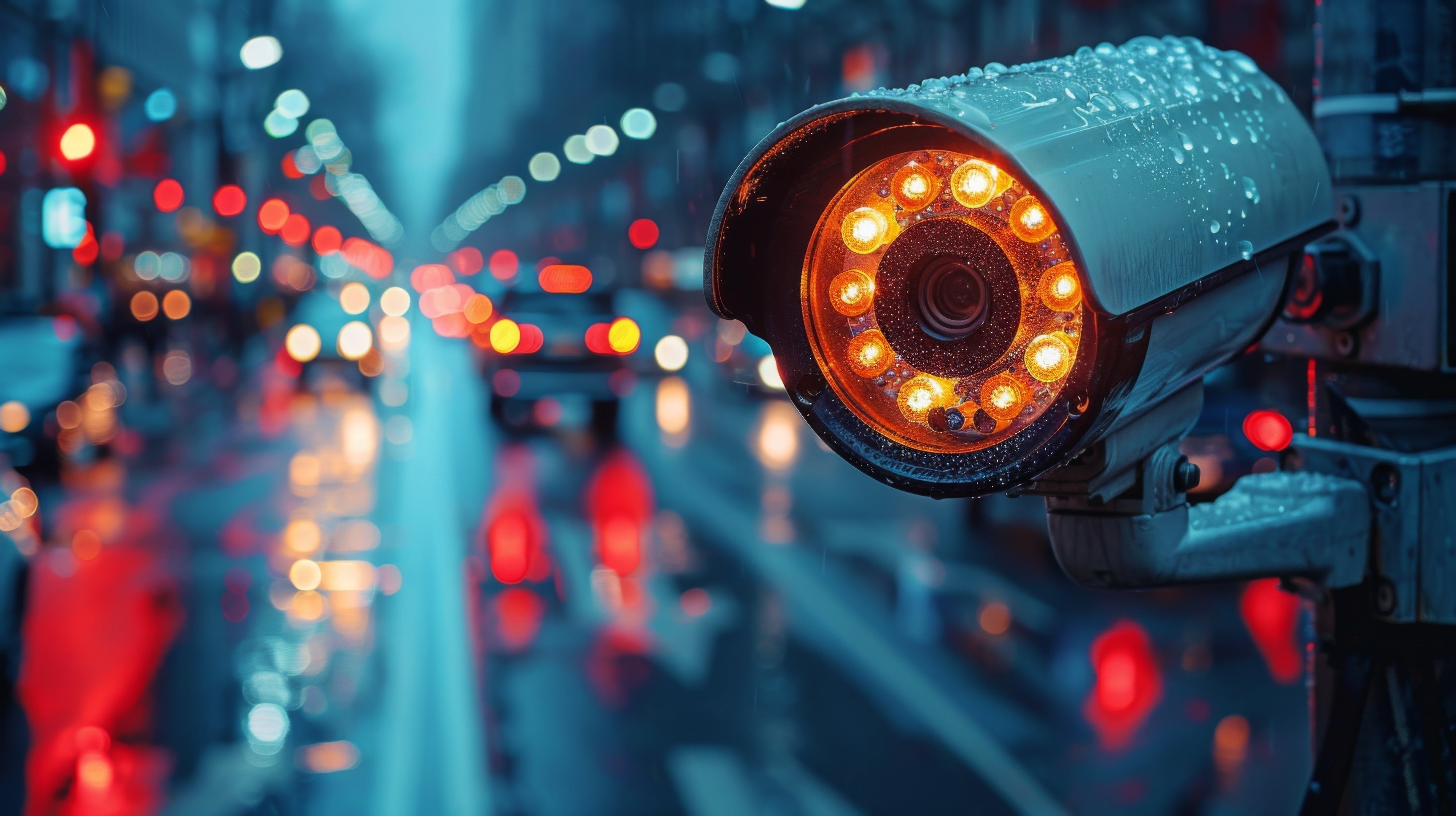
A security camera can work perfectly, record in crisp 4K, and still be illegal to install on a federal project. That’s the part that catches buyers off guard.
The line between a legal camera and a banned one is about who made the parts inside it. NDAA compliance is the rule that draws that line, and for anyone touching government work it’s not optional. This guide explains what NDAA compliance means, the law behind it, who actually has to follow it, which camera brands qualify, and how to confirm a camera is compliant before you buy the wrong one.
What “NDAA-compliant” actually means
An NDAA-compliant security camera contains no parts, chips, or software from the Chinese manufacturers blacklisted under Section 889 of the 2019 National Defense Authorization Act (Public Law 115-232).
That’s the whole definition. It says nothing about resolution, brand prestige, or price — only about the supply chain. A camera is compliant when none of the banned companies’ technology is anywhere inside it, from the image sensor to the firmware.
The companies Section 889 bans
Section 889 names five Chinese companies whose equipment federal agencies can’t buy or use. The ban is written into federal acquisition rules as FAR 52.204-25, and it covers the five companies plus any subsidiary or affiliate:
|
Company |
What it makes |
Section 889 status |
|
Hangzhou Hikvision |
Video surveillance |
Banned (named) |
|
Dahua Technology |
Video surveillance |
Banned (named) |
|
Hytera Communications |
Two-way radio / comms |
Banned (named) |
|
Huawei Technologies |
Telecom / networking |
Banned (named) |
|
ZTE Corporation |
Telecom / networking |
Banned (named) |
Two dates matter. Part A of the ban — agencies can’t use this equipment — took effect August 13, 2019. Part B — agencies can’t contract with any company that uses it — followed on August 13, 2020. The FCC keeps a parallel “Covered List” of gear deemed a national-security risk, and it keeps growing: a December 2025 update added drone makers DJI and Autel Robotics.
The trap is the word “affiliate.” Plenty of cameras sold under names you’ve never associated with China are built on banned hardware underneath.
Why compliance matters, even off a federal contract
For a government buyer the stakes are simple: install banned equipment and you can lose the contract, fail an audit, or be forced to rip it all out and start over. The law leaves no room to argue quality.
For everyone else, the reason is cybersecurity. The ban exists because the U.S. government flagged these devices for national-security and data-privacy risk — concerns about footage being routed or accessed where it shouldn’t be. A private business isn’t breaking any law by using them, but “this camera was banned by the federal government over data security” is a hard thing to explain to your own customers after a breach. A growing number of insurers and enterprise IT policies now require compliant hardware for exactly that reason.
Who actually needs compliant cameras
It splits into two groups:
-
Mandatory. Federal agencies, military installations, federal contractors and subcontractors, and organizations that receive federal grants or funding — including many public schools, universities, and transit systems. If federal dollars touch the project, the cameras have to be compliant.
-
Strongly recommended. Private businesses, healthcare systems, and larger enterprises that handle sensitive data or ever plan to bid on government work. Several states have also passed their own restrictions on Chinese-made surveillance gear, so “we’re not federal” isn’t always the end of the question.
If there’s any chance you’ll chase a government contract later, buying compliant now saves you from replacing an entire camera fleet the day you do.
Which camera brands qualify
Updated: Compliance comes from manufacturers with vetted supply chains. Brands widely recognized as NDAA-compliant include Axis Communications, Hanwha Vision, Bosch, Verkada, Pelco, Avigilon, Digital Watchdog, and Vivotek. At ASE, the compliant lines we stock are Hanwha Vision, Liberty Camera, and UNV (Uniview). Compliance is flagged on each product page, and UNV publishes a model-by-model compliant list, which is exactly the documentation you want to see from any brand.
Then there’s the OEM trap, which is where most compliance mistakes actually happen. A brand can look independent and still be a rebadged banned product underneath. The textbook example: Amcrest cameras are built on Dahua hardware, which makes them non-compliant no matter what the label says. The brand on the box isn’t proof, the supply chain is.
How to verify a camera is really compliant
Don’t take a product-page badge at face value. Confirm it:
-
Ask for a written statement. A compliant manufacturer will provide a Section 889 / NDAA compliance letter on request. If a vendor can’t produce one, treat that as your answer.
-
Check the FCC Covered List. If the brand or its parent is on it, the camera is out.
-
Watch for OEM rebadging. Cheap “off-brand” cameras are the usual culprits — if the price looks too good and the maker is vague, assume banned hardware until proven otherwise.
-
Buy from a supplier that documents it. Sourcing compliant lines from a dealer who can point you to the right brands beats gambling on a marketplace listing.
Get those four habits down and you’ll never be the one explaining to an auditor why the camera at the front door is on a federal blacklist.
Frequently asked questions
What does NDAA-compliant mean for a security camera?
It means the camera contains no components, chips, or software from the companies banned under Section 889 of the 2019 NDAA — Hikvision, Dahua, Hytera, Huawei, and ZTE, or their subsidiaries. Compliance is about the supply chain, not the picture quality.
Are Hikvision and Dahua cameras NDAA-compliant?
No. Both are named directly in Section 889, which makes their cameras non-compliant and barred from federal use and procurement. Equipment built on their OEM hardware is out for the same reason.
Are Amcrest cameras NDAA-compliant?
No. Amcrest cameras are manufactured on Dahua hardware, so they fall under the same ban even though the brand name is different. It’s the most common example of the OEM trap.
Are Axis cameras NDAA-compliant?
Yes. Axis Communications is a Swedish manufacturer whose cameras are recognized as NDAA-compliant, which is why it’s one of the go-to brands for government and federally funded projects.
Is Reolink NDAA-compliant?
Reolink isn’t named on the Section 889 list, but as a China-headquartered brand it generally isn’t treated as compliant for federal or government-funded work. For those projects, stick to brands with a documented compliance statement.
How do I know if a camera is NDAA-compliant?
Ask the manufacturer for a written Section 889 / NDAA compliance statement, check that the brand and its parent aren’t on the FCC Covered List, and be wary of low-cost rebadged cameras that may use banned OEM parts. When in doubt, buy from a supplier that can point you to verified compliant lines.
Compliant by design, not by accident
NDAA compliance isn’t a feature you add on — it’s decided the moment you pick the camera. For federal and federally funded work it’s the difference between a system that passes and one that gets torn out. For everyone else, it’s a straightforward way to keep banned, higher-risk hardware off your network.
The safe path is short: choose from the recognized compliant brands, get the compliance in writing, watch for rebadged OEM gear, and source from someone who documents what they sell. Do that and “is this camera compliant?” stops being a question you have to sweat — because you built the answer in from the start. When you’re ready to spec compliant hardware, ASE’s video surveillance collection is the place to start.