Skip to content

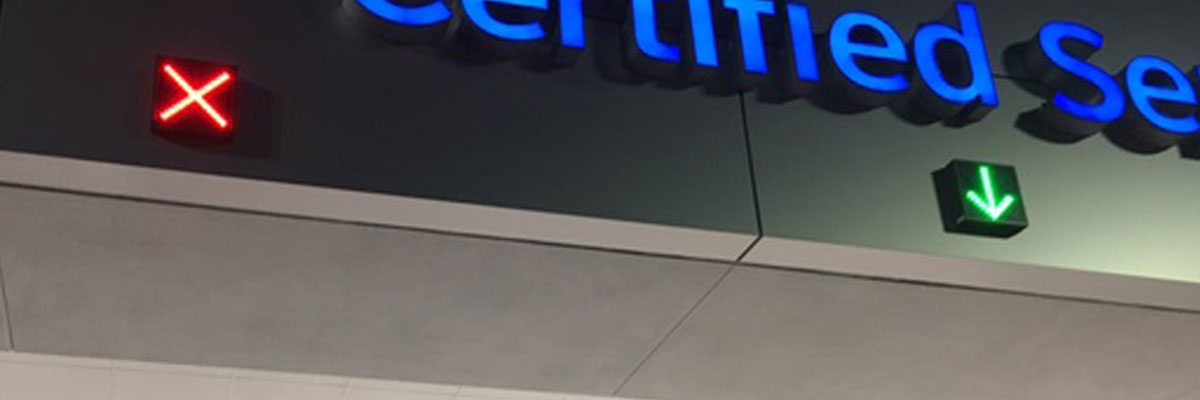
Managing vehicle movement in busy environments is more complex than ever. Parking garages, commercial properties, banks, campuses, and industrial facilities must guide drivers quickly and clearly while keeping traffic flowing safely.
Traditional signage often struggles to keep up with these demands. Static signs cannot adapt to changing conditions, and poor visibility or confusing directions can slow traffic, create bottlenecks, and frustrate drivers.
This is where a smart sign system makes a difference.
Smart sign systems combine digital signage, automated controls, and highly visible LED displays to communicate real-time information. They help drivers make faster decisions, reduce congestion, and improve the overall flow of vehicles in parking areas and traffic lanes.
Facilities that adopt these systems gain not only better organization but also improved safety and operational efficiency.
What Is a Smart Sign System?
A smart sign system is a digital signage solution designed to display dynamic messages and directional guidance for drivers and pedestrians.
Unlike static signs, smart signs can automatically change messages based on conditions, schedules, or operational needs. Many systems include programmable LED displays, centralized controls, and automated triggers that update signage instantly.
These systems are commonly used in:
-
Parking garages and parking lots
-
Bank drive-through lanes
-
Hospital and campus parking areas
-
Industrial loading docks
-
Car wash facilities
-
Traffic guidance zones
-
Pedestrian crossings
Because the signs can be controlled digitally, facility managers can easily update instructions, warnings, or lane availability without physically replacing signage.
Why Traffic Flow Depends on Clear Signage
Drivers rely heavily on visual cues when navigating unfamiliar spaces. When signage is unclear or poorly positioned, vehicles slow down as drivers try to interpret directions.
This hesitation can create congestion, confusion, and even safety risks.
A well-designed sign system improves traffic flow by:
-
Providing clear directional guidance
-
Reducing decision-making time for drivers
-
Preventing unnecessary stops or slowdowns
-
Organizing vehicle movement through structured lanes
-
Communicating availability or restrictions instantly
Smart signage amplifies these benefits by making the information more visible, adaptable, and responsive.
Real-Time Directional Guidance
One of the biggest advantages of smart sign systems is the ability to communicate real-time updates.
For example, parking garages can use digital signage to display:
-
Open or closed parking levels
-
Available spaces
-
Directional arrows toward open parking
-
Temporary closures or maintenance alerts
Instead of drivers searching multiple levels for parking, the signage guides them directly to available spaces.
This reduces circulating traffic and speeds up the parking process.
Similarly, drive-through lanes and car wash facilities can display “OPEN,” “CLOSED,” or directional instructions to keep vehicles moving smoothly.
High Visibility in All Lighting Conditions
Traditional printed signs often become difficult to read in bright sunlight, low-light environments, or nighttime conditions.
Signal-Tech solved one of the industry’s most persistent challenges—sign readability in direct sunlight—by designing high-contrast LED signage specifically engineered for outdoor visibility.
Modern digital signage offers:
-
Bright LED displays
-
High contrast colors
-
Weather-resistant materials
-
Wide viewing angles
-
Reliable performance in sunlight or darkness
This ensures drivers can quickly interpret the message without slowing down to read it.
Clear visibility is one of the most important factors in maintaining smooth traffic flow.
Improved Safety for Drivers and Pedestrians
Smart sign systems do more than direct traffic—they also improve safety.
Facilities that handle large volumes of vehicles must constantly communicate warnings, pedestrian crossings, and operational instructions.
Digital signage can be used to display:
-
Pedestrian crossing alerts
-
Speed warnings
-
Lane restrictions
-
Emergency messages
-
Loading dock instructions
Because these messages are bright and highly visible, drivers are more likely to notice them immediately.
This helps prevent accidents and creates a safer environment for both drivers and pedestrians.
Efficient Lane Management
In facilities with multiple vehicle lanes, such as bank drive-throughs or service centers, lane management is critical.
Signal-Tech originally gained industry recognition for creating the first dual-message drive-through lane controller, allowing banks to easily display “OPEN” or “CLOSED” for each lane.
This simple innovation dramatically improved lane efficiency by allowing drivers to quickly identify available lanes.
Today, smart sign systems expand on this concept by providing:
-
Multi-lane directional guidance
-
Automated lane control
-
Dynamic messaging for operational changes
When drivers immediately know where to go, vehicle queues move faster and congestion decreases.
Easy Installation and Centralized Control
Another advantage of smart sign systems is ease of management.
Many systems are designed with simple installation and centralized control, allowing operators to manage multiple signs from a single interface.
This enables facilities to:
-
Update messages instantly
-
Adjust signage during peak traffic periods
-
Automate daily operational changes
-
Maintain consistent messaging across locations
Instead of manually changing signs or relying on temporary signage, the system handles updates digitally.
This saves time and ensures that instructions remain accurate at all times.
Applications Across Many Industries
Smart signage is used across many industries where traffic organization matters.
Common applications include:
Parking Facilities
Guide drivers to available parking areas and prevent congestion.
Bank Drive-Through Lanes
Display lane availability and improve customer service efficiency.
Hospitals and Medical Centers
Direct vehicles to emergency entrances, parking areas, and drop-off zones.
Industrial Facilities
Control loading dock traffic and communicate safety instructions.
Transportation and Infrastructure
Support highway signage, rail crossings, and pedestrian safety.
Because these environments involve constant movement and changing conditions, adaptable digital signage provides a major operational advantage.

Signal-Tech: A Leader in Smart Sign Innovation
Founded in 1928, Signal-Tech began by producing custom neon displays and large-scale signage.
Over the decades, the company expanded its expertise into traffic guidance and digital sign systems. Its innovations helped transform drive-through lane management and parking direction signage.
Today, Signal-Tech produces advanced digital signage solutions used across multiple industries.
Their product lineup includes:
-
Parking signage
-
Bank drive-through lane signs
-
Highway and directional signage
-
LED pedestrian crossing signals
-
Industrial and workplace safety signs
-
Carwash lane control signs
-
Smart sign systems with automated controls
Signal-Tech products are known for their durability, reliability, and industry-leading warranties.
You can explore available models in the Signal-Tech collection, which features signage solutions designed for parking, traffic flow, and facility management.
Why Smart Sign Systems Are Becoming Essential
As facilities become busier and parking demands grow, managing traffic efficiently becomes more important.
Static signs alone can no longer provide the level of clarity and adaptability required in modern environments.
Smart sign systems solve this challenge by delivering:
-
Clear, dynamic guidance
-
High visibility signage
-
Improved traffic flow
-
Increased safety
-
Easier operational control
By helping drivers move through parking areas and traffic lanes more efficiently, these systems reduce congestion and improve the overall experience for both visitors and facility operators.
For organizations looking to improve parking efficiency, streamline vehicle flow, and enhance safety, smart signage is becoming an essential part of modern infrastructure.