Skip to content

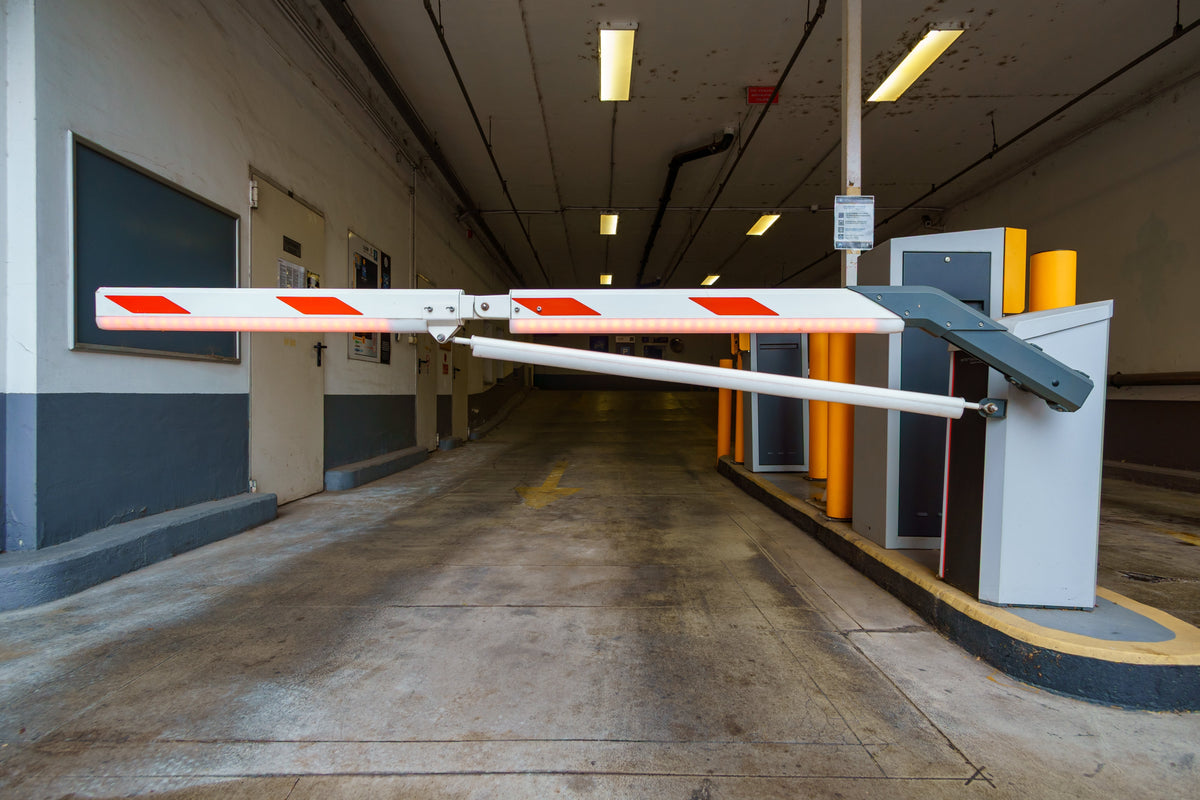
A barrier arm looks like the simplest part of a parking entrance. It is also the part people order twice.
The reason is that an arm is not a standalone product. It is a consumable for a specific operator, and the operator already bolted to the island decides the length, the profile, the mounting and the accessories you did not know were separate. Start there and the choice gets simple.
Start with the operator, not the arm
Before you open a single product page, collect five things. The operator brand and model stamped on the housing. The part number on the arm you are replacing. The mounting hub dimensions, the clear lane width, and the vertical clearance above the operator. With those in hand the choice is quick. Without them it is guesswork. Our barrier gate arm range is organized by operator brand for exactly this reason, and it covers Magnetic Access, HySecurity, DoorKing, LiftMaster, BFT, FAAC, Nice, Mayser, USAutomatic and our own universal arms.
Most arms land between $119 and $980, with accessories from $18.99 and complete industrial barriers well above that. Where an arm falls in that band comes down to five decisions, worked in this order.
-
Approved arm family: what the operator manufacturer lists for your model, which is the gate every other decision passes through.
-
Lane coverage and mounting offset: the clear width the arm has to span plus the offset the operator manual specifies.
-
Clearance and operating envelope: the full arc the arm sweeps through, checked against the deck above and anything beside the island.
-
Profile and visibility cover material, shape and whether the arm is lit, and they move the price more than length does.
-
Work out the required accessories last, and actually check them. Balancing hardware, hubs, collars, safety edges and lighting are frequently separate line items.
How long an arm do you actually need?
Measure the lane, not the lot. Arms in this range are sold from 9 feet to 26 feet, and the number you want is the clear width the arm has to cover plus the mounting offset, which the operator manual specifies.
The reassuring part is that length is cheap. FAAC's arms for the B680H barrier run $892.99 at 20 feet, $904.99 at 23 feet and $980.99 at 26 feet, so six extra feet of coverage costs under $90. Magnetic's VarioBoom arms show the same pattern lower down the range at $164.99 for 10 feet, $193.99 for 12 and $251.99 for 15.
What can get expensive is balance. Longer arms may need a spring adjustment, a counterweight, a balancing kit or model-specific hardware, and those are separate parts. LiftMaster sells a counterweight for its own 15-foot boom at $99.00, which applies to that approved configuration rather than to long arms generally. Check the operator manual for what your intended length requires before you assume the arm is the whole order, because discovering it on installation day means the lane stays open overnight. Our post on barrier arm gate installation cost covers the rest of what lands on that invoice.
Aluminum, wood or plastic: the same operator, three prices
Once the length is settled, the profile is the next decision, and DoorKing's 1601 shows the spread better than any spec sheet. It is one operator with three arm options and $155 between them.
|
The variable |
What the catalog shows |
Price |
|---|---|---|
|
Material, same operator |
DoorKing 1601: 12 ft plastic square arm |
$211.99 |
|
DoorKing 1601: 14 ft round aluminum arm |
$302.99 |
|
|
DoorKing 1601: 14 ft wood rectangular arm |
$366.99 |
|
|
Length, same operator |
FAAC B680H boom kits at 20, 23 and 26 ft |
$892.99 to $980.99 |
|
Parking versus industrial |
LiftMaster TECHNA PBGARM10 at 10 ft, IBGARM18 at 18 ft |
$258.99 and $746.99 |
|
LED versus plain |
LiftMaster PBGARM12 against PBGARM12LED, same arm |
$262.99 and $484.99 |
|
Folding for low clearance |
LiftMaster MA034RDOT 9 ft articulating arm |
$841.99 |
|
Balance at length |
LiftMaster MA117 counterweight for a 15 ft boom |
$99.00 |
|
Required with padded arms |
LiftMaster MA031 adapter collars |
$18.99 |
Material matters, and it is worth being careful about how much it decides on its own. What happens when a vehicle hits an arm depends on the complete assembly. The arm profile, the hub it mounts to, whether the system includes an engineered breakaway or swing-away mechanism, the operator and its limit settings, and the accessories the manufacturer approves. A padded or plastic arm is not the same thing as a breakaway system, and foam is not a substitute for one. If collision behavior is a priority on your lane, specify it as a system with the manufacturer rather than choosing it by material.
Within that, aluminum holds its shape and suits a corporate entrance, plastic and padded profiles are common where contact is expected, and wood reads well on residential and resort properties. Whichever you pick, price the replacement at the same time, because the arm is the part of a barrier that gets consumed.
Two-piece and three-piece arms are worth a look on longer spans. Our 17-foot universal LED arm ships in three sections at $359.00, which matters for a reason no spec sheet mentions: a single 17-foot extrusion is awkward to ship and easy to bend in transit. Sectional arms arrive in a shorter box and let you replace one damaged section instead of the whole span.
When LED arms are worth double
On the pairs we stock, lighting is the biggest single jump in the price of an arm. LiftMaster's TECHNA parking arm is $262.99 at 12 feet and $484.99 for the lit version of the identical arm, and Magnetic's LED VarioBoom runs $579.99 at 10 feet against $164.99 for the unlit boom at the same length. Those are two examples rather than a rule for the category, so compare the specific pair you are choosing between.
That is real money, so it deserves an honest answer. Lit arms earn it on lanes that run after dark, on exits where headlights hit the arm end-on and wash it out, and on any site with a history of drivers hitting the arm. On a daytime office lane with good lighting, the money is better spent on a spare arm and a set of collars.
There is a middle option worth knowing about. Our own universal LED arms cover 12 feet in two pieces at $199.00 and 17 feet in three pieces at $359.00, with a counterweighted 17-foot version at $579.00. That can put a lit arm on a lane for less than a branded unlit one in some cases.
Low clearance, and the arms that fold
A straight arm needs clear height above the operator to stand up, and parking decks frequently do not have it. If the arm cannot reach vertical without hitting the deck above, you need one that folds.
Articulating arms solve it by hinging partway along their length so the tip stays low through the travel. Expect to pay for the mechanism: LiftMaster's 9-foot articulating Mega Arm is $841.99 against $258.99 for a straight 10-foot parking arm, and Magnetic's articulated MicroBoom is $644.99.
Before you order one, get the dimensional drawing for that specific model and check its full operating envelope against the site. Designs differ in how they fold and how much room they need where, so the drawing is the only reliable way to confirm the arm clears the deck above, any columns, ticket pedestals, signage and lighting near the island. Photograph the island from two angles while you are there. That is a lot cheaper than returning an $841.99 part.
Swing-away and breakaway profiles handle a different problem. They let the arm release rather than bend when something drives through it, which protects the gearbox at the cost of the arm. Magnetic's swing-away MicroBoom at 12 feet is $252.99. If your site has a tailgating problem, that price is a bargain against a replacement drive.
The $18.99 part that holds up the whole order
The cheapest item in the category is the one most likely to stop an installation. LiftMaster lists its MA031 adapter collars as required for its padded arms, and they are sold separately at $18.99. A padded 12 foot arm such as the MA025 at $212.99 arrives without them.
Two more small parts belong in the same conversation, and neither one shows up in a search for a barrier arm.
-
A safety edge: the Mayser SP37-2 assembly kit is $204.99 and adds a contact strip along the arm so it reacts to touching something instead of relying on the operator clutch.
-
Add the counterweight if your length calls for one. LiftMaster prices the one for its 15-foot boom at $99.00 and ships it separately.
All three of these can hold a lane closed for a day, and together they come to less than the labor of a second visit. Add them at the same time as the arm.
One caution on fitment. Do not assume an arm crosses brands because the diameter looks close. Where a manufacturer states compatibility, trust that, and where it does not, check the operator manual before ordering. An arm is a poor thing to guess on, because it mounts to a casting that was designed around one part number.
If the operator itself is reaching the end of its life, replacing both together is worth pricing. A new arm on a worn gearbox tends to be the first of two visits, and the full parking systems range covers operators, arms and the detection that goes with them.
Frequently asked questions
Are barrier gate arms interchangeable between brands?
Generally no. Barrier arms are model-specific unless the manufacturer identifies cross-compatibility, or the arm is sold as a universal arm with an approved adapter system, which does exist and is worth checking for. Start from the brand and model on the operator housing and confirm fitment against the operator manual or the arm's listed compatibility rather than by matching diameters.
How much does a barrier gate arm cost?
Most arms land between $119 and $980. Length is the cheap variable: FAAC's B680H boom kits are $892.99 at 20 feet and $980.99 at 26. Lighting costs more than length, with the same LiftMaster parking arm at $262.99 plain and $484.99 with LEDs. Accessories run from $18.99 for adapter collars to $204.99 for a safety edge kit.
What length barrier arm do I need?
Match it to the clear lane width plus the mounting offset given in the operator manual, rather than to the size of the lot. Arms are sold from 9 to 26 feet. Longer arms may need a spring adjustment, counterweight or balancing kit, and those are separate parts: LiftMaster's counterweight for its 15-foot boom is $99.00. Confirm what your length and operator require before ordering.
Why would I choose an articulating arm?
Because a straight arm needs clear height above the operator to stand vertical, and parking decks often lack it. An articulating arm hinges partway along its length so the tip stays low. It costs more: LiftMaster's 9-foot articulating arm is $841.99 against $258.99 for a straight 10-foot parking arm.
Do padded barrier arms need extra parts?
Yes. LiftMaster lists adapter collars as required for its padded arms, sold separately at $18.99. It is the cheapest item in the category and the one most likely to hold up an installation, so add it to the order rather than finding out on site. A padded 12 foot LiftMaster arm is $212.99 and does not include them.
What is the difference between a parking arm and an industrial arm?
Mainly length and the application the manufacturer approves them for. LiftMaster's TECHNA range splits into parking arms such as the 10-foot PBGARM10 at $258.99 and industrial arms like the 18-foot IBGARM18 at $746.99 and the 24-foot IBGARM24 at $910.99. Cycle rating is a specification of the operator and the system rather than of the arm, so check the operator's rating for your traffic volume.
Write down the model, then work through four decisions
The order goes: operator model, lane width, profile, then accessories. Get the model number first and the rest of the choices narrow themselves, because the manual tells you the mounting offset and whether your length needs balancing. Then pick the profile on how you want the arm to behave when a car finds it, and price the replacement while you are there.
Leave the collars, the counterweight and the safety edge to last, and actually check them rather than assuming they came in the box. You can compare all 168 arms in the barrier gate arms collection, see the deepest range in the Magnetic AutoControl catalog, and if you are replacing like for like, our guide to replacement barrier gate arms is the faster route.