Skip to content

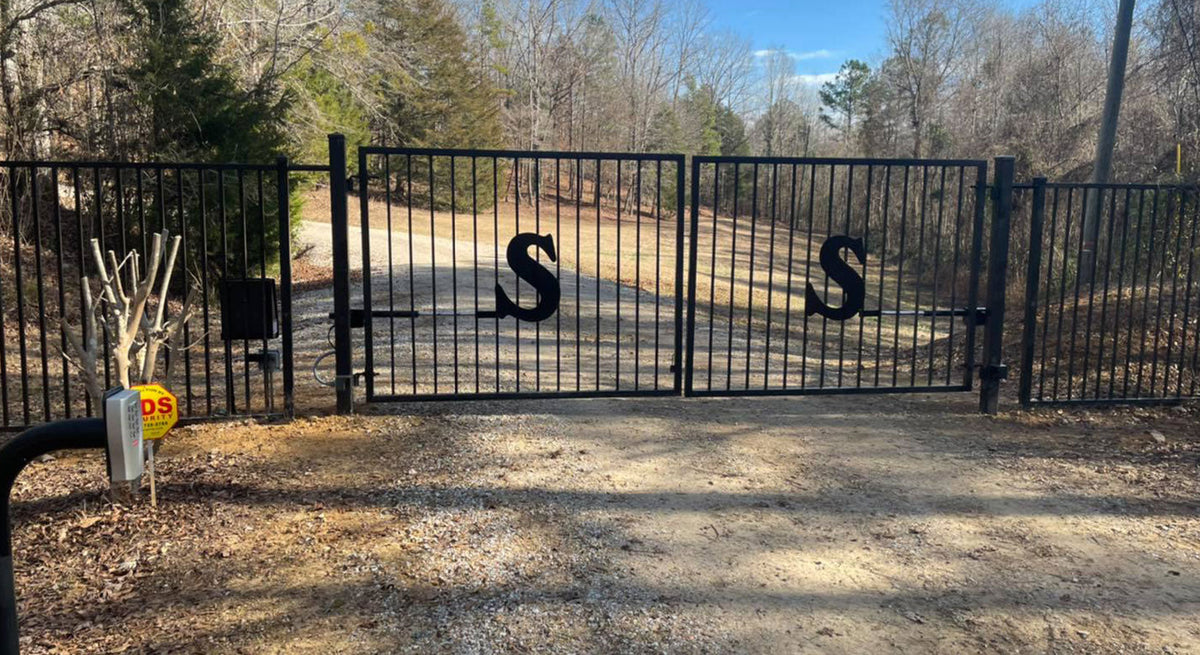
A gate can have a strong frame, reliable latch, and quality operator—but if the hinges aren’t right for the application, the gate may never move the way it should.
Gate hinges support the gate’s weight while allowing it to swing. Depending on the application, they may also provide adjustability, self-closing action, alignment correction, or heavy-duty support.
Choosing the right hinge isn’t simply about finding one that fits.
You need to consider:
- Gate weight
- Gate width
- Gate material
- Post material
- Mounting method
- Opening direction
- Usage
- Required adjustability
- Whether the gate needs to self-close
- Whether the gate will be automated
This guide explains the main types of gate hinges and how to choose the right option for residential, commercial, pedestrian, and automatic gates.
Explore gate hinges and gate hardware available from All Security Equipment.
Why Are Gate Hinges So Important?
A hinge has two basic jobs:
Support the gate + Allow the gate to move
But those jobs become more demanding as the gate gets:
- Heavier
- Wider
- Taller
- More frequently used
- Exposed to wind
- Automated
A lightweight pedestrian gate and a large steel driveway gate shouldn’t use the same type of hinge simply because both gates swing.
The hinge needs to match the load and application.
What Happens When You Use the Wrong Gate Hinges?
An incorrectly selected or installed hinge can contribute to problems such as:
- Gate sag
- Difficult movement
- Poor latch alignment
- Excessive friction
- Uneven gaps
- Binding
- Premature hardware wear
- Gate dragging
- Difficulty closing
- Increased load on an automatic gate operator
If an automated swing gate becomes difficult to move manually, the operator has to work against that resistance every time it opens or closes.
That’s why gate hardware should be evaluated before assuming an automatic gate operator is responsible for poor gate movement.
What Types of Gate Hinges Are Available?
Gate hinges come in many designs, but they can generally be grouped according to their function and mounting method.
Common options include:
- Standard gate hinges
- Adjustable hinges
- Self-closing hinges
- Heavy-duty hinges
- Bolt-on hinges
- Weld-on hinges
- Bearing hinges
- Hinges designed for specific fence and gate materials
The right type depends on the gate.
1. Standard Gate Hinges
Standard hinges provide the basic pivot point that allows a gate to swing.
They’re commonly used where the gate doesn’t require:
- Automatic closing
- Special adjustment
- Extremely high load capacity
The exact hinge design can vary significantly depending on whether the gate is made from:
- Wood
- Steel
- Aluminum
- Vinyl
- Ornamental fencing
Always verify that the hinge is intended for the gate and post material you’re using.
2. Adjustable Gate Hinges
Gate alignment doesn’t always remain exactly the same over time.
Posts can shift.
Hardware can settle.
Gates can sag.
That’s where an adjustable hinge can become valuable.
Instead of requiring the hinge to be completely repositioned, certain adjustable designs allow the installer to make corrections to the gate position.
Depending on the hinge, adjustment may help correct:
- Gate alignment
- Latch positioning
- Gap between gate and post
- Vertical position
Why Is Adjustability Useful?
Imagine that a gate initially lines up perfectly with its latch.
Later, the gate begins to sit slightly lower.
With non-adjustable hardware, correcting the problem may require more extensive work.
An adjustable hinge can provide another way to fine-tune the gate’s position, depending on the design.
This can be especially useful on frequently used gates.
3. Self-Closing Gate Hinges
Some gates need to return to the closed position automatically after someone passes through.
For these applications, a self-closing gate hinge can provide both the pivot point and closing force.
Self-closing hinges are commonly used for:
- Pedestrian gates
- Pool gates
- Residential gates
- Commercial pedestrian entrances
- Child-safety applications
- Controlled-access gates
One of the best-known manufacturers in this category is D&D Technologies, which produces gate hardware including the TruClose line of self-closing hinges.
How Does a Self-Closing Gate Hinge Work?
A self-closing hinge uses an internal mechanism to help return the gate toward the closed position.
Depending on the model, the hinge may provide adjustments for characteristics such as:
- Closing tension
- Gate alignment
- Closing behavior
Exact capabilities vary by product.
The result is a gate that doesn’t depend entirely on the user remembering to close it.
4. Heavy-Duty Gate Hinges
Large driveway and commercial gates place much greater loads on their hinges.
These applications may require heavy-duty hardware specifically designed for substantial gate loads.
Heavy-duty hinges can be used for:
- Driveway gates
- Steel gates
- Large swing gates
- Commercial entrances
- Industrial gates
- Automated gates
- High-cycle applications
For heavy gates, hinge selection becomes especially important because the hardware has to support the gate while allowing it to move with as little unnecessary resistance as possible.
D&D Technologies’ SHUT IT gate hardware includes heavy-duty hinge solutions designed for demanding gate applications.
5. Bolt-On Gate Hinges
Bolt-on hinges attach mechanically using bolts or other compatible fasteners rather than being permanently welded to the gate.
They can be useful where:
- Welding isn’t available
- The gate material isn’t intended for welding
- Easier hardware replacement is desired
- The installation calls for mechanical mounting
The correct fasteners and mounting surfaces are critical.
A heavy-duty hinge isn’t truly heavy-duty if it’s attached to a structure that can’t support the load.
6. Weld-On Gate Hinges
Weld-on hinges are commonly used on steel gates and other metal gate structures.
Instead of bolting the hinge into position, components are welded to the gate and supporting structure.
This can create a strong permanent mounting arrangement when properly selected and installed.
Weld-on hinges are frequently found on:
- Steel driveway gates
- Commercial gates
- Industrial gates
- Heavy swing gates
Welding should be performed by someone qualified for the gate material and application.
Bearing Gate Hinges
Heavy gates need to move smoothly despite carrying substantial weight.
Some heavy-duty hinges use bearings to reduce friction around the pivot point.
This can be especially valuable for large gates that open and close frequently.
The basic idea is:
Gate Weight + Low-Friction Pivot = Smoother Gate Movement
Bearing-based designs can help provide smooth movement while supporting demanding gate loads.
One example is the SHUT IT line from D&D Technologies, which includes bearing-based heavy-duty gate hinge designs.
Self-Closing vs. Standard Gate Hinges
One of the first decisions is whether the gate needs to close itself.
|
Feature |
Standard Hinge |
Self-Closing Hinge |
|---|---|---|
|
Supports gate |
Yes |
Yes |
|
Allows gate to swing |
Yes |
Yes |
|
Provides closing force |
No |
Yes |
|
Good for pedestrian gates |
Yes |
Yes |
|
Useful where automatic closing is needed |
No |
Yes |
|
Adjustment options |
Depends on model |
Depends on model |
A self-closing hinge isn’t automatically necessary for every gate.
The application determines whether automatic closing is beneficial or required.
Self-Closing Hinge vs. Automatic Gate Operator
These shouldn’t be confused.
A self-closing hinge provides mechanical closing action for a gate, typically a pedestrian gate.
An automatic gate operator uses a powered system to open and close a gate.
For example:
Pedestrian Gate → Self-Closing Hinges
Vehicle Driveway Gate → Automatic Gate Operator
Applications vary, but these products perform fundamentally different functions.
If you’re automating a vehicle entrance, browse automatic gate operators.
How Much Weight Can a Gate Hinge Hold?
This is one of the most important specifications to check.
Hinges have load limitations based on their design and intended application.
However, don’t select a hinge based on gate weight alone.
You should also consider:
- Gate width
- Number of hinges
- Hinge spacing
- Gate construction
- Mounting structure
- Frequency of use
- Wind exposure
- Manufacturer installation requirements
A 300-pound compact gate and a 300-pound extremely wide gate don’t necessarily create the same demands on their hinges.
Gate Weight vs. Gate Width
Why does width matter?
Because the gate acts like a lever.
As the distance from the hinge increases, the hinge and post must support the load farther from the pivot point.
That’s why a wide gate can place significant stress on its hardware even if its total weight doesn’t seem extraordinary.
When reviewing hinge specifications, look for the manufacturer’s complete gate-size requirements rather than only the maximum weight.
How Many Hinges Does a Gate Need?
There isn’t one answer for every gate.
The number of hinges depends on factors such as:
- Gate height
- Gate width
- Gate weight
- Hinge model
- Gate construction
- Application
- Manufacturer requirements
Many gates use two hinges, while taller or heavier gates may require additional support.
Follow the hinge manufacturer’s recommendations rather than assuming that adding more hinges automatically increases the gate’s capacity.
Gate Material Matters
The gate material can affect both the hinge and installation method.
Steel Gates
Steel gates often use:
- Weld-on hinges
- Heavy-duty bearing hinges
- Bolt-on industrial hinges
The gate frame and post need to support the selected hardware.
Aluminum Gates
Aluminum gates can be lighter than comparable steel gates, but the hinge still needs to be compatible with the gate construction and mounting method.
Wood Gates
Wood gates can use hardware designed for wood construction, including strap-style and adjustable hinges.
Because wood can move or change with environmental conditions, adjustability can be particularly useful in some applications.
Vinyl Gates
Vinyl fence gates generally require hardware specifically designed for the gate system and its internal support structure.
Don’t mount heavy hardware to unsupported vinyl and expect the surface alone to carry the load.
The Gate Post Is Just as Important as the Hinge
A hinge transfers the gate’s load into the supporting post or structure.
That means the hinge can only perform properly if the structure supporting it is adequate.
Consider:
- Post material
- Post dimensions
- Foundation
- Fasteners
- Welding surface
- Gate weight
- Gate width
If the post moves every time the gate opens, installing a stronger hinge doesn’t solve the underlying problem.
Think of the system as:
Gate → Hinge → Post → Foundation
Every part needs to support the load.
How to Choose Hinges for a Pedestrian Gate
For a typical pedestrian gate, consider:
Gate Material
Wood, metal, vinyl, or another material?
Gate Weight
Can the hinge support the gate?
Gate Width
Does the hinge manufacturer specify a maximum width?
Self-Closing Requirement
Should the gate automatically return to the closed position?
Adjustment
Will you need to adjust gate alignment or closing tension?
Latch
Does the hinge allow the gate to align consistently with the latch?
For many pedestrian applications, combining quality self-closing hinges with an appropriate gate latch can create a reliable gate system.
Explore D&D Technologies gate hardware for hinge and latch solutions.
Choosing Hinges for a Pool Gate
Pool gates require particular attention to gate hardware and applicable local requirements.
Depending on the location, codes may address factors such as:
- Self-closing operation
- Self-latching operation
- Gate opening direction
- Latch placement
- Gate height
- Hardware positioning
D&D Technologies produces gate hardware widely used in pool and pedestrian gate applications, including TruClose hinges and MagnaLatch gate latches.
Browse D&D Technologies products available from All Security Equipment.
Always verify the current code requirements that apply to the specific property and jurisdiction.
Choosing Hinges for a Driveway Gate
Driveway gates introduce different requirements.
These gates can be:
- Longer
- Heavier
- Automated
- Exposed to wind
- Used frequently
For a swing driveway gate, the hinges need to allow the gate to move freely before an operator is installed.
A properly sized swing gate operator shouldn’t be expected to compensate for a gate that binds, drags, or has failing hinges.
Before automating a swing gate, move the gate manually and evaluate its mechanical condition.
Gate Hinges and Automatic Gate Operators
Hinges can have a direct effect on automatic gate performance.
Consider this:
Gate moves freely → Operator moves a properly functioning gate
versus:
Gate binds at hinges → Operator has to overcome additional resistance
That additional resistance can contribute to poor operation and unnecessary strain on the system.
If an automatic swing gate begins moving slowly or inconsistently, don’t immediately assume the operator is failing.
Inspect the mechanical gate as well.
Potential issues include:
- Worn hinges
- Damaged bearings
- Gate sag
- Post movement
- Poor alignment
- Physical obstruction
- Binding
If the gate doesn’t move correctly manually, address the mechanical issue before blaming the operator.
Gate Hinge vs. Gate Pivot
Depending on the gate design, you may encounter different terms for the hardware creating the gate’s pivot point.
Traditional pedestrian gates often use recognizable hinge assemblies.
Large swing gates may use heavier pivot-style hardware designed for substantial loads.
Regardless of terminology, the purpose is similar:
Support the gate while allowing controlled rotational movement.
The correct hardware depends on the gate design.
Should Gate Hinges Be Adjustable?
Adjustable hinges can be especially useful where future alignment changes are likely.
They may allow correction after:
- Installation
- Gate settling
- Minor post movement
- Latch changes
However, adjustment shouldn’t be used to compensate indefinitely for a failing post, damaged gate frame, or inadequate foundation.
If the structure itself is moving significantly, determine why.
How to Tell if Gate Hinges Need to Be Replaced
Gate hinges don’t necessarily need replacement simply because they’re old.
Instead, look at how they’re performing.
Possible signs of a hinge or related mechanical problem include:
- Gate sagging
- Gate dragging
- Excessive movement at the hinge
- Visible damage
- Significant corrosion
- Difficult gate movement
- Gate no longer aligning with latch
- Unusual movement around pivot
- Gate requiring excessive force to move
Inspect the complete gate before deciding that the hinge alone is responsible.
Why Is My Gate Sagging?
A sagging gate can have several possible causes.
These include:
- Worn hinges
- Loose hardware
- Incorrect hinge adjustment
- Inadequate hinge capacity
- Gate frame problems
- Post movement
- Foundation problems
Replacing the hinges won’t correct a post that’s leaning or a gate frame that’s structurally damaged.
Find the source of the movement first.
Gate Hinge Maintenance
Maintenance requirements depend on the hinge design.
Some hinges may require lubrication, while other designs may use sealed bearings, polymer components, or maintenance approaches specified by the manufacturer.
Check for:
- Loose fasteners
- Physical damage
- Corrosion
- Gate alignment
- Smooth movement
- Changes in closing behavior
Always follow the manufacturer’s maintenance instructions.
Gate Hinges and Gate Latches Should Work Together
A gate hinge controls how the gate moves.
A latch controls how it remains secured in the closed position.
Poor hinge alignment can create latch problems.
For example:
Gate sags → Latch no longer aligns → Gate doesn’t latch correctly
This is why replacing a latch may not solve the problem if the gate itself is out of alignment.
D&D Technologies offers both hinge and latch solutions designed for pedestrian gate applications.
Explore D&D Technologies gate hardware for compatible options.
Choosing Gate Hinges: Quick Comparison
|
Application |
Hinge Features to Consider |
|---|---|
|
Residential pedestrian gate |
Adjustable, corrosion-resistant |
|
Pool gate |
Self-closing, adjustable, application-appropriate |
|
Commercial pedestrian gate |
Durable, adjustable, self-closing where needed |
|
Wood gate |
Compatible mounting, adjustability |
|
Metal gate |
Bolt-on or weld-on options |
|
Heavy driveway gate |
Heavy-duty load capacity, smooth pivot |
|
Automatic swing gate |
Heavy-duty, low resistance, appropriate capacity |
|
High-cycle gate |
Durable hardware designed for frequent movement |
Always verify the manufacturer’s specifications for the individual hinge.
Gate Hinge Buying Checklist
Before ordering hinges, collect the following information.
Gate
- Width
- Height
- Approximate weight
- Material
- Frame construction
Post
- Material
- Size
- Mounting surface
- Structural condition
Application
- Pedestrian or vehicle gate?
- Residential or commercial?
- Automated or manual?
- Frequency of use?
- Pool gate?
Hinge
- Maximum gate weight
- Maximum gate width
- Bolt-on or weld-on?
- Adjustable?
- Self-closing?
- Intended gate material?
- Indoor/outdoor suitability?
Installation
- Number of hinges required
- Hinge spacing
- Opening direction
- Required gate clearance
- Latch alignment
Matching these factors is more reliable than selecting a hinge based only on appearance.
Frequently Asked Questions
What type of hinge should I use for a heavy gate?
Use a hinge specifically rated for the gate’s weight, width, construction, and application. Heavy steel driveway gates may require heavy-duty bearing or pivot-style hinges rather than standard pedestrian gate hardware.
What are self-closing gate hinges?
Self-closing hinges contain a mechanism that helps return a gate to the closed position after it is opened. They’re commonly used on pedestrian and pool gates.
Are self-closing hinges the same as a gate opener?
No. Self-closing hinges provide mechanical closing action, while an automatic gate operator is a powered system that opens and closes a gate.
Can gate hinges be adjusted?
Some can. Adjustable hinges allow certain changes to gate alignment or positioning. The available adjustments depend on the specific model.
Should I use weld-on or bolt-on gate hinges?
It depends on the gate material, supporting structure, installation requirements, and hinge design. Weld-on hinges are common on steel gates, while bolt-on hardware can be useful where mechanical attachment is preferred.
How do I know how much my gate weighs?
Manufacturer specifications can help with manufactured gates. For custom gates, weight may need to be calculated from the frame, infill, dimensions, and materials. Don’t guess when selecting load-bearing hardware.
Can bad hinges affect an automatic gate opener?
Yes. Binding, damaged, or poorly aligned hinges can increase the resistance the operator must overcome. The gate should be mechanically sound and move properly before automation.
Why doesn’t my gate latch anymore?
Gate sag, hinge movement, post movement, or latch adjustment can all affect alignment. Inspect the complete gate rather than assuming the latch itself has failed.
How many hinges should a gate have?
It depends on the hinge model, gate dimensions, gate weight, and manufacturer requirements. Follow the hardware manufacturer’s installation specifications.
Find Gate Hinges at All Security Equipment
The best gate hinge isn’t necessarily the biggest or heaviest option.
It’s the hinge designed for your gate weight, width, material, mounting method, and application.
Start with:
Gate Size → Gate Weight → Material → Mounting → Required Function → Hinge
For a pedestrian gate, that may mean an adjustable self-closing hinge.
For a large driveway gate, it may mean a heavy-duty bearing hinge capable of supporting a much greater load.
At All Security Equipment, you’ll find gate hinges, latches, and other hardware for residential, commercial, pedestrian, and automatic gate applications.
Explore:
Shop D&D Technologies Gate Hardware
Need Help Choosing Gate Hardware?
Start with the gate’s dimensions, approximate weight, material, and application.
Contact the All Security Equipment team with information about your gate and how it will be used. We can help you narrow down the hardware options for your application.