Skip to content

Commercial door operators are important for daily business operations. They help open and close large doors safely and quickly.
Many buildings still use older systems. These traditional commercial door operators are strong and reliable. But newer systems now offer more features and better control.
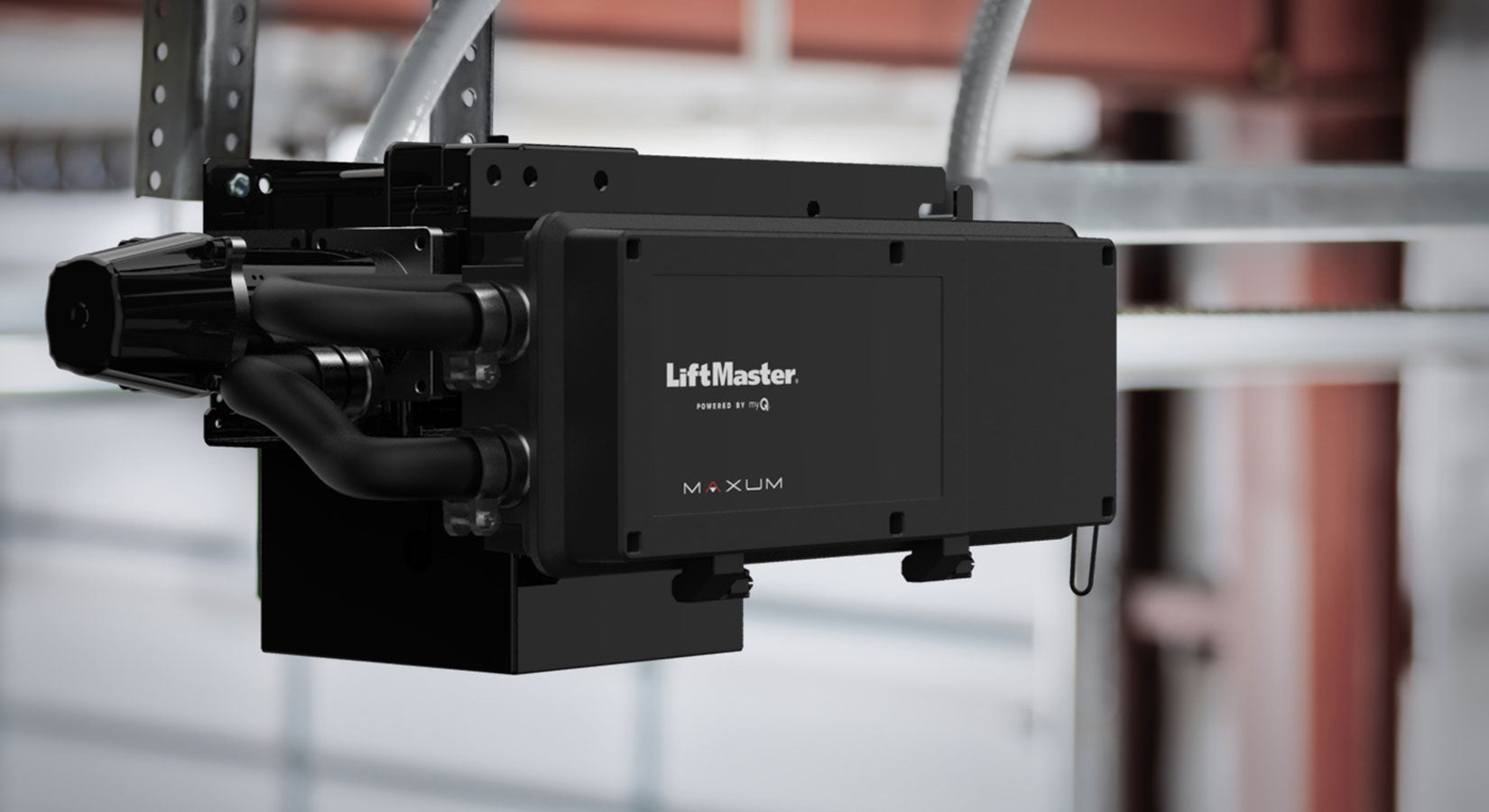
LiftMaster MAXUM is one of the newest options on the market. It is designed to improve performance, reduce downtime, and make daily use easier.
So what is actually different between MAXUM and traditional systems? Let’s look at both.

What Is LiftMaster MAXUM?
LiftMaster MAXUM is a modern line of commercial door operators. It is built for high-use environments like warehouses, parking garages, and industrial spaces.
These operators work with sectional doors and rolling steel doors. They are designed to handle frequent use without slowing down.
MAXUM focuses on simple use and better control. Many models include Wi-Fi and can connect to myQ Facility. This allows you to monitor and control doors from your phone or computer.
You can explore available models here.
What Are Traditional Operators?
Traditional commercial door operators focus on basic functions. They open and close doors using wall controls or simple remotes.
These systems are known for durability. Many have been used for years in different types of facilities.
However, most traditional operators:
-
Do not include Wi-Fi
-
Do not connect to smart systems
-
Require manual checks for maintenance
-
Offer limited control features
You can explore standard options here.
Main Differences Between MAXUM and Traditional Systems
Here is a simple comparison:
|
Feature |
LiftMaster MAXUM |
Traditional Operators |
|
Wi-Fi |
Yes |
No |
|
Remote access |
Yes |
No |
|
LCD display |
Yes (floor-level) |
No |
|
Start and stop |
Smooth and controlled |
Basic movement |
|
Battery backup |
Available |
Sometimes included |
|
Diagnostics |
Built-in |
Manual checks |
|
Installation |
Faster and simpler |
More time required |
MAXUM focuses on ease of use and better control. Traditional systems focus more on basic function.
Smart Features and Remote Control
One of the biggest upgrades with MAXUM is smart control.
With Wi-Fi, these operators can connect to myQ Facility. This lets you:
-
Check door status in real time
-
Open or close doors remotely
-
Track activity
This is very helpful for large buildings or multi-door facilities.
Traditional operators do not offer this. Most require someone on-site to manage the system.
Performance and Daily Use
LiftMaster MAXUM is designed for smoother operation.
It includes:
-
Smooth start and stop
-
Steady average speed
-
Support for high-cycle use (around 20 cycles or more)
This helps reduce wear on parts and keeps the system running longer.
Traditional operators can still perform well. But they may feel less smooth and may need more adjustments over time.
Maintenance and Troubleshooting
Maintenance is easier with MAXUM.
Many models include:
-
Built-in diagnostics
-
Error alerts
-
LCD display at floor level
This makes it easy to spot problems quickly.
With traditional systems, you often need to inspect the system manually. This can take more time and may delay repairs.
Battery Backup and Power Loss
Power outages can stop door operation.
LiftMaster MAXUM models are battery backup compatible, offered as an optional add-on. This allows the door to keep working even when power is out.
Some traditional operators also offer battery backup, but not all include it by default.
For businesses that need constant access, this feature is very important.
Which One Should You Choose?
LiftMaster MAXUM is a good choice if you:
-
Manage a busy facility
-
Need remote control and monitoring
-
Want faster troubleshooting
-
Want to reduce downtime
Traditional operators may still work well if you:
-
Have low or moderate use
-
Do not need smart features
-
Prefer a simple setup
Both options can work. The best choice depends on how your facility operates.
Final Thoughts
LiftMaster MAXUM brings new technology to commercial door operators. It adds smart control, better performance, and easier maintenance.
Traditional systems are still reliable. But they offer fewer features and less flexibility.
For many businesses, upgrading to a modern system can improve daily operations and reduce long-term issues.