Skip to content

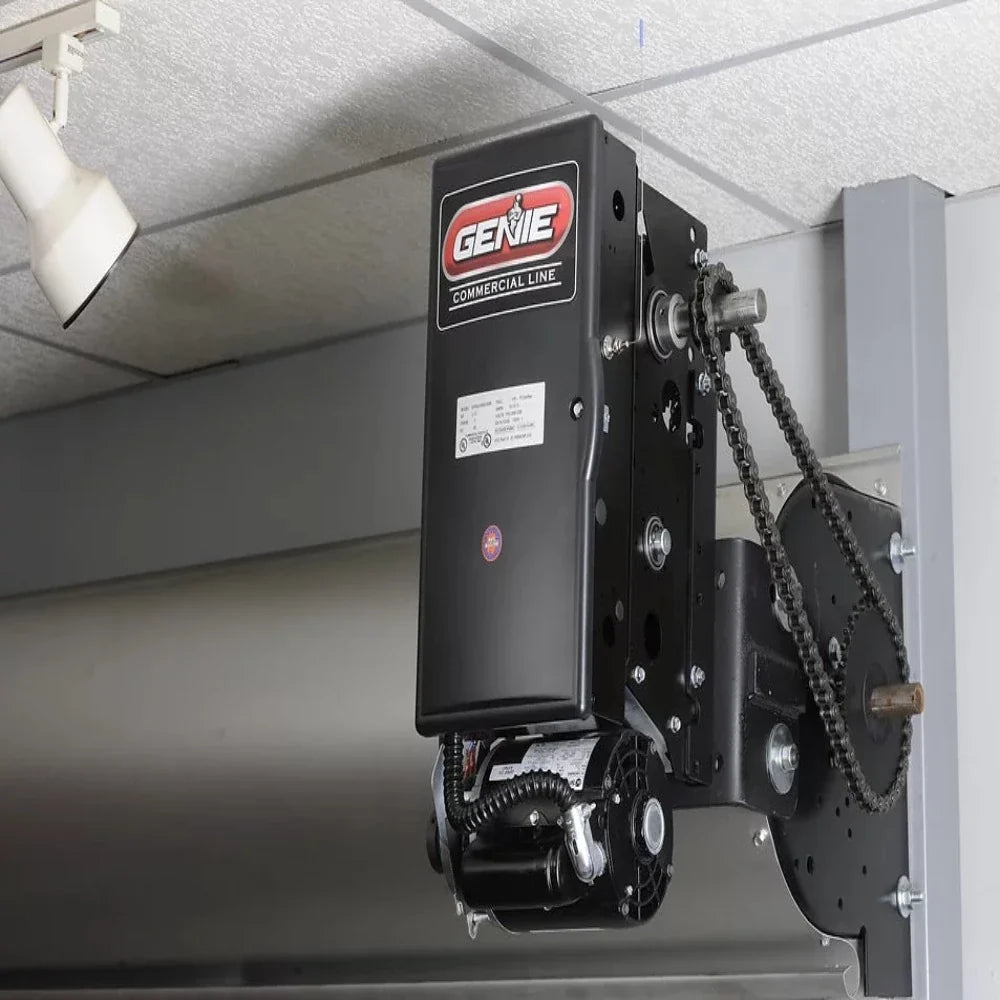
For homeowners, a compatible jackshaft opener is the space-saving choice when a central ceiling motor and rail would obstruct the garage. A belt-drive opener suits quieter overhead operation, while a chain-drive opener is worth comparing for a lower equipment budget. Door compatibility, specific model features, and the complete installation quote determine which option fits the project.
This comparison covers residential garage-door setups. Commercial door operators require a separate review of the approved door type, capacity, and intended use.
Explore garage door openers after identifying the layout and features your garage requires.

How jackshaft, chain-drive, and belt-drive openers move the door
A residential jackshaft garage door opener mounts beside the garage door and turns a compatible torsion shaft. Conventional chain-drive and belt-drive openers move a trolley along an overhead rail; the trolley connects to the door through an arm.
|
Opener type |
How the door is driven |
Installation space to evaluate |
|---|---|---|
|
Jackshaft opener |
A compatible torsion shaft is driven from beside the door. |
Mounting space beside the door, shaft geometry, and model-specific clearances. |
|
Chain-drive opener |
A metal chain moves a trolley along an overhead rail. |
Ceiling space for the motor and rail, plus the model’s door and rail requirements. |
|
Belt-drive opener |
A belt moves a trolley along an overhead rail. |
Ceiling space for the motor and rail, plus the model’s door and rail requirements. |
Sources: The Genie Company wall-mount opener design and The Genie Company door and opener components.
Jackshaft vs. belt-drive openers for ceiling space and noise
A jackshaft garage door opener vs belt drive comparison starts with layout: choose a compatible wall-mount design when the central motor and rail would obstruct storage, or keep an overhead belt-drive layout when that space is available.
A belt-drive opener is a practical alternative when quiet operation matters and an overhead rail already fits. LiftMaster offers both belt-drive and wall-mount models designed to reduce sound and vibration, so a wall-mount layout alone does not establish which specific opener will be quieter.
Check the door as well as the opener when comparing noise. Worn hardware, poor alignment, and maintenance issues can contribute to operating noise; changing the drive arrangement does not correct every door problem.
The disadvantages of belt drive systems are most relevant when ceiling space or equipment budget is limited: the opener still needs an overhead rail and typically costs more than a basic chain-drive model. Compare models with equivalent features and door ratings.
Jackshaft vs. chain-drive openers for layout and budget
A chain-drive opener is a sensible starting point when the garage has room for an overhead rail and the equipment budget is a priority. The Genie Company describes chain-drive openers as among the most affordable options; the final installed price still depends on the selected model and project scope.
The main reason to consider jackshaft over chain drive is the mounting space it frees. Request quotes for both compatible options and compare the extra installed cost with the value of removing the overhead motor and rail.
Chain-drive vs. belt-drive openers for noise and features
Chain-drive and belt-drive openers both use an overhead trolley arrangement. The Genie Company attributes the quiet operation of belt-drive models to smooth movement without metal-on-metal contact in the rail. Compare specific models when noise could affect a bedroom or living space near the garage.
For a belt vs chain garage door opener comparison, check the motor as well as the drive. LiftMaster’s sound demonstration compares a DC belt-drive model with an AC chain-drive model, so the drive mechanism is not the only variable.
Evaluate equivalent feature packages: door rating, battery backup, controls, lighting, and warranty. A feature-rich chain-drive opener and a basic belt-drive opener may differ for reasons beyond the chain or belt.
Sources: The Genie Company drive-type FAQs and The Genie Company opener selection guidance.
Side mount vs. overhead: jackshaft pros and cons
When comparing a side mount garage door opener vs overhead equipment, measure the usable mounting area beside the door as well as the central ceiling space. A wall-mount opener removes the central motor and rail, but the door tracks and the moving door still need clearance.
Jackshaft garage door opener pros and cons center on space savings and installation fit. Reclaimed central ceiling space is the main benefit. Limitations include shaft and door requirements, available side room, and a typically higher equipment price. Include any necessary door changes in the installation quote.
Sources: The Genie Company wall-mount design and Hörmann comparison.
Jackshaft installation requirements to check against your door
Jackshaft garage door opener installation requires a model-specific fit check. Have an installer assess these parts of the existing setup:
-
Door type, dimensions, weight, and balance.
-
The torsion spring and shaft arrangement specified for the opener.
-
Track configuration, lift arrangement, and mounting space.
-
Electrical supply and access requirements in the installation manual.
Garage door opener clearance is the operating and installation space the complete system needs. Measure the path of the moving door as well as the space for the motor and drive assembly.
Side mount garage door opener dimensions describe the equipment’s size. The installation drawing also identifies the clearances needed around the unit and shaft.
Chamberlain’s guidance for the residential jackshaft models covered on its support page specifies a 1-inch torsion bar, at least 1½ inches of shaft extension beyond the bearing plate, and at least 8½ inches between the side wall and shaft end. These figures are reference points for those models, not universal dimensions for every jackshaft opener.
A qualified installer should assess any required changes to the spring, shaft, or track system. Use the selected opener’s manual to confirm the complete requirements.
Source: Chamberlain jackshaft installation requirements.
Garage door opener costs to include in each quote
Compare installed prices only when each quote covers the same scope. Request separate amounts or clear inclusion details for:
-
The exact opener model and included accessories.
-
Installation labor and removal of existing equipment.
-
Electrical work or changes to the door setup, if required.
-
Optional controls, lighting, or battery-backup equipment.
-
Warranty coverage and service terms.
Use the complete quote to judge whether a different mounting arrangement or feature package is worth the added cost for your garage. Equipment price alone does not establish the final project total.
Which opener fits your garage priorities?
Narrow the choice using the need that matters most:
-
Central ceiling space: Investigate a compatible jackshaft opener when the overhead motor and rail would obstruct the planned layout.
-
Quiet overhead operation: Compare belt-drive models when the existing rail arrangement works and sound is a priority.
-
Upfront equipment budget: Compare chain-drive models with the features and door rating the project requires.
The final model must fit the door and installation conditions. Confirm those requirements before choosing between optional features.
Contact All Security Equipment with the door type, dimensions, existing opener, and available mounting space to discuss the options.
For a commercial application, explore jackshaft commercial door operators and verify the operator’s approved door types and intended use.
Jackshaft, chain-drive, and belt-drive opener FAQs
Can I replace a chain-drive opener with a jackshaft opener?
Yes, if the door, shaft, track layout, and mounting space meet the jackshaft model’s requirements. An installer should check compatibility and identify any necessary changes to the door setup.
Does a jackshaft opener eliminate garage door maintenance?
No. A jackshaft opener and the garage door still need the inspections and maintenance specified in their manuals, including care of the door’s moving parts.
What problems can prevent a jackshaft garage door opener from closing?
Misaligned safety sensors, cable-tension monitoring faults on equipped models, and a binding or unbalanced door can prevent closing. Check the model’s diagnostic guide and have mechanical faults assessed by a qualified technician.
What should I check when choosing a garage door opener for cold weather?
Check the model’s operating-temperature limits and maintenance instructions. Door balance, weather seals, and safety sensors also need attention for winter operation.