Skip to content

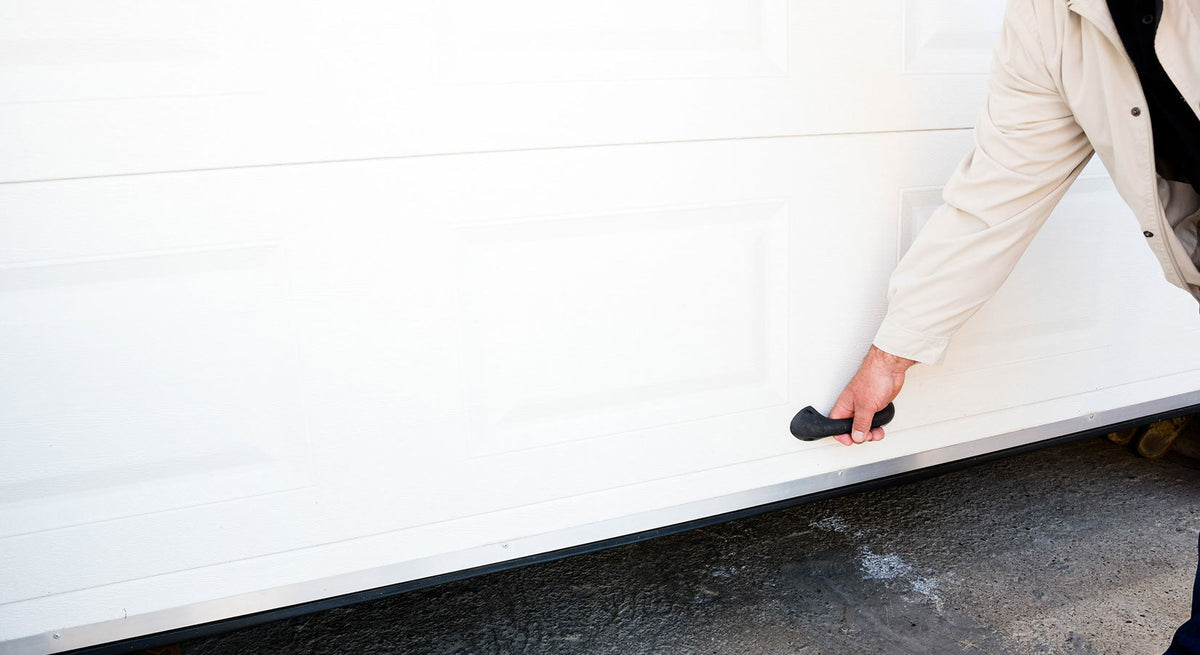
A small gap beneath your garage door can create bigger problems than you might expect.
Water, dust, leaves, insects, and outside air can enter through the space between the bottom of the garage door and the floor.
Over time, the rubber seal along the bottom of the door can wear out, crack, flatten, or become detached.
The solution may be as simple as replacing the garage door bottom seal.
But finding the right replacement isn’t always straightforward.
Garage door bottom seals come in different shapes, widths, materials, and mounting configurations. A seal that looks similar to your existing one may not fit the retainer installed on your garage door.
In this guide, we’ll explain the most common types of garage door bottom seals, how to identify the one you need, and what to check before purchasing a replacement.
Whether you’re maintaining a residential garage or servicing commercial overhead doors, understanding these differences can help you select compatible weatherstripping.
What Is a Garage Door Bottom Seal?
A garage door bottom seal is a flexible strip installed along the bottom edge of a garage door.
Its purpose is to help close the gap between the door and the floor when the door is fully closed.
The seal typically compresses against the floor to create a barrier against:
- Rainwater
- Dust
- Leaves
- Insects
- Drafts
- Small debris
Depending on the door and seal design, it may also help accommodate minor irregularities in the garage floor.
Garage door bottom seals are commonly made from flexible materials such as rubber, vinyl, or synthetic compounds.
They are available in several different profiles to accommodate different door constructions and retainers.
Why Is a Garage Door Bottom Seal Important?
Even when a garage door closes completely, the bottom edge may not create a tight seal against the floor.
This is especially common when:
- The floor is slightly uneven
- The existing seal is worn
- The rubber has become compressed
- The weatherstripping is damaged
- The door has been in service for many years
A properly selected bottom seal helps reduce the amount of water, air, and debris entering the garage.
Helps Keep Water Out
Rainwater can enter through gaps beneath the garage door, particularly during wind-driven rain.
A bottom seal helps reduce this exposure.
However, a seal alone may not prevent flooding or water intrusion caused by poor drainage or significant floor irregularities.
Helps Reduce Drafts
A gap beneath the garage door allows outside air to enter.
Replacing damaged weatherstripping can help reduce drafts.
Helps Keep Out Dust and Debris
Leaves, dirt, and other debris can enter through the bottom opening.
A properly fitted seal helps close this gap.
Helps Limit Pest Entry
Small insects and other pests may enter through openings around the garage door.
Weatherstripping can help reduce these entry points.
How Do Garage Door Bottom Seals Work?
Most garage door bottom seals use one of two general mounting arrangements.
1. Seal inserted into a retainer
2. Seal attached directly to the door
In many modern sectional garage doors, a metal or compatible retainer runs along the bottom edge of the door.
The flexible seal slides into channels in the retainer.
Other doors use different mounting systems.
This distinction matters because the replacement seal must match the mounting configuration.
Types of Garage Door Bottom Seals
There are several common seal profiles.
The main types include:
- T-style seals
- Bulb seals
- Beaded seals
- J-style seals
- U-shaped or astragal seals
- Brush seals
These names describe general shapes or attachment styles, but terminology can vary between manufacturers.
The most important factor is the actual profile and retainer compatibility.
1. T-Style Garage Door Bottom Seals
T-style seals are among the most common replacement options for sectional garage doors.
They have T-shaped ends that slide into matching channels in the bottom retainer.
A typical configuration looks like:
T-End → Retainer Channel
Flexible Seal → Contacts Garage Floor
Some seals have two T-shaped ends that slide into a dual-channel retainer.
How to Identify a T-Style Seal
Look at the ends of the existing weatherstripping.
If the seal has small T-shaped sections that slide into the retainer, you likely have a T-style configuration.
However, the dimensions of the T-shaped ends can vary.
Two T-style seals may look similar but use different T-end dimensions.
When Should You Choose a T-Style Seal?
A T-style seal is appropriate when your existing retainer is designed for that specific T-end profile.
Before ordering, verify:
- T-end dimensions
- Retainer channel compatibility
- Seal width
- Required length
- Material
Don’t assume all T-style seals are interchangeable.
2. Bulb Garage Door Bottom Seals
Bulb seals use a rounded or hollow profile that compresses against the garage floor.
The bulb shape helps create a flexible contact surface.
Depending on the design, the seal may attach through a retainer or another mounting arrangement.
Advantages of Bulb Seals
A bulb-style profile can provide:
- Flexible compression
- A rounded contact surface
- Accommodation for some minor floor variations
- Weather sealing along the bottom edge
The amount of compression depends on the profile and installation.
When Should You Choose a Bulb Seal?
Choose a bulb seal when the door and mounting hardware are designed for that profile.
Check the bulb diameter, attachment style, and manufacturer specifications.
3. Beaded Garage Door Bottom Seals
Beaded seals have rounded attachment edges that fit into compatible retainer channels.
The bead is the part of the seal that slides into the mounting track.
This is different from a T-shaped attachment.
How to Identify a Beaded Seal
Inspect the attachment ends of the existing seal.
If they are rounded rather than T-shaped, the door may use a beaded profile.
The bead diameter matters.
A bead that is too large may not fit the channel, while one that is too small may not remain securely in place.
4. J-Style Garage Door Bottom Seals
J-style seals use a J-shaped attachment profile.
These are associated with certain garage door and retainer designs.
The shape of the attachment helps secure the seal to the bottom of the door.
As with other profiles, the replacement must match the existing mounting configuration.
Can You Replace a J-Style Seal With a T-Style Seal?
Not necessarily.
A T-style seal requires a compatible T-style retainer.
If your door uses a J-style mounting arrangement, a standard T-style replacement may not fit.
In some cases, replacing the retainer may allow a different seal design to be used.
However, compatibility must be verified before making that change.
5. U-Shaped Garage Door Bottom Seals
U-shaped seals, sometimes called astragal seals, form a flexible loop beneath the garage door.
The seal compresses when the door closes.
Many dual-channel bottom retainers use seals that form a U-shaped profile when installed.
This is an important distinction:
T-style describes the attachment ends.
U-shaped describes the installed shape of the seal.
A garage door bottom seal can therefore be both T-style and U-shaped.
Why Is the U-Shape Useful?
The flexible loop provides a compressible surface between the door and floor.
Depending on the profile, it may accommodate minor variations in the floor surface.
6. Brush Garage Door Bottom Seals
Brush seals use dense bristles rather than a continuous flexible rubber profile.
They are commonly used in certain commercial and industrial applications.
Brush seals can help reduce the entry of:
- Dust
- Debris
- Airborne particles
- Some pests
They can also be useful where a flexible bristle profile is appropriate for the opening.
However, brush seals generally aren’t the first choice when the main objective is creating a water-resistant compression seal against a garage floor.
The right choice depends on the application.
Garage Door Bottom Seal Comparison
|
Seal Type |
Main Characteristic |
Common Consideration |
|---|---|---|
|
T-style |
T-shaped attachment ends |
Must match retainer channels |
|
Bulb |
Rounded compressible profile |
Verify diameter and mounting |
|
Beaded |
Rounded attachment edges |
Bead size must match retainer |
|
J-style |
J-shaped attachment |
Requires compatible mounting |
|
U-shaped |
Flexible loop beneath door |
Check width and attachment style |
|
Brush |
Dense bristles |
Often used for dust and debris control |
Remember that these categories can overlap.
A seal may have T-shaped attachment ends while forming a U-shaped profile when installed.
How to Identify Your Garage Door Bottom Seal
Before purchasing a replacement, identify the existing mounting system.
This is the most important step.
Step 1: Inspect the Bottom of the Garage Door
With the door safely closed and stationary, visually inspect the bottom edge.
Look for:
- Metal retainer
- Plastic retainer
- Sliding channels
- Directly attached weatherstripping
- Damaged or missing seal sections
Avoid placing your hands beneath a moving garage door.
Step 2: Identify the Attachment Profile
Determine whether the seal uses:
- T-shaped ends
- Rounded beads
- J-shaped attachments
- Another mounting design
If the profile isn’t obvious, consult the garage door manufacturer’s documentation.
Step 3: Measure the Existing Seal
Record the dimensions of the attachment ends and the flexible seal.
Step 4: Measure the Door Width
Determine the length of replacement weatherstripping required.
Step 5: Check the Retainer
A damaged or incompatible retainer may need replacement along with the seal.
How to Measure a Garage Door Bottom Seal
There are three important measurements.
1. Door Width
Measure the full width of the garage door.
For example, a residential door might be:
- 8 feet wide
- 9 feet wide
- 16 feet wide
- 18 feet wide
Commercial doors can be considerably wider.
The replacement seal must be long enough to cover the entire opening.
2. Seal Profile Width
Measure the flexible portion of the seal according to the manufacturer’s specified method.
For a U-shaped seal, this may be the flat width of the material before installation.
This measurement affects how much material is available to form the compressible loop.
3. Attachment Dimensions
Measure the T-end, bead, or other attachment profile.
This determines whether the seal will fit the retainer.
A replacement that matches the door width but has the wrong attachment profile won’t install correctly.
What Size Garage Door Bottom Seal Do You Need?
The correct size depends on the door and retainer.
Don’t choose a seal based only on whether the door is 8, 9, or 16 feet wide.
You also need to determine:
- Retainer type
- Attachment dimensions
- Seal profile
- Seal width
- Floor condition
For example, two 16-foot garage doors may use completely different bottom seals.
The door width tells you the required length, but not the correct profile.
Can You Use a Wider Garage Door Bottom Seal?
Sometimes, a wider compatible seal may provide additional compression or help accommodate minor floor variations.
However, a wider seal isn’t automatically better.
Too much material can cause:
- Improper compression
- Folding
- Poor fit
- Uneven contact
- Difficulty closing correctly
Use a profile and width suitable for the door and retainer.
If the floor has a significant slope or depression, a different solution may be necessary.
Garage Door Bottom Seal Materials
Garage door weatherstripping is available in several materials.
Common options include:
- Rubber
- Vinyl
- EPDM
- Other synthetic compounds
Each material has different characteristics.
Rubber
Rubber seals provide flexibility and compression.
Performance varies depending on the specific compound.
Vinyl
Vinyl is commonly used in garage door weatherstripping.
Its flexibility and temperature performance depend on the formulation.
EPDM
EPDM is a synthetic rubber commonly used in outdoor sealing applications because of its resistance to weathering and environmental exposure.
The best material depends on the manufacturer’s specifications and the installation environment.
Garage Door Bottom Seals for Cold Weather
Cold temperatures can affect the flexibility of certain sealing materials.
A seal that becomes excessively stiff may not compress as effectively against the floor.
For colder environments, review the manufacturer’s temperature specifications.
Also consider:
- Snow
- Ice
- Moisture
- Freeze-thaw conditions
A seal should be selected for the climate in which it will operate.
Garage Door Bottom Seals for Hot Climates
High temperatures and sunlight can also affect weatherstripping.
Over time, some materials may:
- Harden
- Crack
- Deform
- Lose flexibility
Choose weatherstripping designed for the expected outdoor conditions.
Residential vs. Commercial Garage Door Bottom Seals
Residential and commercial garage doors may require different weatherstripping.
Residential Garage Doors
Common considerations include:
- Standard sectional door construction
- Retainer compatibility
- Weather protection
- Ease of replacement
- Garage floor condition
Commercial Garage Doors
Commercial installations may involve:
- Wider openings
- Taller doors
- More frequent operation
- Different bottom retainers
- Industrial door construction
- Greater exposure to outdoor conditions
Commercial overhead doors may also use specialized bottom assemblies.
Always identify the door and hardware before selecting a replacement.
How to Replace a Garage Door Bottom Seal
The exact process depends on the door design.
For a common slide-in seal, the general replacement process involves removing the old weatherstripping and inserting the new compatible profile into the retainer.
However, garage doors contain high-tension components that can be dangerous if disturbed.
Do not loosen bottom brackets, lift cables, springs, or other tension-related hardware to replace a seal.
If the seal or retainer cannot be serviced without disturbing these components, contact a qualified garage door professional.
General Replacement Process
Step 1: Identify the Existing Seal
Confirm the attachment profile and dimensions.
Step 2: Inspect the Retainer
Check for damage, corrosion, or deformation.
Step 3: Follow the Manufacturer’s Instructions
Use the recommended method for removing the existing weatherstripping.
Step 4: Install the Compatible Replacement
Make sure the seal is correctly seated in the retainer.
Step 5: Check the Final Fit
Verify that the weatherstripping contacts the floor appropriately when the door closes.
Step 6: Test the Door
Confirm that the garage door operates normally and that the replacement doesn’t interfere with the door’s travel or safety systems.
What If the Garage Door Bottom Retainer Is Damaged?
The retainer is the component that holds the seal in place.
If the retainer is bent, corroded, or damaged, a new seal may not install correctly.
Possible signs include:
- Seal sliding out
- Damaged channels
- Loose attachment
- Uneven seal position
- Visible deformation
In these cases, the retainer may need replacement.
However, bottom retainer replacement can involve hardware near high-tension garage door components.
Follow manufacturer instructions and use a qualified technician when necessary.
Garage Door Bottom Seal vs. Garage Door Threshold Seal
These products are often confused.
A garage door bottom seal attaches to the door.
A garage door threshold seal attaches to the garage floor.
They serve related but different purposes.
Bottom Seal
Attached to garage door → Compresses against floor
Threshold Seal
Attached to garage floor → Creates a raised sealing surface
A threshold may help reduce water and debris entry in certain installations.
However, threshold seals can affect floor clearance and drainage.
Before installing one, verify that it won’t interfere with the door’s operation.
Can You Use a Bottom Seal and Threshold Together?
In some applications, yes.
A compatible bottom seal and floor threshold may work together to improve sealing.
But the combination needs to be evaluated carefully.
Too much interference between the door and threshold can prevent proper closing or affect the door’s safety system.
Follow the relevant manufacturer instructions.
Why Is Water Still Coming Under My Garage Door?
If water continues entering after replacing the bottom seal, the problem may not be the weatherstripping.
Possible causes include:
- Uneven concrete
- Improper driveway slope
- Poor drainage
- Damaged bottom retainer
- Incorrect seal profile
- Insufficient seal compression
- Door alignment problems
A new seal can help close ordinary gaps, but it won’t necessarily solve a drainage problem.
If water accumulates against the garage door during heavy rain, drainage improvements may be needed.
Why Is There Still a Gap Under My Garage Door?
A visible gap can result from several issues.
These include:
- Worn weatherstripping
- Incorrect replacement seal
- Uneven garage floor
- Damaged retainer
- Door alignment
- Door travel or limit settings
Don’t immediately adjust the garage door opener’s closing force to compensate for a gap.
Excessive closing force can create safety concerns.
Identify the actual cause and follow the manufacturer’s instructions.
Signs You Need to Replace Your Garage Door Bottom Seal
Look for:
Visible Cracks
The material may be aging or losing flexibility.
Flattened Profile
The seal may no longer compress effectively.
Missing Sections
Pieces may have torn away or become detached.
Water or Dust Entry
Gaps may allow outdoor elements into the garage.
Loose Weatherstripping
The seal may no longer be securely held by the retainer.
Hard or Brittle Material
The seal may have deteriorated due to age or environmental exposure.
Not every gap requires a new seal, but these are common reasons to inspect the weatherstripping.
How Long Does a Garage Door Bottom Seal Last?
There isn’t one universal replacement interval.
Service life depends on:
- Material
- Climate
- Sun exposure
- Frequency of door operation
- Floor condition
- Installation quality
- Maintenance
Inspect the seal periodically and replace it when it no longer performs its intended function.
Common Garage Door Bottom Seal Buying Mistakes
Buying Based Only on Door Width
Door width determines length, but not the correct attachment profile.
Assuming All T-Style Seals Are the Same
T-end dimensions vary.
Ignoring the Retainer
A damaged or incompatible retainer can prevent proper installation.
Choosing the Wrong Profile Width
An unsuitable width may affect compression and sealing.
Using a Seal to Fix Major Floor Problems
A seal may accommodate minor irregularities, but it won’t correct substantial drainage or structural issues.
Overlooking Door Manufacturer Requirements
Some doors use proprietary or specialized bottom assemblies.
Disturbing High-Tension Hardware
Garage door bottom brackets, cables, and springs can be dangerous.
Avoid modifications to tension-related components.
Garage Door Bottom Seal Buying Checklist
Before purchasing, confirm:
Garage Door
- Manufacturer
- Model, if available
- Residential or commercial
- Door width
- Door construction
Existing Seal
- T-style, bulb, bead, J-style, or other profile
- Attachment dimensions
- Seal width
- Material
- Condition
Retainer
- Retainer type
- Channel dimensions
- Physical condition
- Compatibility with replacement seal
Installation
- Required length
- Floor condition
- Weather exposure
- Manufacturer instructions
- Whether professional installation is needed
Frequently Asked Questions
What is the rubber strip at the bottom of a garage door called?
It’s commonly called a garage door bottom seal, bottom weather seal, bottom weatherstripping, or garage door astragal.
Are all garage door bottom seals the same?
No. They vary by profile, attachment style, dimensions, material, and retainer compatibility.
How do I know which garage door bottom seal I need?
Identify the existing attachment profile, measure its dimensions, inspect the retainer, and confirm the door width. Manufacturer documentation can help identify the correct replacement.
What is a T-style garage door bottom seal?
A T-style seal has T-shaped attachment ends that slide into compatible retainer channels.
What is the difference between a T-style and U-shaped seal?
T-style describes the attachment ends. U-shaped describes the loop formed by the seal beneath the door. One seal can have both characteristics.
Can I replace a garage door bottom seal myself?
Some slide-in seals can be replaced without disturbing the door’s tension system. However, never loosen bottom brackets, cables, springs, or related high-tension components. Use a qualified professional if the replacement requires that work.
Can a new garage door bottom seal stop rainwater?
It can help reduce water entering through ordinary gaps. However, significant water intrusion caused by poor drainage, floor slope, or flooding may require additional solutions.
Should I replace the retainer when replacing the seal?
Not necessarily. If the retainer is in good condition and compatible with the new seal, it may be reusable. Replace it when damaged or when required by the replacement system.
Can I install a wider garage door bottom seal?
Possibly, if the profile and retainer are compatible and the width is appropriate for the door. Excessively wide seals can create fit or closing problems.
What’s the difference between a garage door bottom seal and a threshold seal?
A bottom seal attaches to the door, while a threshold seal attaches to the floor.
How often should I replace garage door weatherstripping?
Replace it when it becomes damaged, brittle, detached, or no longer provides adequate sealing. There isn’t one replacement schedule for every installation.
Find Garage Door Hardware at All Security Equipment
Choosing the right garage door bottom seal starts with identifying the existing hardware.
The most important factors are:
Door Type → Retainer → Attachment Profile → Seal Dimensions → Material → Installation
A replacement seal should fit the door correctly, compress appropriately against the floor, and work without interfering with normal garage door operation.
At All Security Equipment, you’ll find garage door openers, replacement parts, and hardware for residential and commercial applications.
Explore our selection of garage door openers and accessories.
Need Help Finding Compatible Garage Door Hardware?
If you’re replacing garage door hardware, start by identifying the door manufacturer, model, and existing components.
Contact the All Security Equipment team with your equipment information and the replacement part you’re looking for. Our team can help you explore compatible garage door hardware options.