Skip to content

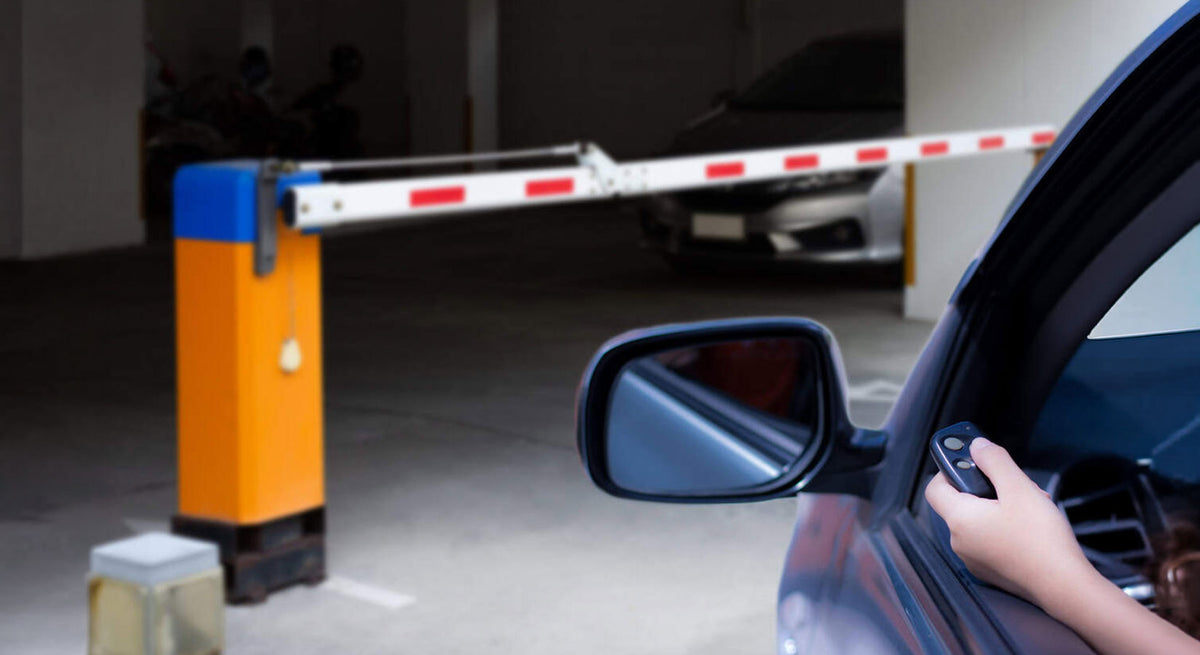
A driver should not have to stop, roll down the window and reach toward a pedestal every time they enter a property.
That is the main advantage of long-range RFID for vehicle access. A reader identifies an authorized vehicle from several feet away, sends that credential to the access control system and allows the gate to begin the approved opening sequence without the driver presenting a card by hand.
But “long range” is not one fixed distance. A reader advertised for 25 feet may perform differently depending on the RFID tag, windshield, mounting angle, lane layout and surrounding environment.
Start with the lane and the vehicle, not the maximum number on the reader specification.
Start with the lane, not the RFID reader
Before selecting a reader, stand at the gate and work backward from where the vehicle should be identified.
Collect five pieces of information:
- Desired identification point: How far before the gate should the credential be read?
- Lane geometry: Is traffic approaching straight toward the reader or at an angle?
- Vehicle speed: Will vehicles stop, slow down or remain in motion?
- Credential location: Will the RFID tag be on the windshield, headlamp, rearview mirror or another part of the vehicle?
- Controller interface: What input does the existing access control system support?
These details determine whether you need a true long range reader, a mid-range option or something closer to a conventional proximity reader.
Buying maximum range first can create another problem: reading a credential in the neighboring lane or identifying a vehicle before it reaches the correct decision point.
What does “long range” actually mean for RFID?
RFID stands for radio frequency identification. The reader communicates wirelessly with an RFID credential and sends the credential data to the system responsible for deciding whether access should be granted.
For vehicle access, many current systems use passive UHF RFID technology around the 900 MHz band. Passive RFID tags do not require their own battery. The reader's RF field provides the energy needed for the tag to respond.
Other systems use semi-active or active credentials, which can support different operating distances and applications.
That distinction matters because a 30-foot passive UHF system and a 30-foot semi-active system are not interchangeable just because their listed distances look similar.
RFID is also widely used for applications such as inventory tracking and supply chain management, but a gate-access RFID system has a different job. Here, accurate vehicle identification, lane control and integration with the access controller matter more than reading large numbers of inventory tags at once.
Read range is a system specification, not just a reader specification
Manufacturers routinely qualify their maximum distances because the read range depends on the complete installation.
For example, LiftMaster lists a 20- to 30-foot maximum range for its LMSC1000, depending on tag placement. The reader operates at 902–928 MHz and outputs 26-bit Wiegand data.
EMX lists an average 18- to 25-foot range for its Patriot-E and Patriot-L readers, specifically noting that actual range depends on the site and tag. Its Patriot-MR is designed for a shorter 6- to 10-foot range.
That gives installers several very different lane designs:
|
Reader type |
Typical published range |
Where it fits |
|
Mid-range UHF |
About 6–10 ft. |
Controlled lanes where vehicles slow or stop near the gate |
|
Long-range UHF |
About 18–30 ft. |
Gated communities, employee parking and commercial entrances |
|
Extended vehicle identification systems |
Up to about 33–50 ft. on some systems |
Larger or more complex vehicle approaches |
Nedap, for example, publishes ranges up to 33 feet for its uPASS Go and up to 50 feet for its uPASS Target when used with the appropriate credentials and installation.
Do not design the lane around the maximum number alone. Design around where you actually want the gate authorization to occur.
Choose the tag before you finalize the reader position
The credential is half of the RFID system.
All Security Equipment carries several vehicle credential formats, including UHF windshield stickers, rearview-mirror hang tags, headlamp-compatible tags, metal-mount credentials and active RFID tags.
The mounting location matters because vehicle materials can affect RF performance.
A windshield tag gives you a permanent or semi-permanent credential attached to a specific vehicle. LiftMaster's LMUNTG, for example, is designed for windshield or headlamp mounting, while the LMHNTG hangs from the rearview mirror. ASE carries both options.
Hang tags make more sense when a credential needs to move between authorized vehicles. Windshield stickers can make credential sharing more difficult when the goal is tying access to one vehicle.
Some windshields also contain metallic coatings that can interfere with RFID performance. In those cases, the approved tag location or another credential format becomes important.
Test the reader with the actual vehicles and tags that will use the lane rather than assuming every windshield behaves the same way.
Linear or circular polarization changes how carefully the tag must be positioned
Two readers can offer similar published ranges and still behave differently at the gate.
EMX's Patriot-L uses a linear polarized antenna and specifies vertically oriented tags. The Patriot-E uses circular polarization, which provides more flexibility in credential orientation. Both are rated by EMX at an average 18- to 25-foot read range.
That makes orientation an installation decision.
A controlled fleet where every tag can be mounted in exactly the same position may work well with a linear reader. An entrance serving many vehicle types and windshield configurations may benefit from greater orientation flexibility.
Again, do not compare readers only by distance.
The RFID reader identifies the vehicle; it does not replace the gate controller
A long range RFID reader is part of the access control system. It is not the entire gate system.
When the reader detects an authorized credential, it sends the corresponding data or output to the controller. The controller determines whether the credential has permission and then provides the appropriate command to the gate operator.
Different readers support different interfaces. Wiegand remains common in existing access control installations, while some newer equipment also supports interfaces such as OSDP, RS-485, relay outputs or network connections.
EMX's current Patriot series, for example, provides Wiegand and RS-232 across the range, with additional connectivity varying by model.
Check that interface before buying the reader. An excellent RFID reader is not useful if it cannot communicate properly with the controller already installed at the property.
Where long-range RFID makes the most sense
Long-range RFID works best when the vehicles are known before they reach the gate.
Gated communities can issue credentials to residents so regular traffic enters without keypad interaction.
Employee parking facilities can assign tags to approved vehicles and remove permissions when employment or parking authorization changes.
Commercial properties can give regular staff or tenant vehicles hands-free access while visitors continue using a separate entry process.
Industrial facilities can use RFID for fleet and authorized vehicle identification, especially when drivers repeatedly enter and exit throughout the day.
At higher-volume gates, reading the credential before the vehicle reaches the barrier can also reduce the amount of time each driver spends stopped at the entry point.
Long-range RFID is less useful when nearly every visitor is temporary or unknown. In those situations, telephone entry, license plate recognition or another visitor-access method may be a better primary system.
Long range or mid-range: more distance is not always better
A 25-foot reader is not automatically an upgrade from a 10-foot reader.
Imagine two entrances.
The first has one straight lane with a long approach. Reading a resident's tag 20 feet before the gate gives the operator time to begin opening before the vehicle reaches it.
The second has an entrance and exit lane immediately beside each other. Extending the RF field too far could make credential detection harder to contain to the intended lane.
That is why adjustable output matters. EMX's Patriot long-range and mid-range readers allow the RF level and read range to be adjusted rather than forcing the installer to use maximum power.
Use enough range to create smooth traffic flow. More than that can create unnecessary problems.
Long-range RFID options at All Security Equipment
ASE currently carries several RFID reader and system options at different ranges and price points.
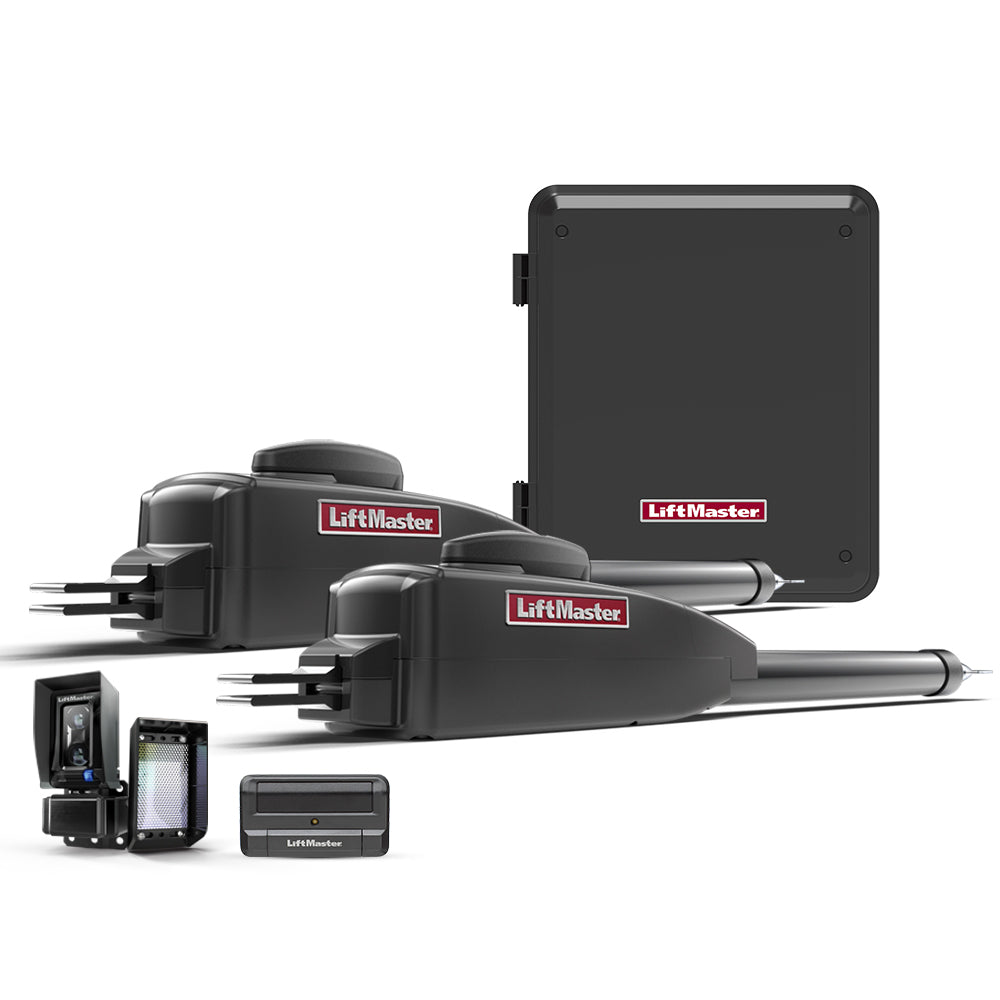
The catalog includes the LiftMaster LMSC1000 RFID Long-Range Reader, EMX Patriot-E WiFi Premium Long-Range RFID Gate Access Kit, EMX Patriot-L Plus Long-Range RFID Kit, and the smaller EMX Patriot MR Mid Range Mini UHF Passive RFID Reader.
The right one depends less on which product has the largest number in its specification and more on the lane, credentials and controller already in the project.
Frequently asked questions
How far can a long-range RFID reader read a vehicle tag?
It depends on the system. Current vehicle-access readers commonly offer ranges measured in tens of feet. LiftMaster rates the LMSC1000 at 20–30 feet depending on tag placement, while EMX rates its Patriot-E and Patriot-L at approximately 18–25 feet depending on the site and credential.
Do RFID vehicle tags need batteries?
Passive UHF windshield tags do not. Other RFID technologies may use semi-active or active credentials that contain a battery, so credential requirements depend on the reader system.
Can RFID open an automatic gate?
The RFID system identifies the credential and communicates with the access controller or gate system. Authorization from that system then causes the gate to open. RFID itself should not be treated as a gate safety device.
Can one reader accidentally read vehicles in another lane?
It is possible for an RF field to reach farther than intended if the reader is poorly positioned or configured. Reader direction, power level, tag orientation and lane layout should be tested during commissioning.
What type of RFID tag should I use for a gate?
Windshield tags work well when a credential should stay with one vehicle. Hang tags are easier to transfer. Other options include headlamp and metal-mount tags. Always confirm the credential is compatible with the selected reader.
Set the read point, then choose the reader
The order is: lane geometry, desired identification distance, credential, reader, then controller integration.
Mark where you want the vehicle identified before looking at maximum ranges. Decide where the tag can reliably sit on the vehicle and whether it needs to be permanent or transferable. Then select a reader that covers that zone and communicates with the existing access control equipment.
You can compare available RFID tags and credentials at All Security Equipment, including windshield, hang, active and vehicle-specific options, and match the credential to the reader instead of treating the two as separate purchases.