Skip to content

Access control helps businesses manage who can enter a building and when they can enter. It improves security and helps protect employees, equipment, inventory, and sensitive areas.
Many businesses replace traditional keys with electronic credentials. Two of the most common options are keycards and key fobs.
Both provide secure building access. Both allow businesses to manage permissions, track activity, and remove access when needed. However, each option offers different benefits.
If you're evaluating key fob access control systems for your facility, understanding how they compare to keycards can help you choose the right solution.

Understanding Modern Access Control Systems
Access control systems replace traditional locks and metal keys with electronic credentials and readers.
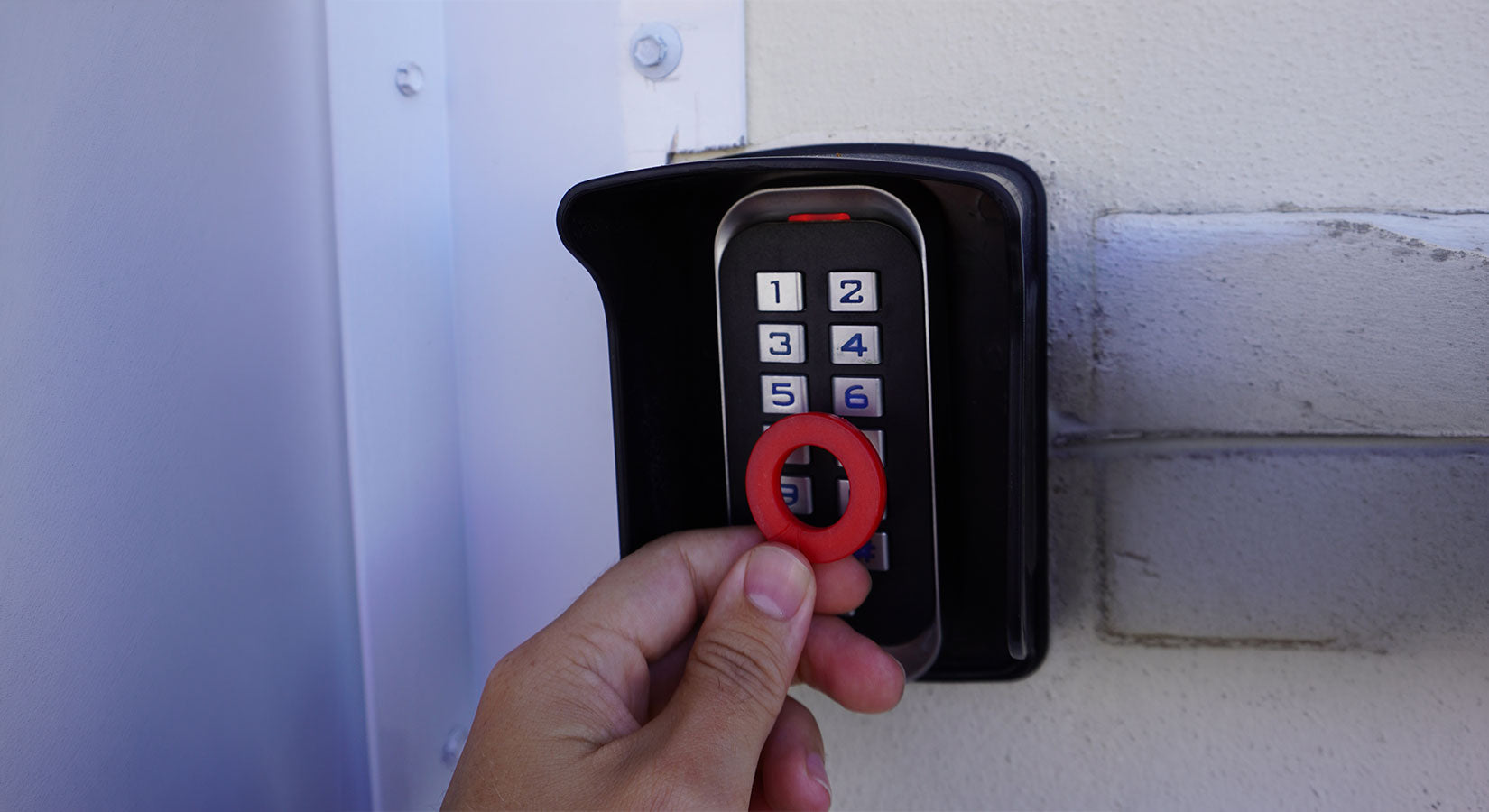
When a user presents a credential to a reader, the system verifies authorization through a control panel. If the user has permission to enter, the system unlocks the door.
Modern access control systems help businesses:
-
Restricting access to sensitive areas
-
Track building activity
-
Improve employee accountability
-
Protect inventory and equipment
-
Manage visitors
-
Create audit trails
-
Support time based access permissions
Unlike traditional keys, access credentials can be added, modified, or removed without replacing locks.
This flexibility makes access control one of the most effective security systems available for commercial properties.
How Key Fob Access Control Systems Work
Many businesses choose key fob access control systems because they are easy to manage and simple to use.
A typical system includes:
-
Credentials
-
Readers
-
A control panel
-
Electronic locks
-
Management software
When a user presents a fob to a reader, the reader sends credential information to the control panel. The system checks the user's permissions and decides whether to unlock the door.
Administrators can control:
-
Which doors users can access
-
What times access is allowed
-
Temporary credentials
-
Visitor permissions
-
Lost credential replacement
Because permissions are managed electronically, businesses can quickly make changes without replacing locks or issuing new keys.
This flexibility makes key fob access control systems a popular choice for office buildings, apartment communities, schools, warehouses, and industrial facilities.
What Are Keycards?
A key card is a plastic credential that contains information used by an access control system.
When presented to a reader, the credential communicates with the system and determines whether access should be granted.
Keycards are commonly used in:
-
Office buildings
-
Schools
-
Healthcare facilities
-
Hotels
-
Government facilities
-
Corporate campuses
Many organizations prefer keycards because they can also function as employee identification badges.
Companies often print:
-
Employee photos
-
Names
-
Job titles
-
Department information
This allows a single credential to provide both identification and building access.
Businesses can also use keycards for attendance tracking and visitor management.
Organizations looking for integrated readers can explore access control keypad with card reader solutions that combine credential verification and door access in a single device.
What Are Key Fobs?
Key fobs are small electronic credentials that usually attach to a keychain.
Like keycards, they communicate with readers using RFID technology. When presented to a reader, the system verifies the credential and grants access if authorized.
Key fob access control systems are commonly used in:
-
Apartment communities
-
Commercial buildings
-
Warehouses
-
Industrial facilities
-
Fitness centers
-
Parking garages
-
Gated communities
Because they attach to keyrings, many users find them more convenient than cards.
Most people already carry keys every day. This makes key fobs easy to carry and harder to forget.
Many businesses use individual fobs because they are compact, durable, and simple to manage.
Security Comparison: Key Fobs vs. Keycards
Both credential types provide strong security when used with a modern access control platform.
Both systems allow administrators to:
-
Assign credentials to individual users
-
Track entry activity
-
Create audit trails
-
Restricting access to specific areas
-
Set time based permissions
-
Disable lost credentials remotely
From a security standpoint, neither credential is automatically safer than the other.
The overall level of protection depends more on the access control system and management practices than on whether users carry a card or a fob.
When properly managed, both solutions can provide excellent key fob security and access management capabilities.
Convenience and User Experience
Convenience is one reason many businesses choose key fobs.
Since they stay attached to a keychain, users are less likely to forget them.
Employees, residents, and tenants often find fobs easier to carry because they become part of their daily routine.
Keycards may be easier to store in wallets, badge holders, or lanyards, but they are sometimes forgotten, bent, or misplaced.
For properties with high traffic, key fob door entry systems often provide a smoother user experience.
This is one reason many multifamily communities and commercial properties prefer fob access control systems.
Durability and Maintenance
Durability can affect long-term costs.
Keycards are generally durable but may crack, bend, or wear out over time.
Key fobs are often more resistant to daily wear because they are designed for frequent handling.
Businesses with high employee turnover may benefit from the added durability of key fobs.
Both credential types are affordable and easy to replace when needed.
The choice often comes down to convenience, user preferences, and how the credential will be used each day.

Common Access Control Features
Whether you choose a key card or a key fob, most modern systems offer similar features.
Audit Trails
Audit trails record who entered a door and when they entered.
These records help managers investigate incidents, monitor activity, and improve accountability.
Time Based Access
Businesses can restrict access during specific hours.
For example, employees may have access during business hours while managers maintain 24-hour access.
Remote Management
Administrators can add or remove users without visiting every door on the property.
This saves time and simplifies system administration.
System Integration
Many access control systems support system integration with:
-
Security cameras
-
Alarm systems
-
Visitor management software
-
Elevator controls
-
Gate operators
This integration helps businesses create a complete security solution from a single platform.
Which Businesses Benefit Most from Keycards?
Keycards are often the preferred choice when visual identification is important.
They work especially well in:
-
Corporate offices
-
Schools and universities
-
Healthcare facilities
-
Government agencies
-
Large office campuses
Organizations that already use employee badges can combine identification and access control into a single credential.
This simplifies administration while improving building security.
For facilities that rely heavily on identification, keycards often provide the most practical solution.
Which Businesses Benefit Most from Key Fobs?
Key fob entry systems are particularly popular in environments where convenience and durability are priorities.
They are commonly used in:
-
Apartment buildings
-
Multifamily communities
-
Warehouses
-
Industrial facilities
-
Fitness centers
-
Parking structures
Property managers often prefer fob door entry systems because residents can easily carry credentials alongside their house and vehicle keys.
For properties with frequent daily access activity, key fobs often deliver the best user experience.
Businesses looking for credential options can explore key fob access credentials designed for commercial and residential access control systems.
Can Businesses Use Both?
Absolutely.
Many modern access control systems support multiple credential types at the same time.
For example:
-
Employees may use keycards
-
Maintenance teams may use key fobs
-
Contractors may receive temporary credentials
-
Property managers may have expanded permissions
This flexibility allows organizations to choose the most practical credential for each group of users.
Many businesses find that using multiple credential types provides the best balance of convenience and security.
Which Option Is Best?
Both keycards and key fobs provide reliable access control.
Keycards work well when businesses want employee identification and access credentials in a single badge. Schools, offices, and healthcare facilities often prefer this approach.
Key fobs offer convenience, durability, and ease of use. Many apartment communities, warehouses, industrial sites, and commercial properties prefer key fob entry systems because users can keep credentials attached to their keys.
The best choice depends on your building, your users, and your security goals.
No matter which credential type you choose, modern key fob access control systems and keycard solutions help improve security, simplify management, and provide better control over who can access your property.