Skip to content

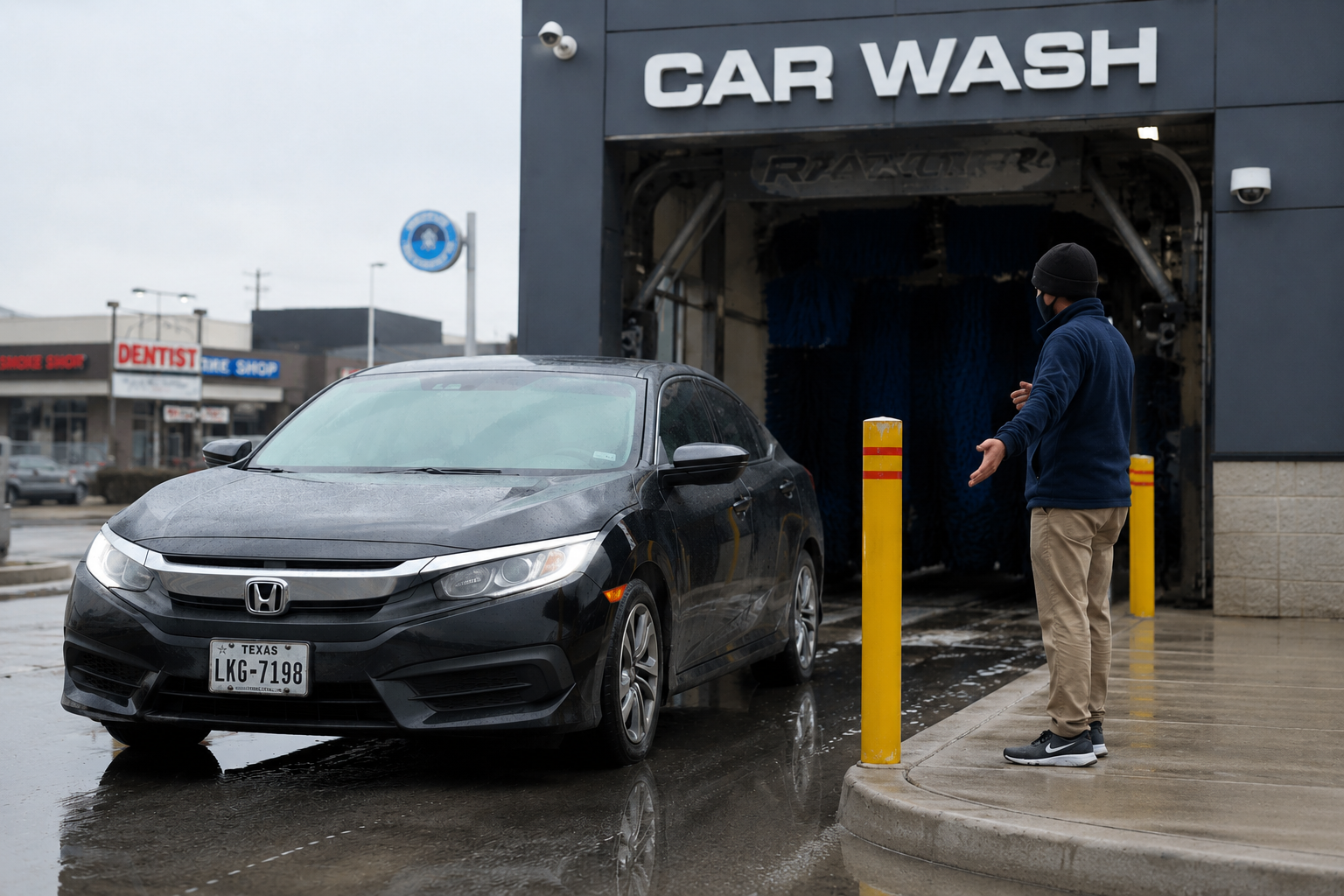
Vehicle damage at car washes costs operators thousands of dollars every year. A distracted driver clips a pay station. Someone misjudges the turn into a self-serve bay. A car rolls forward and hits a vacuum unit. These accidents happen constantly — and most of them are preventable.
Security bollards create a physical barrier between vehicles and your most vulnerable equipment. They are one of the most cost-effective ways to protect your investment. This guide covers where bollards make the most difference at a car wash and what to look for when choosing them. You can also browse our full range of bollards to find the right fit for your site.

Why Car Washes Need Bollards
A car wash moves vehicles through tight spaces all day. Entry lanes, pay stations, vacuum islands, and equipment rooms are all within reach of a moving car. One mistake — a misjudged turn, a foot that slips off the brake, a new driver unfamiliar with the layout — and you have a damaged machine, a liability claim, or both.
Bollards solve this by standing between the vehicle and whatever you need to protect. They absorb impact, stop forward movement, and give drivers a clear visual boundary to follow.
Beyond physical protection, bollards also reduce your liability exposure. When a driver hits a clearly marked bollard, the responsibility shifts. Without them, damage claims are harder to contest.
Types of Security Bollards for Car Washes
Not every bollard is right for every location. Car washes typically use three types depending on what they need to protect and whether access to that area changes.
Fixed Bollards
Fixed bollards are permanently set into the ground with a concrete foundation. They offer the strongest protection and are ideal for spots where you never need vehicle access — the front of a pay station, the corners of a vacuum island, or the exterior wall of your equipment room.
Most fixed bollards are powder coated steel, which holds up well against the moisture and chemical exposure common at car washes. Powder coated finishes resist rust and are easy to keep clean.
Removable Bollards
Removable bollards drop into a ground sleeve and can be taken out when you need vehicle access. They work well in areas like service lanes that staff need to drive through for maintenance but should be blocked off during regular operation.
They are also a practical choice when you are not sure yet whether a spot will need permanent protection. You can install the sleeve now and add or remove the bollard as your layout changes.
Flexible Bollards
Flexible bollards bend on impact and spring back into position. They do not stop a vehicle the way a fixed bollard does, but they are effective as lane guides and visual markers in areas with slow-moving traffic.
Use them to define entry and exit lanes, guide drivers through the tunnel approach, or mark the edge of a vacuum island where a light bump is the main concern rather than a full collision.
Where to Install Bollards at Your Car Wash
Every car wash layout is different, but some spots consistently benefit from bollard protection. For guidance specific to your operation, visit our car wash security solutions page.
Pay Stations
Pay stations are expensive to replace and sit exactly where vehicles are entering the site. A driver reaching for their wallet, adjusting their window, or simply misjudging the distance can easily clip the unit.
Install fixed bollards on both sides of each pay station. Position them close enough to protect the unit but far enough apart that a normal vehicle can still pull up and complete the transaction comfortably.
Vacuum Islands
Vacuum units take a beating. Drivers pull up at odd angles, move forward and back repeatedly, and sometimes lose control of the vehicle entirely while their car is in neutral. Corners and ends of vacuum islands are the most vulnerable points.
Place fixed bollards at each corner of the island. If the island is long, add bollards along the sides at regular intervals. Flexible bollards along the edges work well as an additional visual guide for drivers who are still lining up.
Self-Serve Bay Entrances
The entrance to a self-serve bay is a tight space that requires precise driving. Many operators find that the walls, equipment panels, and side columns of these bays get hit regularly — especially from customers who are not familiar with the layout.
Bollards at the entrance corners give drivers a clear target to aim for and protect the most-hit surfaces. Flexible bollards inside the bay can guide vehicle positioning without risking damage to the car if contact is made.
Equipment Rooms and Mechanical Areas
Chemical tanks, pumps, and mechanical equipment are often housed in rooms or enclosures with vehicle access nearby. A vehicle that breaches one of these areas can cause serious damage, and create a safety hazard if chemicals are involved.
Fixed bollards in front of equipment room doors and along exposed walls give these areas a strong physical barrier at low cost.
Entry and Exit Gates
The approach to an entry gate is another common collision point. Drivers who miss the lane or misjudge the gate arm angle can take out the gate housing, the intercom unit, or the entry columns.
Bollards on both sides of the gate guide vehicles into the correct position and protect the gate hardware. For sites with high traffic, powder coated steel fixed bollards work best here given the constant exposure to weather and wash runoff.
What to Look for When Choosing Bollards for a Car Wash
Material and Finish
Car wash environments are wet, chemical-heavy, and often exposed to direct sun. Steel bollards with a powder coated finish are the most practical choice, they are strong, resist corrosion, and are available in high-visibility colors that help drivers see them clearly.
Stainless steel is a good option for areas with especially heavy chemical exposure, though it costs more than powder coated carbon steel.
Diameter and Wall Thickness
A bollard's ability to stop a vehicle depends on its diameter and steel wall thickness. For car wash use, look for bollards with a minimum 4-inch diameter and at least 0.25-inch wall thickness. Heavier bollards are better at absorbing impact without bending or breaking loose from their foundation.
Height
Standard bollard height for vehicle protection is between 36 and 42 inches. This puts the bollard at bumper height for most passenger vehicles and SUVs. Shorter bollards can be missed by taller vehicles. Taller ones can become a door-edge hazard when customers park close.
Visibility
A bollard only works as a guide if drivers can see it. Choose high-visibility colors, yellow is the most common, or add reflective banding for sites that operate in low-light conditions. Bollards that blend into the pavement get hit more often than ones that stand out.
The Bottom Line
Vehicle damage at a car wash is not a question of if, it is a question of when. Security bollards are a simple, durable way to protect the equipment that keeps your business running.
Focus your installation on the spots with the highest collision risk: pay stations, vacuum islands, self-serve bay entrances, equipment rooms, and entry gates. Use fixed bollards where protection needs to be permanent, removable bollards where access changes, and flexible bollards to guide traffic in low-speed areas.
Browse our full selection of security bollards to find the right options for your car wash.