Skip to content

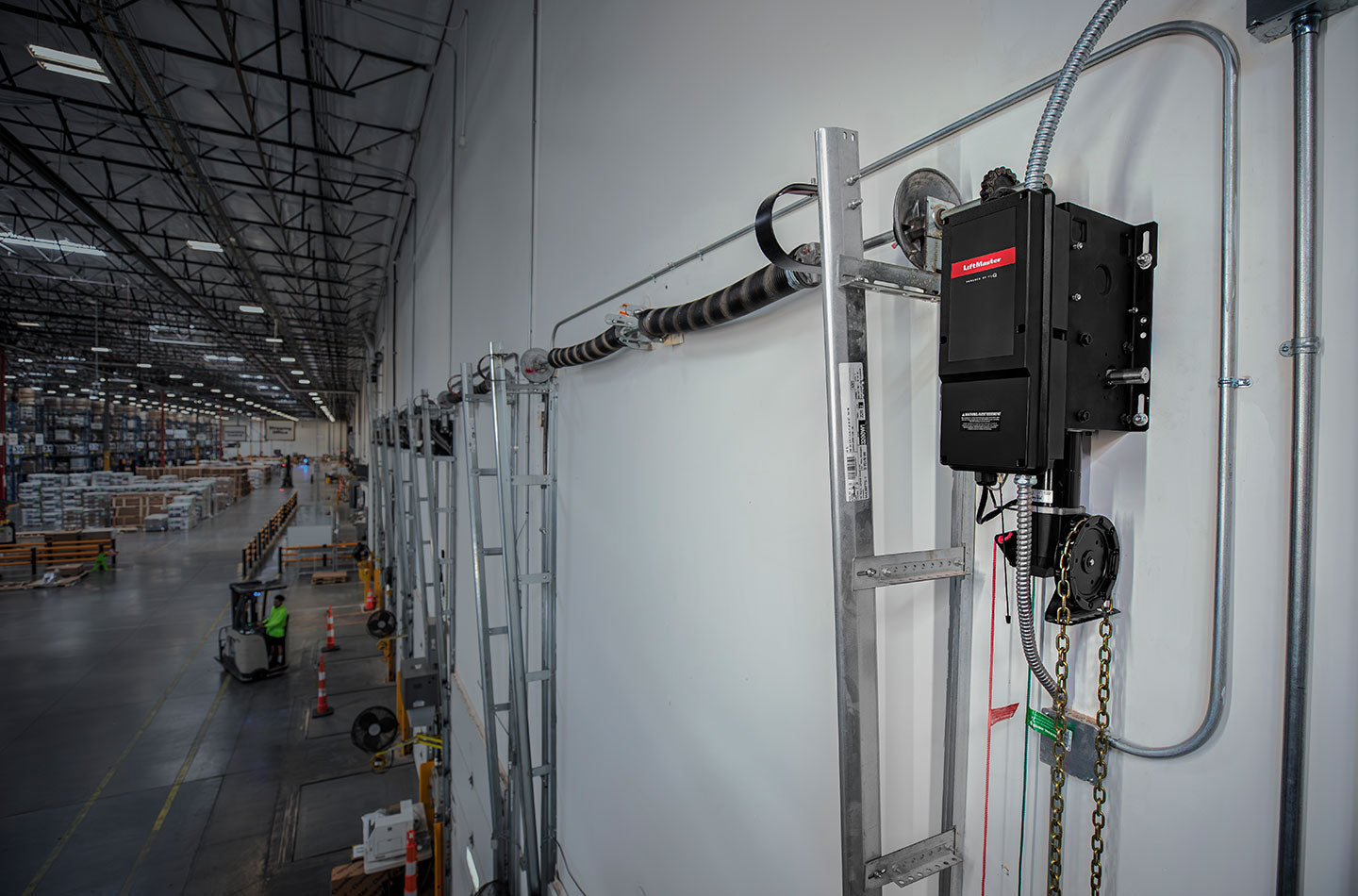
A commercial garage door opener is a critical piece of equipment for businesses that rely on loading docks, warehouse access, or secure storage. Regular maintenance reduces downtime, prevents costly repairs, and extends the life of the system.
This guide covers the most important maintenance tasks for commercial garage door openers and how often they should be performed.
Why Regular Maintenance Matters
Commercial garage doors see significantly more use than residential units. A warehouse door may open and close dozens of times per day, which places greater stress on springs, cables, rollers, and the opener itself.
Without regular maintenance, small issues can quickly become expensive problems. A worn spring can snap, a misaligned sensor can cause the door to stop responding, and a poorly lubricated system can burn out the motor.
Monthly Maintenance Tasks
Visual Inspection
Inspect the door, tracks, springs, cables, and rollers for visible signs of wear, rust, or damage. Look for fraying cables, cracked rollers, and loose hardware.
Test the Safety Reversal System
Place an object under the door and activate the closer. The door should reverse immediately upon contact. If it does not, the safety system needs adjustment.
Check the Photo Eye Sensors
Make sure the sensors on each side of the door are aligned and free of dirt or debris. Misaligned sensors can prevent the door from closing.
Quarterly Maintenance Tasks
Lubricate Moving Parts
Apply a garage door-specific lubricant to hinges, rollers, springs, and the drive chain or screw. Avoid using WD-40, which is a solvent rather than a long-lasting lubricant.
Tighten Hardware
Vibration from daily use loosens bolts and brackets over time. Check and tighten all mounting brackets, track bolts, and hinge screws.
Inspect the Weatherstripping
Replace cracked or missing weatherstripping along the bottom and sides of the door. This helps maintain energy efficiency and keeps water and debris out.
Annual Maintenance Tasks
Professional Inspection
Have a qualified technician perform a full inspection of the door system annually. This should include spring tension testing, cable inspection, motor assessment, and alignment checks.
Balance Test
Disconnect the opener and manually lift the door to about halfway. It should stay in place without support. If it slides up or down, the springs need adjustment.
When to Replace Parts
-
Springs that are visibly stretched or have gaps between coils
-
Cables that are frayed, kinked, or corroded
-
Rollers that are cracked or no longer spin freely
-
A motor that overheats, makes unusual noise, or struggles to lift the door
Final Thoughts
Regular maintenance keeps commercial garage door openers operating safely and efficiently. A consistent inspection schedule prevents unexpected breakdowns and extends the service life of the entire system.
FAQ:
Q: How often should a commercial garage door opener be serviced?
A: Monthly visual inspections, quarterly lubrication and hardware checks, and an annual professional inspection are recommended for most commercial doors.
Q: What lubricant is best for garage door openers?
A: Use a silicone-based or lithium-based garage door lubricant. Avoid WD-40 and other solvents, which can dry out and attract dust.
Q: How long does a commercial garage door opener last?
A: With proper maintenance, most commercial garage door openers last 10 to 15 years. Heavy-use environments may require earlier replacement.