Skip to content

A gate operator runs outdoors and carries safety devices built specifically for that environment. Most of the faults people blame on programming are actually one of those devices doing its job.
This covers pairing a remote to a LiftMaster gate operator, then the faults that stop the gate and how to tell them apart.
One thing before you open anything. Pairing a remote is owner-level work. Anything inside the control cabinet involves line voltage and the safety circuits that stop a gate closing on a person, so that side belongs to a qualified gate technician. Each section below says which of the two it is.
Programming a remote to the operator

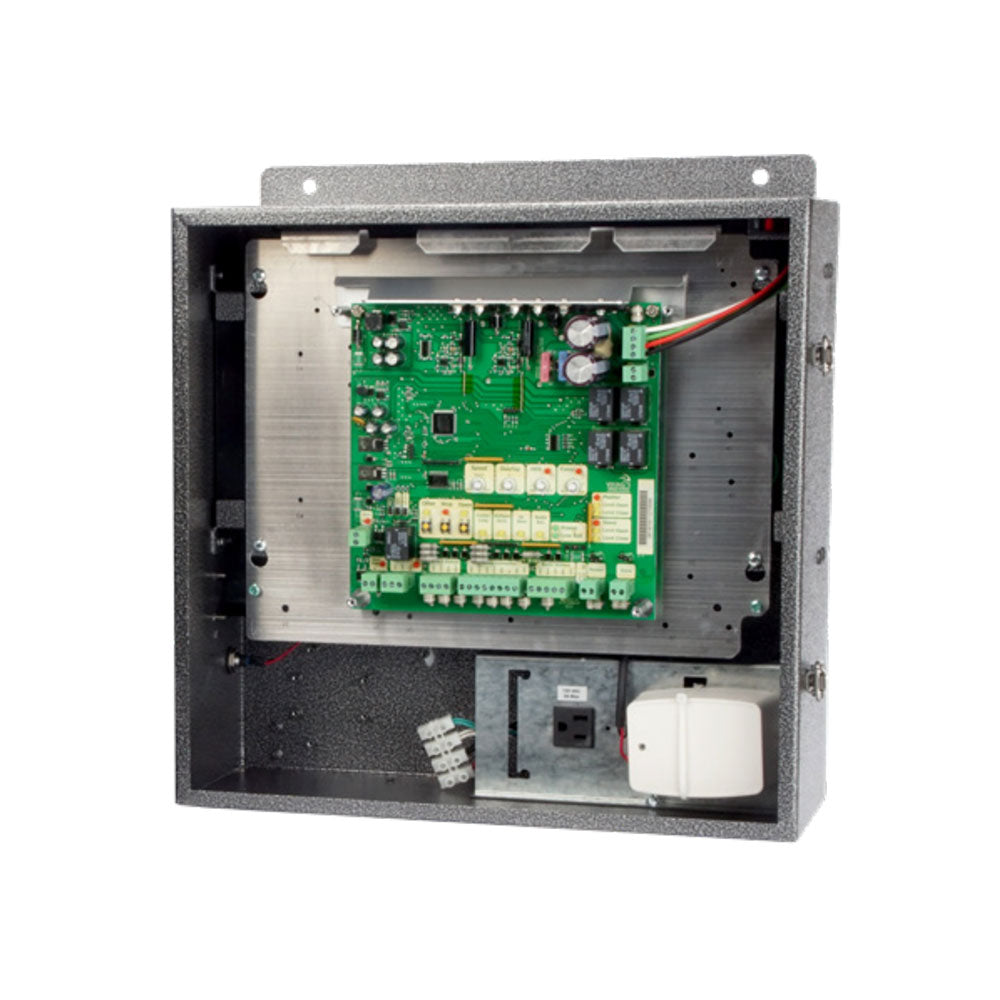
The learn button is inside the control box on the operator.
-
Open the control box. Power down at the disconnect first if you are working near the board. Find the learn button and the LED beside it.
-
Press and release once. The LED lights and you have roughly 30 seconds. Holding the button clears every transmitter in memory.
-
Press the remote button once. The LED confirms. On operators with multiple channels, make sure you are on the channel you intend to use, because open and open-partial are separate.
-
Close the box before testing. Test the full cycle from outside the gate. Standing at the operator proves nothing about range.
The gate does not move at all
-
Check the disconnect and the reset. Manual release levers get left engaged after a power cut, and the operator will run without moving the gate.
-
Look at the board LEDs before anything else. LiftMaster boards signal the fault with the diagnostic lights. Reading them takes a minute and skips an hour of guessing.
-
Confirm power. On solar and battery units, a run of overcast days is a more common cause of a dead gate than any component failure.
The gate opens then reverses
This is nearly always a safety device rather than the operator, and that is the system working correctly.
-
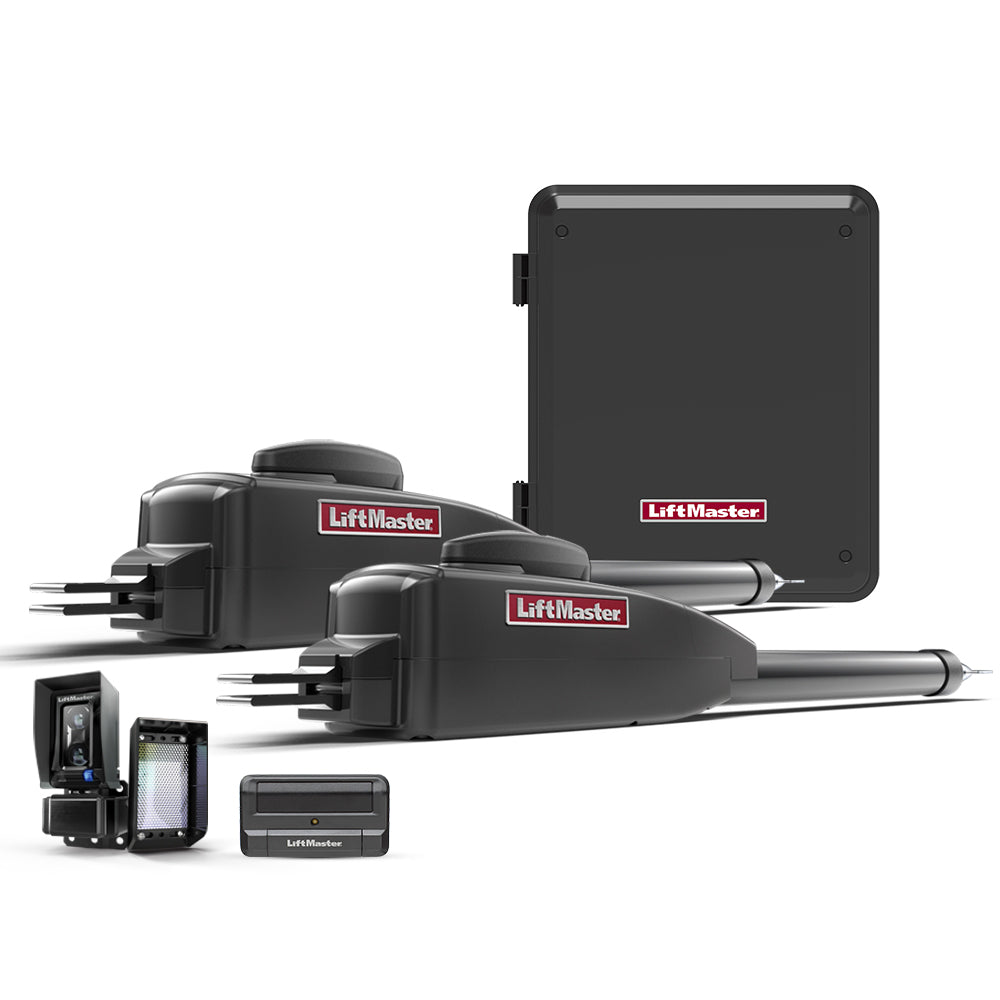
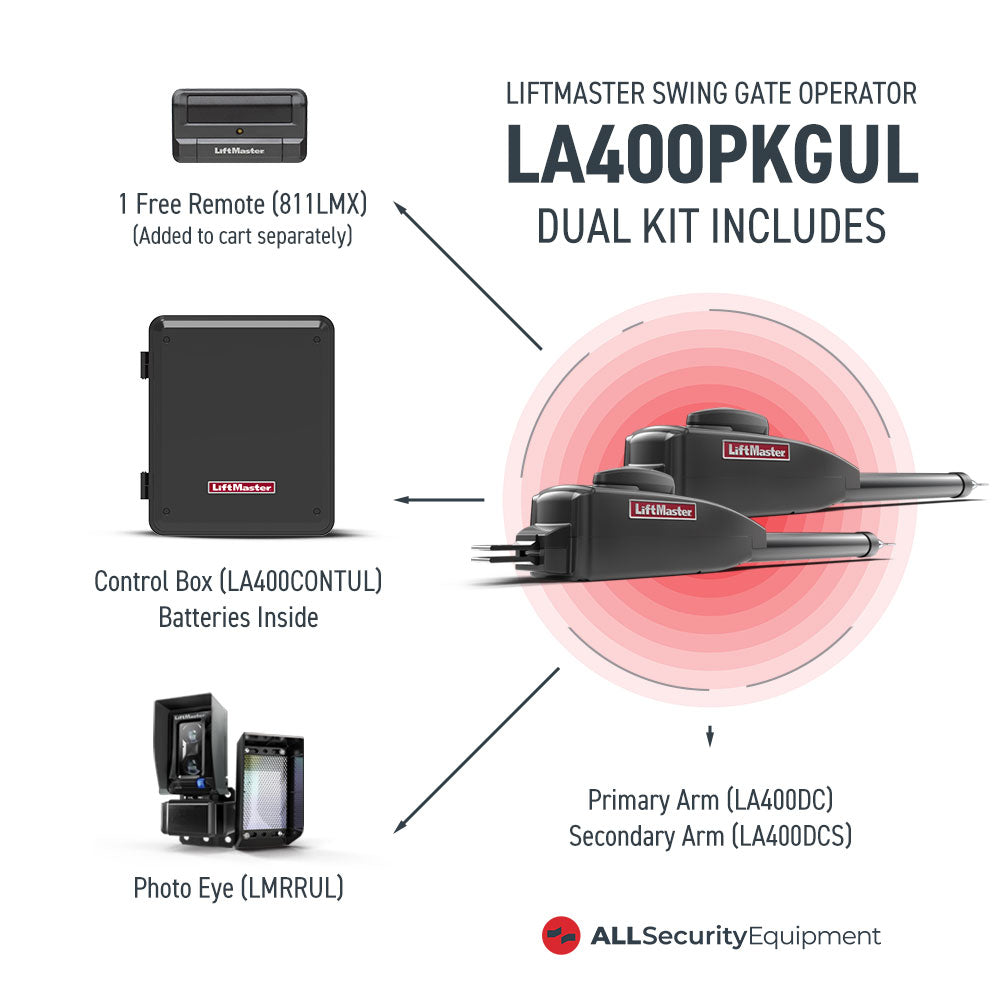
Photo eyes. Misalignment of a few degrees is enough. Spiders, condensation and a knock from a mower are the usual causes. Clean both lenses and confirm the indicator LEDs.
-
Ground loops. A loop that stays triggered holds the gate open or reverses it. Water in the saw cut is the classic winter fault.
-
Force settings. If the gate has become stiff, the operator hits its force limit and reverses. Turning the force up hides a mechanical problem instead of fixing it, so check the hinges and rollers first.
-
Obstruction in the path. A stone in the track or a sagging gate leaf dragging at one point will do it at the same spot every cycle, which is the tell.
The remote works sometimes
Intermittent range on a gate is more common than on a garage, because the antenna sits in a metal cabinet next to a motor.
Check that the antenna is outside the cabinet and clear of the metal. Then check for new interference, since a neighbor's new LED floodlight or solar inverter can take out a gate remote overnight. If several remotes fail together it is the receiver. If one fails it is the remote.
The gate runs but the safety devices are not wired in
A gate that cycles fine on the bench and misbehaves on site usually has a wiring problem rather than a failing part. Check these against the wiring diagram for your model. All of them are work for a qualified gate technician.
-
An unused safety input set up wrongly. Boards differ in how they expect an input with no device on it to be configured. Follow the wiring diagram for your exact model rather than any general rule, and never bridge a safety input to clear a fault. That defeats entrapment protection on a powered gate.
-
Photo eyes wired to the wrong terminal. Close-side and open-side inputs are separate. Swap them and the gate reverses on the wrong half of the cycle, which is a distinctive symptom.
-
No entrapment protection on a second device. Current requirements expect two independent means of protection. A single photo eye plus the operator's own force sensing is the usual pairing, and an inspector will look for it.

Weather faults that look like electrical faults
Gate operators live outdoors, and a large share of callouts trace back to that rather than to the electronics.
-
Water in the loop saw cut. The classic winter fault. The loop reads a permanent vehicle, so the gate holds open or refuses to close. It often clears in dry weather and comes back, which is the tell.
-
Condensation on photo eye lenses. Morning-only faults that disappear by mid-day are almost always this. Sun angle at dawn and dusk causes the same symptom by blinding the receiver directly.
-
Frost heave and ground movement. A slide gate that binds at the same point every winter has a track or post that has moved, not a motor problem. Raising the force setting to push through it is how operators get destroyed.
-
Insects in the cabinet. Ants and spiders across a board or a terminal block cause faults that no amount of programming resolves. Worth a look before ordering parts.
Match the operator to the traffic
Half the faults on gate operators come from a residential unit installed on a commercial cycle count. Duty rating is the specification that decides whether a gate lasts.
-
Residential and light commercial: the RSL12UL slide operator at $2,019.00 and the RSW12UL swing operator at $2,269.00.
-
High traffic commercial: the CSL24UL 24VDC slide operator at $2,479.00 and the SL3000101UL 1HP AC slide operator at $2,889.00.
-
Industrial and continuous duty: the INSL24UL 24V BLDC continuous duty slide operator at $3,199.00.
-
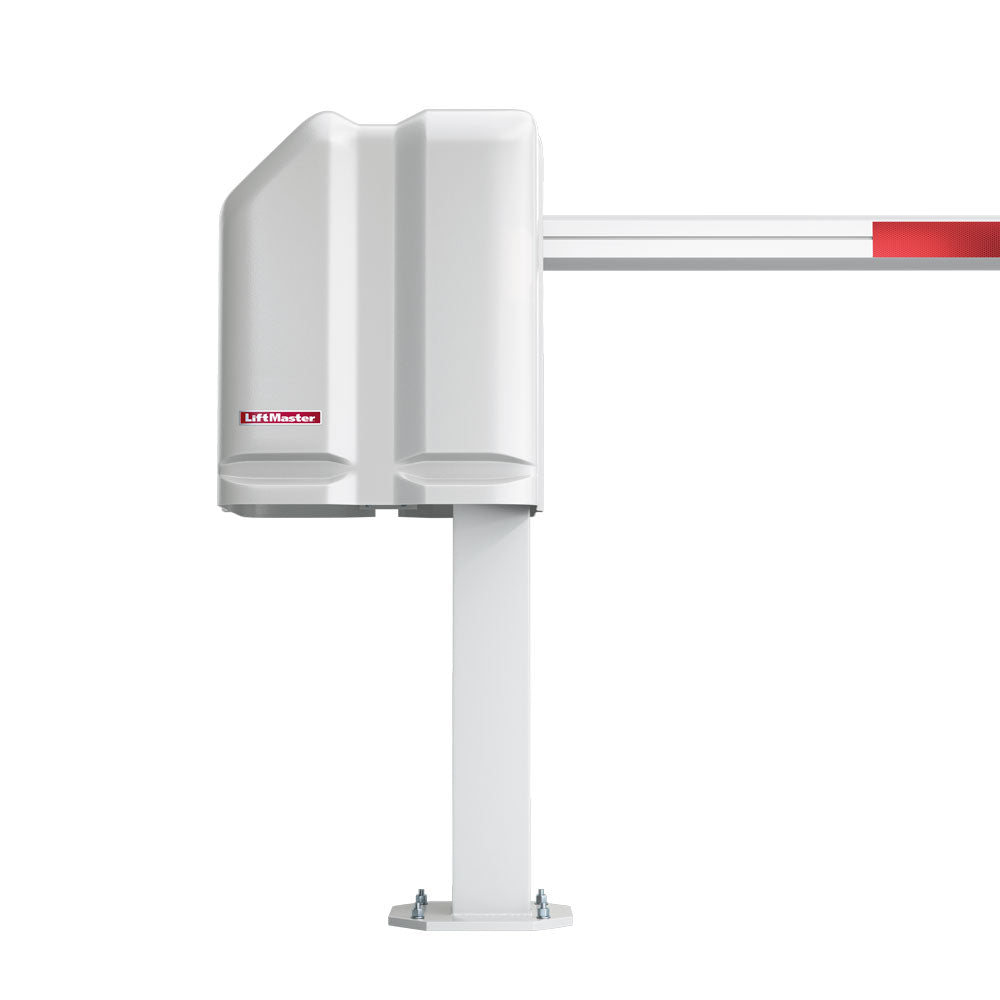
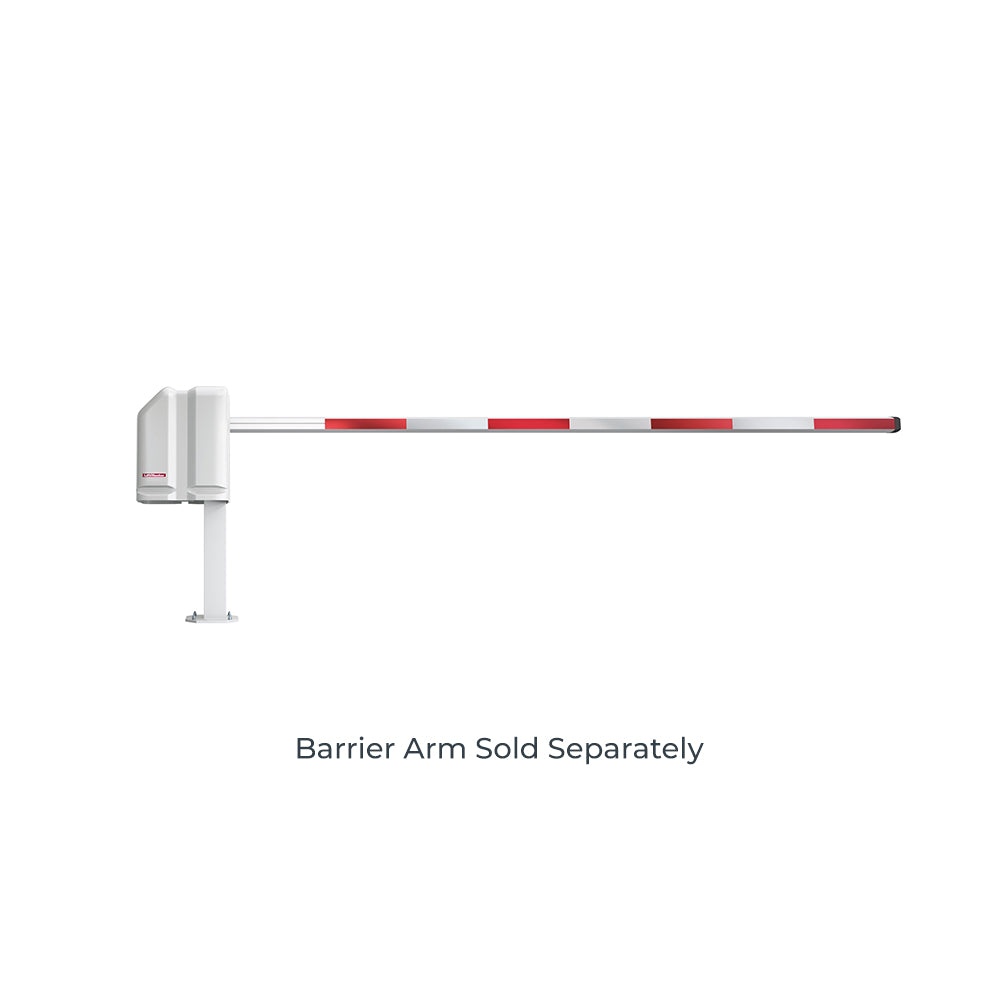
Dual leaf and specialty: the CSW200501UL dual swing operator at $5,219.00 and the MATDCBB3 Mega Arm Tower at $2,759.00.
The full range is in our gate operators collection, and the loop detectors and photo eyes that cause most of the faults above sit in parking systems. Loop detector installation is covered step by step in our gate loop detector guide, and board-level faults in the control board troubleshooting guide.
Frequently asked questions
How do I program a remote to a LiftMaster gate opener?
Open the control box on the operator, press and release the learn button once, then press the remote button within about 30 seconds. The LED beside the learn button confirms. Unlike a garage opener, the button is inside the operator cabinet rather than on the motor head, and holding it down clears every transmitter stored.
Why does my LiftMaster gate open and then close again?
A safety device is triggering, and the operator is behaving correctly. Check the photo eyes for misalignment or dirt on the lenses, then the ground loop for water in the saw cut, then the force setting if the gate has become stiff. Raising the force to make the symptom go away hides a mechanical fault rather than fixing it.
Why is my LiftMaster gate remote not working?
If several remotes stopped together, the receiver or the antenna is the problem: confirm the antenna is outside the metal cabinet and clear of the motor. If only one remote stopped, replace its battery and reprogram it. Intermittent operation that started suddenly usually means new radio interference nearby rather than a fault in the gate.
How do I reset a LiftMaster gate operator?
Hold the learn button in the control box until the LED goes out, which clears every remote and accessory paired to the operator. Reprogram the ones you still have. Do this whenever a transmitter is lost or a resident leaves, since a remote that is no longer on site keeps working until the operator forgets it.
What do the lights on a LiftMaster gate operator board mean?
They are diagnostic indicators and they name the fault. Read them before testing anything, because they distinguish a triggered safety input from a power problem from a motor fault in about a minute. The legend is printed inside the control box lid and repeated in the manual for your model.
How much does a LiftMaster gate operator cost?
Residential and light commercial units start at $2,019.00 for the RSL12UL slide operator and $2,269.00 for the RSW12UL swing operator. High traffic commercial runs $2,479.00 for the CSL24UL and $2,889.00 for the SL3000101UL. Continuous duty industrial is $3,199.00 for the INSL24UL, and a dual swing operator is $5,219.00.
Read the board before you touch anything
The fastest gate diagnosis available is free and takes a minute: open the control box and read the diagnostic lights. They separate a dirty photo eye from a flooded loop from a real motor fault, and the three have completely different fixes. Programming problems are the small half of this job. Safety devices doing exactly what they were installed to do are the large half.