Skip to content

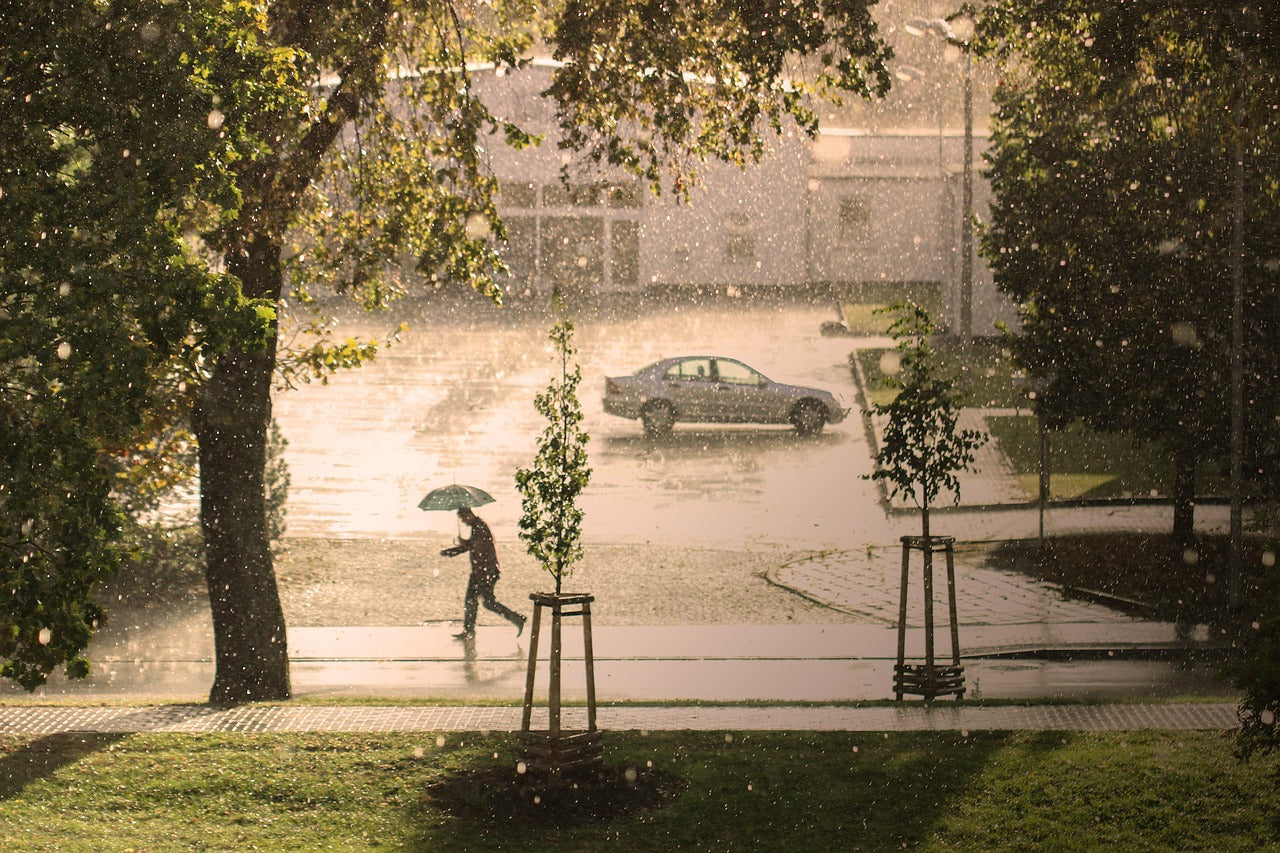
"Water-Resistant" - Just a Polite Way of Saying "Good Luck"
Investing in premium security hardware is only half the battle; the true test is whether it survives its environment. Imagine a high-end coastal camera corroding within months due to salt-laden mist, or a Midwestern gate system shorting out as melting snow bypasses an inferior seal. Consider a rural owner finding their motion sensors clogged with fine grit after a windstorm, rendering them useless during a nighttime intrusion.

These aren’t just inconveniences; they are critical security failures that leave your property vulnerable and lead to expensive replacement costs that are easily avoided with the correct Ingress Protection (IP) standards.
At All Security Equipment we believe a modern security system must offer peace of mind regardless of the forecast. This post pulls back the curtain on IP ratings, helping you navigate the technical specifications required to protect your investment. In an era of advanced technology, matching hardware to your regional climate is the most effective way to ensure long-term reliability.
Understanding the IP Rating: A Shield Against the Elements
An IP (Ingress Protection) rating defines how effectively an electrical enclosure blocks foreign bodies and moisture. You will typically find this rating on the technical spec sheet, the packaging, or embossed directly on the device housing. The rating uses two digits: the first (0–6) measures protection against solids like dust, while the second (0–9) measures resistance to liquids.
For example, an IP67 camera is "dust-tight" and survives temporary immersion. Understanding these numbers allows you to look past vague "waterproof" labels and verify the certified durability of your security equipment.
Choosing Your Rating Based on Climate

1. The Humid Subtropical & Coastal Regions
Common in the Southeastern US and coastal Australia, these climates feature heavy rainfall, high humidity, and salt air. Constant moisture causes internal condensation, while salt accelerates metal corrosion. For these areas, equipment needs high liquid resistance to prevent moisture from "creeping" into sensitive internal motherboards.
- Required Rating: IP66 or IP67
- ASE Product Recommendation: BFT Praetorian IP Video Intercom System with Keypad

This system features marine-grade brushed stainless steel and a powder-coated aluminum hood, specifically designed to withstand corrosive coastal air while offering remote gate control via WiFi or 4G.
2. The Arid and Semi-Arid Deserts
In Arizona or Nevada, the enemy is incredibly fine, wind-borne dust and sand. These particles act as abrasives, grinding down moving parts in PTZ cameras or infiltrating gaps in keypad entries. Total sealing against solids is non-negotiable here to prevent mechanical jams and overheating caused by debris buildup.
- Required Rating: IP6X (Specifically IP65 or IP66)
3. The Cold Continental & Alpine Zones

Found in the Northern US and Canada, these climates endure extreme freeze-thaw cycles. When snow melts and refreezes, it expands, cracking seals not rated for thermal cycling. Equipment must be rugged enough to handle heavy snow loads and the corrosive impact of de-icing salts used on nearby roads and walkways.
- Required Rating: IP65 (with UV-stabilized and thermal-rated housings)
- ASE Product Recommendation: Hanwha Vision 34MP 5CH PTRZ Multi-Directional Camera.
Built for extreme durability with IP66 and NEMA4X ratings, this AI-powered camera operates down to -40°F. Its reinforced design protects 360° sensors and a 40x PTZ lens from ice, snow, and wind-driven debris.

4. The Temperate & Maritime Climates
Common in the Pacific Northwest and the UK, these areas see persistent light rain and frequent fog. While not always "extreme," constant dampness means seals are always under pressure. Any equipment fully exposed to the sky needs professional-grade protection to avoid long-term "wicking" of moisture into the electronics.
-
Required Rating: IP65
5. Flood-Prone & Low-Lying Rural Areas
In rural floodplains or communities with complex drainage, seasonal flooding can submerge ground-level equipment like gate sensors. In these scenarios, standard weatherproofing is insufficient. You require equipment specifically designed for submersion to ensure your security system remains fully operational even when the ground is temporarily underwater.
- Required Rating: IP67 or IP68
- ASE Product Recommendation: ASE Magnetic Lock Kit with IP68 Keypad.

This comprehensive kit includes a vandal-resistant and virtually waterproof IP68-rated keypad, ensuring your access control remains functional even in extreme moisture or flood-prone conditions
Don’t Let Your Security Drown: Weatherproof Your Peace of Mind
Selecting equipment is a high-stakes decision for your budget and safety, but you don't have to choose alone. The ASE customer service team consists of experts who understand environmental protection and regional climate challenges. Whether managing a rural estate or a high-density community, we can help audit your hardware and recommend IP-rated solutions that stand the test of time. Don't wait for the next major storm to find the weak points in your perimeter. Contact our support team today for a personalized consultation!