Skip to content

A Complete Guide for Security Professionals, Facility Managers, and Installers
Selecting the right electric strike is one of the most important decisions when designing or upgrading an access control system. While electric strikes are among the most reliable and cost-effective locking solutions available, choosing the wrong model can result in installation delays, code compliance issues, security vulnerabilities, and unnecessary replacement costs.
Whether you’re securing a commercial office, healthcare facility, school, retail storefront, or industrial building, understanding how electric strikes work and how to match them to your door and lock configuration is essential.
In this guide, we’ll walk through everything you need to know about electric strikes, including door types, lock compatibility, fail safe versus fail secure operation, and recommended products available from All Security Equipment.
What Is an Electric Strike?
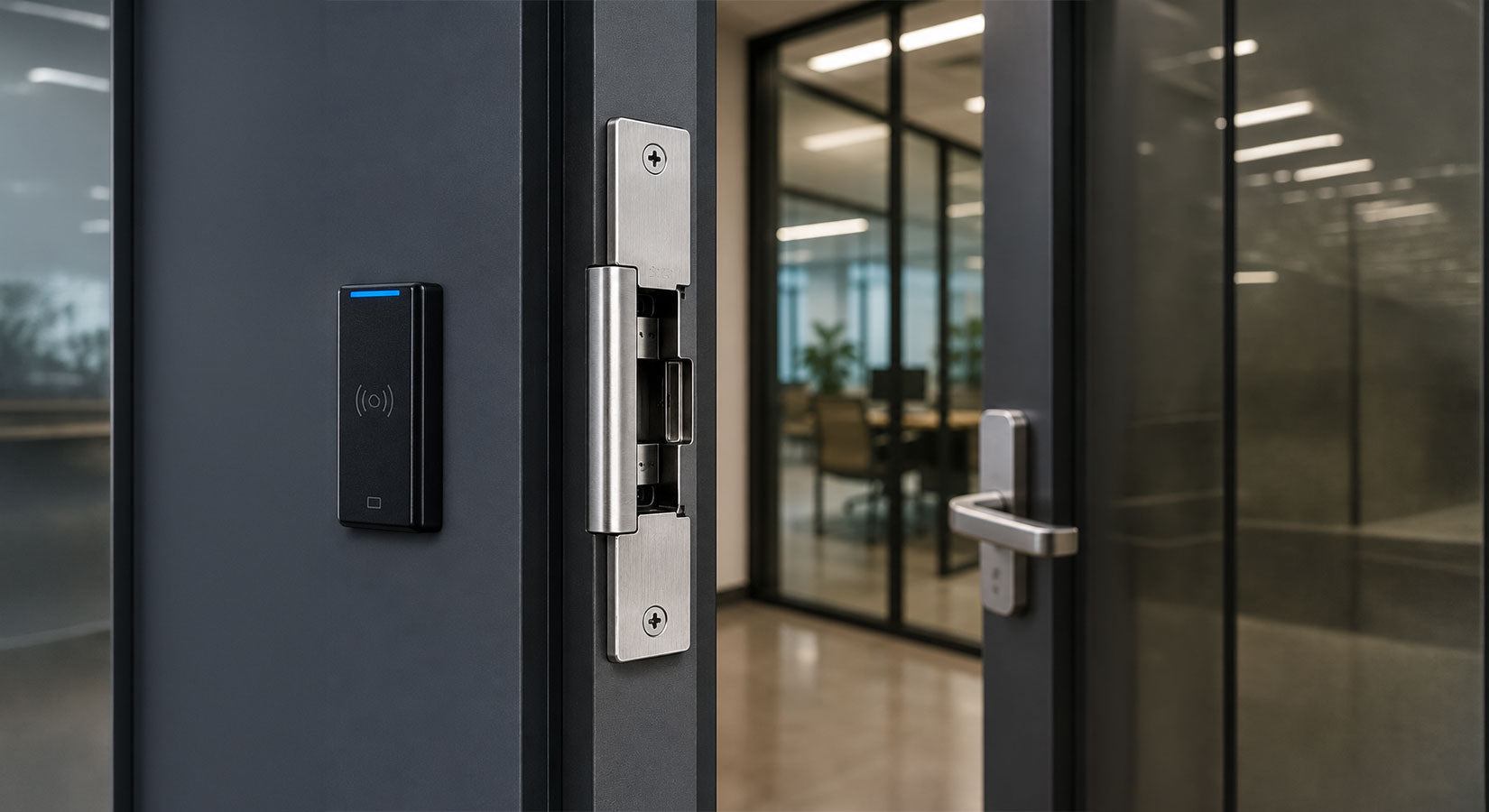
An electric strike is an electronic access control device that replaces the standard strike plate in a door frame. When connected to an access control system, the strike releases the latch upon receiving an authorized signal from a credential reader, keypad, push button, or remote control system.
Unlike magnetic locks that secure a door using holding force, electric strikes work with existing mechanical locksets and allow doors to remain securely latched while providing controlled access.
Electric strikes are commonly used with:
- Access control systems
- Card readers
- Keypad entry systems
- Intercom systems
- Video door entry systems
- Remote release applications
Why Electric Strikes Are Popular
Electric strikes remain one of the most widely used access control locking devices because they offer several advantages.
Enhanced Security
The locking hardware remains mechanically engaged even when access control credentials are not being presented. This provides stronger resistance against unauthorized entry attempts.
Lower Power Consumption
Compared to magnetic locks, electric strikes typically require power only during activation, making them more energy efficient.
Cleaner Installations
Because the locking mechanism is integrated into the door frame, electric strikes often create a more aesthetically pleasing installation.
Greater Flexibility
Electric strikes can be integrated with nearly every major access control platform and credential technology.
Understanding Door Types Before Choosing an Electric Strike
One of the most common mistakes installers make is selecting an electric strike before evaluating the door itself.
Hollow Metal Doors
Hollow metal doors are among the easiest doors to retrofit with electric strikes.
Common applications include:
- Schools
- Government buildings
- Office complexes
- Industrial facilities
Recommended Product:
The Doorking Electric Door Strike 12VDC DKES-C1-1FX is one of the industry’s most versatile solutions for hollow metal door applications.
Aluminum Storefront Doors
Aluminum storefront doors require narrow-profile electric strikes due to limited frame space.
Common applications include:
- Retail stores
- Shopping centers
- Restaurants
- Commercial office entrances
Recommended Products:
These models are specifically designed for narrow stile aluminum doors.
Wood Doors
Wood doors require careful consideration of frame construction and latch alignment.
Common applications include:
- Professional offices
- Religious facilities
- Residential communities
Recommended Product:
The Doorking DKES-C2-1FS remains one of the most adaptable options for wood door installations.
Lock Compatibility Matters
Not all electric strikes work with every lock type.
Before selecting a strike, identify the locking hardware currently installed on the door.
Cylindrical Locks
These are the most common commercial locksets.
Electric strikes compatible with cylindrical locks include:
- Doorking DKES-C2-1FS
- Doorking DKES-C2-1FX
Mortise Locks
Mortise locks provide enhanced durability and security but often require specialized electric strikes.
Recommended Products:
- General Lock GM9180 RR 630 C Grade 1 Storeroom Lock Mortise Lock
- General Lock GM9180 RE 630 C Grade 1 Storeroom Lock Mortise Lock
Exit Devices
Panic hardware and exit devices require strikes specifically designed for latch retraction mechanisms.
Recommended Product:
Fail Safe vs Fail Secure
One of the most important decisions is determining how the door should behave during a power failure.
Fail Secure
A fail secure electric strike remains locked when power is lost.
Benefits include:
- Higher security
- Better protection for restricted areas
- Reduced risk of unauthorized entry
Common applications:
- Data centers
- Equipment rooms
- Financial institutions
Fail Safe
A fail safe electric strike unlocks when power is lost.
Benefits include:
- Improved emergency egress
- Better life safety compliance
Common applications:
- Healthcare facilities
- Educational institutions
- Areas with strict egress requirements
Many modern electric strikes provide field-selectable fail safe or fail secure operation, giving installers greater flexibility.
Fire-Rated Openings Require Special Attention
Fire-rated openings introduce additional code requirements.
When selecting an electric strike for a fire-rated door, verify:
- UL listing
- Fire rating certification
- Local code compliance
Using non-rated hardware on a fire-rated opening may violate building codes and compromise occupant safety.
Integrating Electric Strikes with Access Control Systems
Electric strikes are most commonly paired with:
Card Readers
Popular options include:
- HID Signo Readers
Keypad Systems
Standalone keypads provide cost-effective access control for smaller facilities.
Mobile Credentials
Modern systems increasingly utilize smartphone-based credentials for convenient access management.
Access Control Controllers
Reliable controllers ensure proper communication between readers and locking hardware.
Popular controller manufacturers include:
- Altronix
Power Supplies and Accessories
An electric strike installation is only as reliable as its supporting components.
Recommended accessory categories include:
Access Control Power Supplies
Products from Altronix provide dependable power management and battery backup options.
Request-to-Exit Devices
REX devices help ensure safe and code-compliant egress.
Door Position Switches
These devices provide monitoring and reporting capabilities for enhanced security management.
Power Transfer Devices
Power transfer solutions help protect wiring when moving from frame to door.
Common Electric Strike Selection Mistakes
Choosing Based Only on Price
A lower-cost strike may not meet operational or code requirements.
Ignoring Door Alignment
Misaligned doors can lead to latch release failures and premature wear.
Overlooking Fire Ratings
Fire-rated openings require properly certified hardware.
Selecting the Wrong Lock Compatibility
Always verify compatibility between the strike and existing lock hardware.
Neglecting Future Expansion
Choose solutions that can grow with the facility’s security requirements.
Final Thoughts
Electric strikes continue to be one of the most versatile and dependable locking solutions available for modern access control systems. By carefully evaluating door construction, lock type, fire rating requirements, and access control integration needs, facility managers and security professionals can select a solution that provides years of reliable performance.
Whether you’re upgrading a single entry point or designing a facility-wide access control system, All Security Equipment offers a comprehensive selection of electric strikes, access control readers, credentials, controllers, power supplies, and door hardware to support virtually any application.